


The most significant pandemic of our lifetime arrived at a time when the United States was already grappling with deep societal fractures.
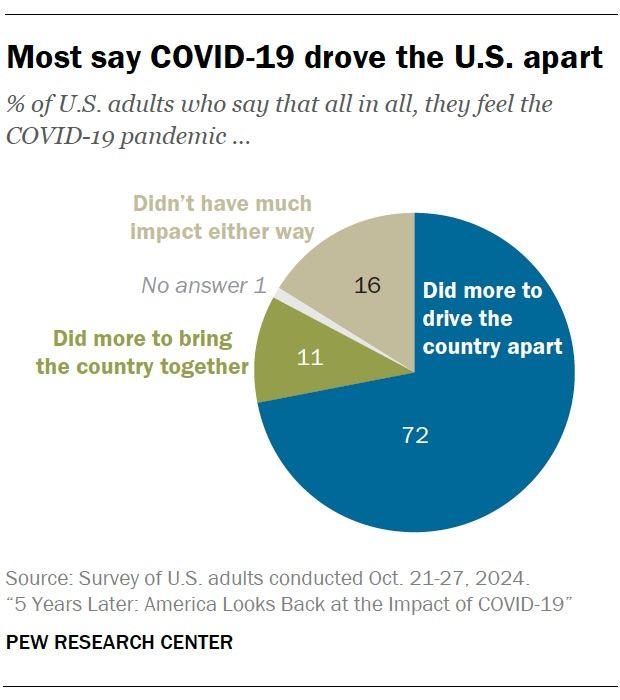
The growing partisan divide, declining trust in institutions and an increasingly fragmented information landscape all shaped the nation’s response to COVID-19 in March of 2020. These pre-existing conditions fueled a polarized reaction to the crisis, with nearly three-quarters of U.S. adults (72%) now believing that the pandemic did more to divide the country than bring it together.
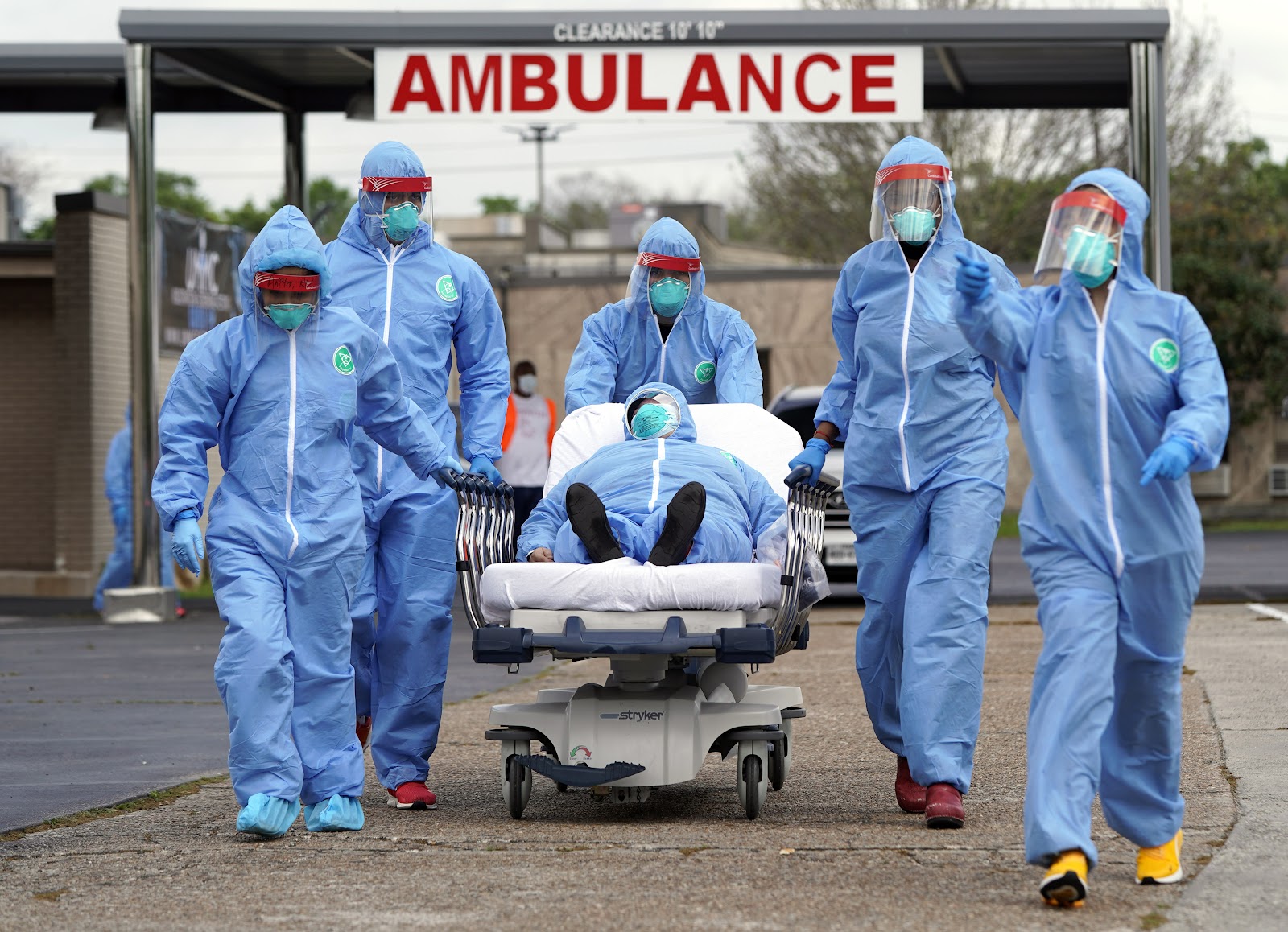
Looking back more than five years later, three-quarters of Americans say the pandemic took a personal toll on their lives. Among them, 27% report a major impact, while 47% describe it as minor. Beyond the personal struggles, the virus left a lasting mark on public health, work, religion, education, business and technology—key areas that continue to reflect the pandemic’s profound influence.
The lingering health crisis
The pandemic’s health impact remains substantial, with millions still battling long COVID, a condition characterized by persistent symptoms long after the initial infection has cleared. Long COVID is arguably the most significant hangover from the pandemic, affecting everything from the state’s workforce’s stability to its health systems’ viability.
Dr. Noah Greenspan, founder of the Pulmonary Wellness Foundation, emphasizes the importance of targeted therapy for long COVID patients. “Compression garments, electrolyte supplementation, balancing activity with rest and oxygen therapy have all shown to be helpful,” he explains.
Vaccine perception and public health preparedness
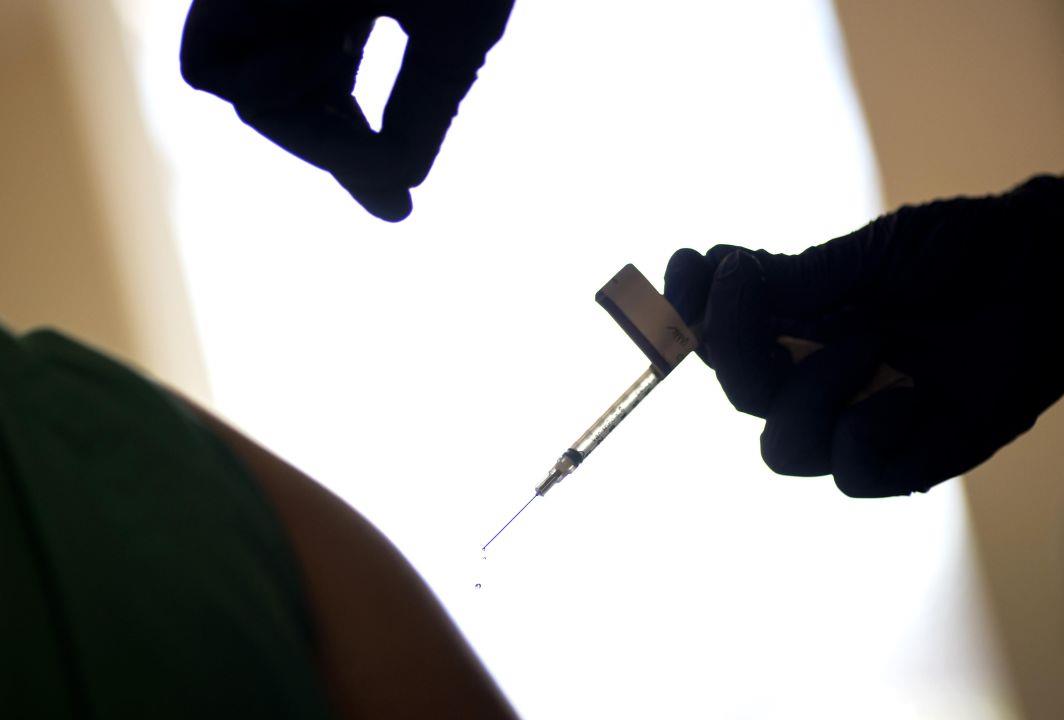
The development of COVID-19 vaccines was an unprecedented achievement, credited with saving millions of lives worldwide. Yet, public opinion on vaccines has remained deeply divided. A Pew Research survey found that while many Democrats planned to receive the latest booster (39% had received it, 23% planned to), the overwhelming majority of Republicans (81%) said they would not get an updated vaccine.
This skepticism has bled into attitudes toward other vaccines, including those for childhood diseases. A March 2023 survey showed a 12-percentage-point drop in support for requiring vaccines in schools. CDC data also reveals declining kindergarten vaccination rates for measles, polio and chickenpox.
Texas, which entered the pandemic with one of the highest uninsured rates and an underfunded public health system, remains vulnerable. The state now spends less per capita on public health than before the pandemic. Local officials have also seen their authority to enforce health protections weakened, making Texas less prepared for future outbreaks.
COVID-19’s psychological toll is another lasting legacy. Texas Children’s Hospital reported an 800% increase in emergency visits for mental health crises compared to pre-pandemic levels. Schools, already underfunded, struggle to provide adequate support for students facing pandemic-related trauma.
Economic shifts and small business resilience
The pandemic triggered major shifts across industries, and Houston continues to feel the economic ripple effects, with particular impacts on businesses.
Sambuca Restaurant closed after 22 years. The spot, which featured nightly live music, was located at the base of the Rice Hotel in downtown Houston. The owner said in a Facebook post, “In recent years we face challenges that have tested our resilience, the changing climate of our city, with rising homelessness and crime, coupled with the lingering impacts of Covid….created a perfect storm that we could not weather, though we fought with everything we had to keep our doors open. We’re closing this chapter with gratitude carrying countless memories over the past 22 years.”
A Constant Contact small business survey on the lasting impact of COVID found a number of issues, from financial strain to supply chain issues to mental and emotional toll. However, Constant Contact’s Director of Small Business Success, Dave Charest, said resilience is what they saw most in surviving businesses.
Many businesses that maybe weren’t so keen on the shift to digital really realized and saw the value in doing that. They adapted to figure out how they could communicate with their customers and offer virtual services, and think about their businesses differently.“
Dave Charest, Constant Contact’s Director of Small Business Success
“And so they’re really focused on figuring out how they get to long-term success and they have this growth mindset. And pretty much the entrepreneurial spirit is still very much alive, and 95% of the people that we talk to actually said if they were given the opportunity again that they would still start their own business.”
From a marketing standpoint, business challenges due to the pandemic included maintaining old customers, acquiring new clientele and standing out from the proverbial crowd.
“When you start thinking about ‘What do I do right? How do I start to overcome that?’ What they’re telling us is that they’re looking to build stronger customer relationships and learning new marketing strategies and adopting new tools, but even leaning into technology like AI and automation to help them work more efficiently,” he added.
Religious institutions adapt to a changing landscape
The COVID-19 pandemic disrupted many aspects of daily life, including the traditional practices of worship for the Black church community.
For young Black people, the pandemic accelerated a trend that was already in motion: a growing disconnection from the church. As churches closed their doors and shifted to online services, many young congregants found it challenging to maintain their spiritual routines, leading to a noticeable decline in attendance and engagement. Now, years after the pandemic, churches are finding new ways to bring people back into the fold.
Before the pandemic, young Black Americans were already exhibiting signs of drifting away from the church. Factors such as the increasing secularization of society, the influence of social media and a perceived disconnect between the church’s teachings and contemporary issues were contributing to this trend. The pandemic further exacerbated these issues by severing the in-person connections that many found vital to their spiritual lives.
The shift to online services provided a temporary solution but it also exposed the challenges of maintaining community in a digital space. Many young people reported lacking personal connection and engagement during virtual services, which often felt more like a broadcast than a communal worship experience. This led to a significant drop in attendance among younger congregants, that is just now seeing a turnaround.
“I grew up in the church,” said 22-year-old Camille Young, who attended Windsor Village United Methodist Church. “After the pandemic, I started watching online…every Sunday, then once a month, until I just started sleeping in on Sundays and never went back. I think not being there in person just led me to find other ways to get my spiritual nourishment.
Moving forward
Over one million Americans lost their lives to the virus, and countless others suffered severe illness. Despite this, many Americans have moved on—only 21% now consider COVID-19 a major public health threat and a majority (56%) believe it is no longer a pressing concern. However, the long-term effects are far from over.
