


When choreographer Jakari Sherman first encountered painter Jacob Lawrence’s iconic Migration Series, the colors struck him before anything else.
The bold reds, yellows, and blues seemed to leap off the canvas, carrying the weight of six million African Americans who left the South between 1910 and 1970 in search of new lives in the North and West. For Jakari Sherman, a Houston native and longtime member of Step Afrika!, those colors became movement, rhythm, and story.
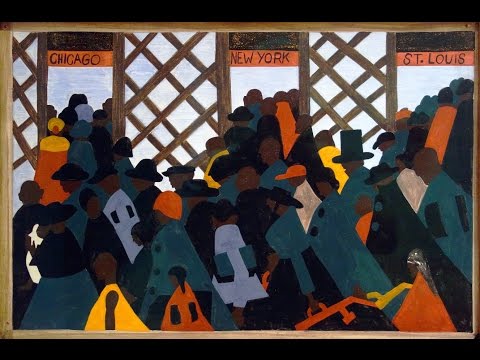
“What Lawrence did with paint and brush, we try to do with our bodies,” Sherman said. “We use sound, light, rhythm, and stepping to evoke the same emotions that those 60 panels captured.”
That translation turning history into choreography is the foundation of The Migration: Reflections on Jacob Lawrence, one of Step Afrika!’s most celebrated productions. Since its creation in 2011, the show has toured nationally and internationally. Now, it returns to Houston on Nov 14-15, bringing with it not just performance, but conversation about history, resilience, and belonging.
Movement as a vessel of memory
Step Afrika! is the world’s first professional company dedicated to the tradition of stepping, a percussive dance form originating from African American fraternities and sororities. Founder C. Brian Williams sees stepping as more than performance; he calls it a vessel for cultural memory.
“Our history lives in our bodies. Every step we take, every stomp and clap, carries the blood and the experience of our ancestors. Even if you don’t know the history, it’s inside you. That’s what makes dance
C Brian Williams
such a powerful medium.”
“Our history lives in our bodies,” Williams said. “Every step we take, every stomp and clap, carries the blood and the experience of our ancestors. Even if you don’t know the history, it’s inside you. That’s what makes dance such a powerful medium.”
Williams, a seventh-generation Texan, sees the Great Migration as part of his own family’s story. Some relatives left Texas for California and Chicago, while others remained rooted in the South. Bringing The Migration to Houston is not just a professional milestone but a personal one.
“Everybody has a migration story,” he said. “Latino, African, European, Native American, especially in Texas. This work is a way to honor that.”

Sherman’s challenge was to take Lawrence’s visual language and transform it into the vocabulary of stepping. He found a surprising parallel in Lawrence’s process: The painter would choose a color and apply it across all 60 panels before moving on to the next, creating consistency and cohesion. Sherman approached choreography the same way, layering stepping motifs, rhythms and movements across a 90-minute show.
“It was like painting with sound and movement,” Sherman explained. “I had to stretch a form that usually lives in five- or ten-minute bursts into a full-length story. We had to figure out, how do we make stepping convey emotion, narrative, even character?”
One recurring motif is the train, a central image in the Great Migration. In stepping, “the train” is also a classic move, one that Sherman wove into scenes that echo the sounds of locomotion, jazz rhythms from John Coltrane, and the imagery in Lawrence’s work.
“The train connects all of it, history, art, and the rhythm of our bodies,” he said.
History’s weight on stage

Telling such a story came with challenges. For Step Afrika!’s dancers, embodying characters such as enslaved people or migrants was emotionally taxing.
“There was trauma in that,” Sherman said. “We had never done character work like this before, and taking on those roles was difficult. But it was necessary. It takes courage to put our bodies and spirits on the line to tell these stories.”
That courage extends to reviving traditions rarely seen on American stages, such as the Ring Shout, one of the oldest African American art forms born during slavery. Moments like this demonstrate how dance preserves aspects of history that history books often overlook.
“When audiences see the Ring Shout in The Migration, they’re seeing continuity from Africa through slavery to now,” he said. “That’s what makes this work unlike anything else.”
The Migration home to Houston is deeply personal for Sherman. He grew up stepping in public schools and at Booker T. Washington High School before joining Step Afrika! in 2005. Now, standing on the same stages where he once sat in the audience as a student, he reflects on a journey that mirrors the migration story.
“I remember going to the Alley Theatre, Jones Hall, the symphony, but I never imagined stepping would be on those stages, let alone something I created,” he said. “This is a full-circle moment.”
Williams hopes that audiences will leave with a deeper respect for the courage of migrants and a greater understanding of migration as a universal human experience.
“Whether forced or voluntary, people move for safety, opportunity, or hope,” Williams said. “When you see The Migration, you’re not just watching history. You’re feeling it, carried in the rhythm of every step.”
