

Black music has always been a powerful force, a constant evolution reflecting the times and shaping them, too. Today, the landscape is being redrawn again, with streaming services acting as both a catalyst and a challenge.
Gone are the days of gatekeepers and limited airwaves. Streaming platforms like Spotify, Apple Music, and Tidal offer a smorgasbord of sound, empowering Black artists to bypass traditional barriers and connect directly with audiences worldwide.
This democratization of access has fostered a vibrant new era of Black music, one brimming with diversity, experimentation, and a relentless drive to redefine genres.
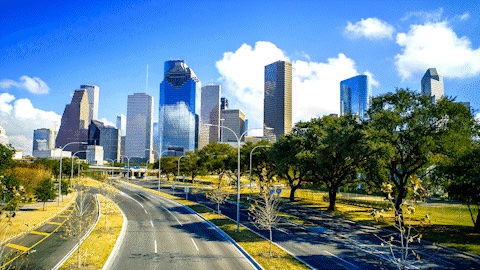
Take Soullia Rae, a rising Houston soul singer and songwriter. Though she has been singing all her life, she chose to delve into music during the COVID-19 pandemic. She gradually began doing open mic nights as a way to tap into her community and heal due to her experience with personal grief and loss. Her desire to make music stems from her appreciation of Black culture, and she uses her platform to show appreciation.

“I’m a rising artist, so streaming changed everything for me,” she said. “Before, I would perform live and do pop-up shops, but now we have all these social media platforms to help us reach people globally. It’s all about how to covert the personal essence and touches of meeting me in real life into this digital concept.”
Her favorite part about being able to use technology to promote her music is having autonomy over how she chooses to tell her own story. Rae hopes to return music to when it was “authentic and vulnerable.” To where it has a “lasting impact that is not only trendy but timeless.”
“As an independent artist, I don’t rely on a record company. Or anyone to tell me what the vision is because they are writing the check for me,” she said. “I’m growing my community, taking the power back on my narrative, and creating what I see fits.”
What are the challenges?
Recording artists rely on a few extremely wealthy companies for their income: Spotify, Apple, Amazon, and Google control the streaming market, which currently generates 84% of all recorded music revenue in the US. Outside of that system, there is hardly anything left for recorded music.
The average amount that the system pays for content is $0.00173 per stream. And that tiny sum that doesn’t even go to the artist directly. It is paid to the master recording’s rights holder, typically a record label, who divides the proceeds with the artists in accordance with their contracts. An artist’s share is typically between 15% and 50% of the total revenue.
That’s why a bill was introduced recently to establish a new royalty fund that would go directly to musicians, potentially fostering more fair relationships between musicians, companies, and streaming services.
Representatives Rashida Tlaib (D-MI) and Jamaal Bowman (D-NY) introduced the Living Wage for Musicians Act to the US House of Representatives in collaboration with the United Musicians and Allied Workers Union.
The bill was submitted because they were concerned about the discrepancy between the payment for associated royalties and individual streaming production. The goal is to assist musicians in continuing to make a living income in the streaming digital age.
The Living Wage for Musicians Act proposes an Artist Compensation Royalty Fund, which would pay artists an additional subscription fee and a percentage of platforms’ non-subscription revenue for ad-supported streaming. The fund would distribute money directly to artists based on their monthly stream share, with a maximum cap on monthly earnings per track.

Babatunde Ogunseinde, is also a singer and songwriter, and creator of Village Square: The Gathering. In this live musical event, people all over the African diaspora in Houston come together to exchange ideas and learn about the arts and creatives in the community.”
He has been a performer for almost 20 years and can vividly remember how artists hustle to sell their CDs (Compact Disks) or merchandise, hoping to make good sales. The direct-to-consumer experience has dwindled over time with online streaming, which to him is daunting because of the regulations and the fact that the services don’t pay enough to make a living.
“Musicians receive fractions of a penny per stream. It will take a large number of streams to earn a dollar. At times, it requires a huge scale to be successful, which can be a challenge for artists who aren’t well known,” he said. “If independent artists are supported or if they can bypass streaming services, it would be great.”
Ogunseinde is grateful for the growing community he has been able to build throughout the years. Even though he has been able to succeed with our reliance on traditional gatekeepers or record labels, he believes that those labels still have a place as times continue to change.
“The labels, especially the established ones, help artists be known for their songs. Sometimes some songs become famous, but the audience can’t put the face to the song or voice, but then again, technology makes things a little bit different, not easier,” he said. “Growth should start from the community the artist is in and build a loyal fan base from there. Look at Tobe Nwigwe and how far he has come.”
The same sentiment is shared by Brian Malbrough, a Houston area Hip-Hop and R&B music producer also known as D’angelo Soundz. After being in the business for four years, he’s learned that the best way to survive is to have a good rollout strategy and alternative ways to earn money through music.
As streaming continues to evolve, one thing that each musician remains certain of is that black music will continue to adapt and innovate. “Black music has always been about pushing boundaries,” said Rae. Streaming just gives us more tools to tell our stories, express ourselves, and connect with the world on a deeper level.”
