Aldine ISD is losing one out of 10 students to charter schools.
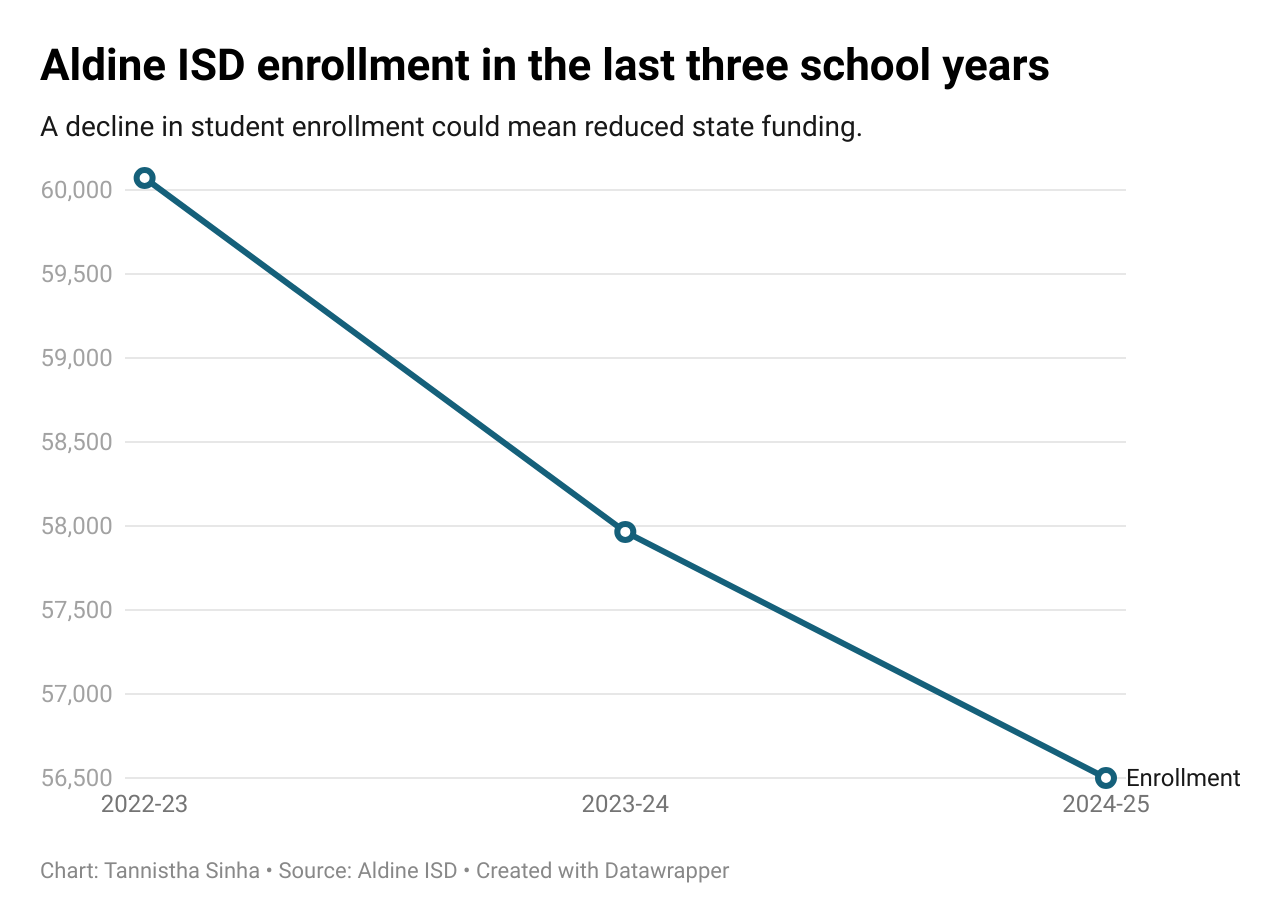
Texas Education Agency (TEA) transfer records show that in the 2023–24 school year, 7,485 students out of 57,966 who lived within Aldine ISD’s boundaries opted out of the district. While 6,418 chose charter schools over their zoned campuses, 963 enrolled in other public school districts, according to the data analysis.

In the 2023-24 school year, a majority of the students (75.4%) who transferred went to these four charter schools:
- Harmony Public Schools: 1,330
- Idea Public Schools: 1,210
- KIPP Texas Public Schools: 659
- YES Prep Public Schools: 1,645
Aldine ISD has a majority-minority enrollment, with more than 70% of its student population being Hispanic and more than 20% Black students.
It is time to ask the hard questions — does this exodus represent a crisis of confidence in traditional public school systems?
To be clear, Aldine ISD is not alone. Houston ISD is also facing a similar crisis. Student transfer data shows that in the last school year, more than 50,000 students living within HISD boundaries opted to attend a charter school network, while 4,000 students transferred to another traditional school district.
Across Texas, families are increasingly deciding their children’s futures by turning to charter schools and magnets. And the numbers are only increasing.
Per the October 2024 Public Education Information Management System snapshot, 436,031 students are enrolled in charter schools across the state, which represents roughly 7.86% of all public-school enrollment.
Several students are on the waiting list to be enrolled.
According to the Charter School Waitlist, 66% of Texas’s charter schools have a waitlist, while 34% do not. More than 89,000 students are on the list, including duplicates who are also on other charter school waiting lists.
For some school districts, it is a normal churn, while for others, it might be a referendum.
Why school districts should care
School districts like Aldine ISD must explore why families are moving away from traditional public education and choosing other options.
This means treating enrollment loss as an urgent issue and listening to parents: What are they asking for?
- Smaller class sizes?
- Cleaner campuses?
- More engaging instruction?
- Transparency and communication?
The current trends of moving to charter schools have ripple effects beyond test scores. Enrollment drops mean fewer per-pupil dollars and staff layoffs.
A deep dive into charter schools
According to the Texas Charter Schools Association, charter schools are public schools and are funded through the state’s Foundation School Program, much like traditional ISDs.
Additionally, public charter schools receive only 85% of the total per-pupil funding compared to traditional school districts and receive no local taxpayer dollars. This leaves a funding gap as ISDs receive both local and state funding.
Charter schools are also legally bound to take all students and not discriminate based on academic ability or other preferences.