


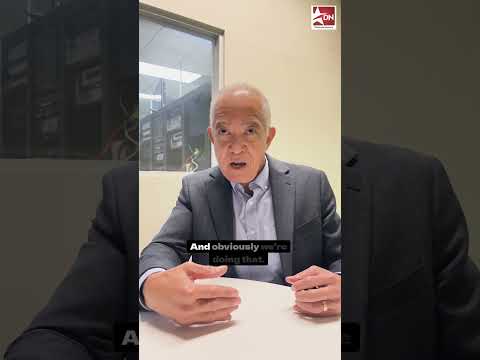
Two years into the controversial Texas Education Agency (TEA) takeover of Houston ISD, state-appointed Superintendent Mike Miles declared that for the first time, no student would return to a failing school this fall. But even as he touted the district’s gains, like eliminating F-rated campuses and doubling the number of A and B-rated schools, Miles made it clear: the job is not done. Achievement gaps linger. Trust remains fragile. A fractured community is still watching.

In a one-on-one interview with the Defender, Miles discussed the preliminary 2025 TEA accountability ratings data released by the school district. The data will be available to school systems on Aug. 13 and publicly accessible on TXschools.gov on Friday, Aug. 15.
The Texas Fifteenth Court of Appeals recently ruled that the TEA can release 2024 A-F accountability ratings after a lawsuit from various districts blocked their release. Ratings were halted for both the 2023 and 2024 school years as school districts challenged the state’s methodology for calculating performance metrics. They argued that there were stricter criteria for receiving an A grade and higher scores on standardized tests like the State of Texas Assessments of Academic Readiness (STAAR).
HISD was not one of the districts that sued to block the release of the results and released its scores for 2024 using the same TEA methodology.
By the numbers
Texas’ largest school district now has 197 A and B-rated schools, up 35% from before the TEA intervened and appointed a Board of Managers and Miles. Their reforms have sparked controversy over the last two years.
This means nearly three out of four schools (74%) in HISD are now A and B-rated, more than doubling in number from the 93 schools the previous year.

The school district has also eliminated F-rated campuses, a dramatic decrease from 56 F-rated campuses in HISD at the start of the intervention.
“What that means is that come next week when the kids come back to school, not one HISD student will attend a failing school,” Miles said. “Students, for the first time, will have greater opportunities to succeed in high school and further education and post-high school.”
These include the 82 schools that were rated D or F in 2023. Now, 18 D-rated schools remain in HISD.
“We had a huge achievement gap and our Black and brown kids were behind their peers,” Miles said. “There was a gap with their peers in Texas. In other words, a Black student in HISD was doing worse in math and language arts than black students in the state of Texas by far. Two years later, we’ve narrowed the achievement gap significantly. We’re above our peers.”
Accountability and instructional reform
Miles credits this improvement in ratings to a focus on instructional quality.
“You have to have principals who are instructional leaders who can coach teachers around high-quality instruction,” he added. “And you have to have executive directors who coach principals to be also instructional leaders…We also ensure that we have strong support for teachers.”

Miles’ controversial “New Education System” (NES) reforms mandate a centralized curriculum and a rigorous teaching regimen, which includes 90-minute classes that begin with Learning Objectives.
Classes are divided into 40-45 minutes of instruction using Multiple Response Strategies (MRS), during which principals and assistant principals visit classrooms to observe the instruction. Then comes 10 minutes of Demonstration of Learning (DOL) or mini quiz, on which students are scored. Those who master the DOL proceed to “team centers” (formerly libraries) to practice more advanced exercises supervised by learning coaches for 35 minutes. Those who do not master the DOL remain in the classroom for a “second teach,” where teachers review concepts.

The NES model has been widely criticized by HISD parents and teachers alike. They say the curriculum weighs too heavily on tests and timed lessons, which impacts student and teacher morale.
Miles disagrees. He says in NES schools, the district provided everything from ready-made PowerPoint slides to answer keys, giving teachers more time to focus on instruction.
“In the 130 NES schools, we even made copies so that teachers would spend most of their time on instruction, not on tasks that other people can do,” Miles explained. “When they leave 15 minutes after the bell rings, they’re done with work and they can enjoy their families and do other things. But when they’re at school, it’s about quality instruction.”
That philosophy extends to leadership, as well.
Since the beginning of the state takeover of Houston ISD in June 2023, there have been 177 principal changes. About half of these principals have left the district, with some separating voluntarily and others being asked to resign or facing termination. Specifically, in June 2024, there were 76 principal departures, the most in a single month since the takeover began, according to the Houston Chronicle’s HISD Principal Tracker.
“We removed some principals and some teachers who were not as effective. As you can see, that strategy worked,” Miles explained. “The kids got better instruction and did better academically. Kids need effective teachers…if a teacher is not progressing towards proficiency, then those are the teachers that aren’t gonna be effective for our kids. So that’s what we’ve been doing. It’s putting kids first, not adults first.”
Equity in historically underserved campuses

HISD’s transformation has had a profound impact on Black and Latino students, who have historically faced deep educational inequities.
According to Miles, Black students in HISD were once performing significantly below their peers statewide. He assures HISD parents that the gap is narrowing and students will be better prepared to attend college and earn high-paying jobs once they graduate.
“When you attend an F school, it’s like you attend a school with an anchor,” he said. “Kids who attend an A school in the district are being lifted up…we’re changing that for the first time. And we’re doing it expeditiously. It’s been only two years. But the gaps are closing and our kids are thriving.”
Board President Ric Campo agreed with Miles that the results demonstrated “Houston’s commitment to providing world-class education for all children.” Other board members also weighed in.
“As a member of the Board of Managers, I’m proud to see excellence becoming the norm in every Houston community,” said Angela Lemond Flowers. “These ratings represent real opportunity for families who have waited too long for great neighborhood schools. Every child deserves access to quality education, and today’s results show we’re delivering on that promise.”
Challenges remain in trust and staffing

While the academic gains are undeniable, questions linger over the sustainability and transparency of the reforms.
TEA’s accountability system, particularly the A-F rating scale, has come under scrutiny from educators and legal advocates for its methodology.
But Miles insists the system remains valid.
“The STAAR exam…is valid and reliable. It is a good measurement of whether a student can read at grade level or do math at grade level or is proficient in the other subjects,” Miles said. “The accountability ratings is a reflection of the STAAR scores, our graduation rates, closing the achievement gap…the public can trust TEA. They’re not my scores, they’re not any one district scores, there’s TEA scores.”
Miles added that whether a student can read and do math relies on a teacher’s instinct.
When it comes to community engagement and feedback, Miles suggests that HISD parents and teachers use the Shared Decision-Making Committee and teacher advisory committee and students rely on student councils for their input.
“At the district level, we’ve started a number of things to try to get even more feedback,” he said. “We’ve always had the district accountability committee, district advisory committee, principal advisory committee, town halls. We have surveys almost monthly.”
Enrollment is also an issue at HISD. Since the state takeover began two years ago, NES campus enrollment has declined by about 6% yearly. In 2024 alone, HISD lost nearly 7,400 students.
The district leadership accounted for the loss in its budget workshops.
“We have budgeted for a decline in enrollment, just like across the country, enrollment has declined,” Miles said. “Hopefully, we won’t have as great an enrollment decline and that’ll be budget-saving a little bit. We’re always going to be conservative in our budget. We’re always going to assume some worst-case scenarios in order to make sure that we have the money we need to do [the] transformation.”
However, trust, especially in communities impacted by state takeover and leadership upheaval, takes time to rebuild, as community members vocally discuss at school board meetings.
Teacher retention is another hurdle. Despite the high staff turnover prompted by the reforms, HISD insists it’s keeping 85% of its proficient teachers and 89% of exemplary teachers.
“We’re retaining the right teachers,” Miles said. “For new or uncertified hires, the district has ramped up training and coaching to bring them up to speed quickly.”
Community engagement also remains a work in progress. HISD has expanded its advisory councils, launched a revamped website and rolled out family surveys.
“We’re doing a lot to communicate, but that’s a never-ending battle,” Miles said. “Because there was so much change, we need to make sure people understand how we’re operating and why.”
What’s next for HISD?
For the 2025-2026 school year, Miles said the district will stay the course, focusing on differentiated instruction to support struggling and advanced learners. He also plans to build out career and technical education (CTE) programs, including health sciences, cybersecurity, welding and augmented reality.
As for the future of the state intervention, which TEA Commissioner Mike Morath extended for at least two more years, the path ahead remains unclear regarding when the intervention will end.
“We have already shown and we will continue to show that we’re moving in the right direction and we will be out of D and F status here very soon,” Miles said. “He [TEA Commissioner Mike Morath] hasn’t shared this with me, but I suspect after the next two years he’ll start thinking about a transition to an elected board.”
