


“Anything out of context is a lie.”
Dr. Tiffany Thomas says it plainly, without hesitation. The assistant professor of community development at Prairie View A&M University is not talking about a courtroom argument or a cable news debate.
She is talking about a word, one single, powerful word, that Black communities created to survive, passed down through generations to protect their own, and watched get ripped from its roots and turned against the very people who built it.
That word is “woke.”

It has shown up in presidential speeches and executive orders. It has been written into state law and shouted from campaign stages. In Texas alone, it has reshaped what teachers can say, what books children can read, and what universities are allowed to teach.
From the barbershops to the halls of the Texas Legislature, being woke has become the loudest flashpoint in America’s culture wars.
But for the Black Houstonians who created it, inherited it, and lived by it, this is not a political debate. It is a history lesson. And it is one that too many people have never been taught.
Being woke over time
To understand what is happening to the word woke today, you have to go back at least a century. Historians trace the concept to a 1923 collection of writings by Black nationalist Marcus Garvey, who urged, “Wake up Ethiopia! Wake up Africa!” as a call for African nations and the diaspora to “awaken” to their potential and fight for a free, united nation, often highlighting Ethiopia as a symbol of African independence.
The founder of the Houston Defender, C. F Richardson Sr featured the phrase “Stay Woke” in his Houston Informer newspaper column on May 24, 1924, prior to launching the Defender, urging African Americans to remain politically alert and socially aware. Richardson used this slogan to advocate for racial pride, equality, and improved conditions.
“Anything out of context is a lie. The word ‘wokeness’ has been spread throughout every medium and misinterpretedand yet again, it’s another example of how Black Americans and our culture are often extracted.”
Dr. Tiffany Thomas, program coordinator and assistant professor of community development at Prairie View A&M University’s School of Architecture
The phrase surfaced again in 1938, when folk blues artist Lead Belly, born Huddie Ledbetter, recorded “Scottsboro Boys,” a protest song about nine Black teenagers falsely accused of rape, convicted by an all-white Alabama jury. Lead Belly’s warning to his listeners was direct: “Stay woke. Keep your eyes open.”
The word moved quietly through the decades, alive in homes, churches, campuses, and barbershops. Singer Erykah Badu significantly popularized and revived the phrase “stay woke” in her 2008 neo-soul song “Master Teacher” from the album New Amerykah: Part One, featuring the recurring refrain “I stay woke”.
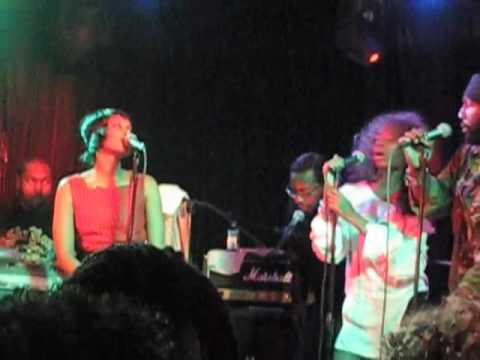
Merriam-Webster officially added woke to its dictionary in September 2017. The word reached its most galvanizing moment in 2014, following the police shooting of Michael Brown in Ferguson, Missouri, and surged again after the murder of George Floyd in 2020, when “stay woke” became a rallying cry for millions across the country and around the world.
Extracted, manipulated, and out of context
Thomas has a precise way of explaining what happened to the word “woke.” She points to the Green Book, the celebrated travel guide that helped Black Americans safely navigate the country during segregation, as an example of the vigilance that “stay woke” demanded. It was about knowing where you could eat, where you could sleep, and which towns were dangerous after dark. It was, in the most literal sense, a matter of life and death.
“This idea of wokeness has been hijacked, which is not an anomaly,” she says. “When we look at Black American culture and how the mainstream culture has extracted pieces and portions, whether it’s entertainment, civil rights, our own movements, and morphed it into their own, this wokeness has been extracted from our conversation internally, and then manipulated and redefined as something extreme. And it’s not.”
Few people in Houston are better positioned to connect the sociological and political dimensions of this debate than Dr. Carla Brailey. A Sociology associate professor at Texas Southern University and a senior fellow at the Barbara Jordan Institute of Policy Analysis, Brailey is also one of the most recognizable voices in Texas Democratic politics, having served as vice-chair of the Texas Democratic Party and becoming the first Black woman Democrat to run for lieutenant governor of Texas.
“Woke for me is that you are aware that we still have a ways to go in terms of experiencing equality for all in this country,” she says. “Woke means you are following what’s happening. You’re living, feeling, and seeing in society that we have a way to go in terms of reaching our fullest potential as humanity.”
But she is equally clear-eyed about how that definition has been distorted. From her perspective, the conservative co-optation of the word is rooted in the MAGA political movement’s effort to use it as a mobilizing buzzword.
“From their perspective, if you’re woke, then you’re a troublemaker. You’re doing harm to society,” Brailey said. “You’re exposing people to matters that, from their standpoint, shed light on the notion of white supremacy in a way they find threatening.”
Brailey says the strength of the word woke lies in resilience rather than anger. She asserts that being woke involves understanding the challenges faced by the Black community, and raising families with self-care and joy, while continuing the fight for survival, reflecting on a history of resilience.
“Being woke is understanding that even though life may not be the same struggle as someone across the tracks,” she said. “You are aware of your privilege, and you use it to serve those who may not be where you are, to help get them there.”
Woke became a political weapon
The backlash against ‘woke’ and ‘wokeness’ emerged in the 2010s, linked to the growing emphasis on Black history in education and heightened awareness of police violence against Black Americans. This political shift intensified in 2022, when Florida Governor Ron DeSantis signed the “Stop W.O.K.E. Act,” which prohibits specific teachings on race and gender in schools and workplaces. DeSantis’s administration characterized “woke” as a belief in systemic injustices in society, labeling it a threat.
The law was challenged in federal court. U.S. District Court Judge Mark E. Walker blocked it, writing that Florida had turned the First Amendment “upside down” by burdening speech based on its content.
In 2025, President Donald Trump pledged to review content at the Smithsonian Institution for being “WOKE.” Texas Governor Greg Abbott declared in his State of the State address that government would keep “woke agendas” out of universities and K-12 schools, and Defense Secretary Pete Hegseth announced he would end “woke culture” in the military. The White House issued a statement declaring, “America is no longer woke under President Trump’s leadership.”
Young people weigh in
While scholars and community leaders parse the political and historical dimensions of this debate, the students sitting in Houston’s classrooms are the ones who will live with its consequences.
Sean Williams is a freshman Political Science major at Texas Southern University (TSU), Williams grew up in Brooklyn, New York, and chose to attend an HBCU in Houston deliberately, wanting, as he puts it, to be “mentored by Black people who had the same visions” as him and to be in the center of a city that is itself a historically Black place.
“When I hear the word ‘woke’ today, I think ‘informed,’ because a lot of people aren’t,” he says. “It kind of feels like a threat and a slap to the face. It’s a word we created based on being disrespected, because you have to be woke when people are doing things to you that you don’t even know about. Using it to slander the Black community is a slap to the face.”
Williams also sees himself as part of the solution. He walks TSU’s campus in business attire every day, deliberate about the message he is sending to other young Black men who, in his view, deserve to see themselves occupying that space.
“Students aren’t informed. So it’s my purpose to bridge that gap, starting younger, and using social media,” he said. “Because that’s mainly what people in my age bracket use, to get the word out in ways they find plausible.”
Sha’mya Fields is a senior Political Science major at TSU with her sights set on law school and a career as a civil rights attorney. She is precise, passionate, and deeply aware of the gap between what the word woke was built to do and what it has become.
“Today, when I hear the word ‘woke,’ I think of someone who is overly conscious of what’s going on, in a negative sense,” she says, acknowledging the stigma the word now carries even among her peers. “It didn’t start this way.”
Fields was not taught the origins of woke in school. She discovered its roots on her own, in the aftermath of George Floyd’s murder, during the long stillness of the pandemic.
“It’s a term that stems from way back, the 1930s or so, when people would say, ‘Stay woke.’” “It originated with such a positive connotation. But it has definitely changed.”
Fields also bears witness to the impact of Texas’s educational restrictions in a deeply personal way. Her 13-year-old sister, educated in Texas public schools, knows little beyond Martin Luther King Jr. about Black history.
“Before the book bans, before they started removing statues, before they started limiting words, she already didn’t know,” Fields says. “Now it’s to a point where it’s not only putting White-Out on Black history. It’s losing self-identity. When you go to school, and you can no longer find yourself in American history, you become an outsider. In your own country.”
When asked what she would say to a politician who weaponizes the term, Fields strips it to its most essential meaning.
“I would just ask the question, what is so wrong about being awake? When you’re awake, you can see,” she said. “When you’re awake, you can hear. When you’re awake, you can speak. What is so wrong about people being able to see, hear, and vocalize what is happening around them?”
