


Nearly 60% of Texas’ population is made up of people of color [Latinos: 40.2%, white: 40%, Black: 13% and Asian: 6%], according to the Brennan Center for Justice. Yet, when it comes to congressional representation, the state’s political maps tell a different story, one where white-majority legislators control the power.
As state lawmakers reopen the redistricting process just four years after the last maps were drawn, many Houstonians fear their communities are being deliberately silenced through partisan gerrymandering. Rep. Armando Walle (D-Houston) pointed out that Republicans are now challenging the very map they approved earlier.
The Texas House’s redistricting committee held a public hearing in Houston to take into consideration local residents’ input on the state’s plan to redraw congressional districts. The committee includes Houston’s state representatives Jolanda Jones and Gene Wu.
What’s at stake?


Reflecting on the redistricting efforts, Wu said working-class Texans will feel the impacts.
“They’re stealing food from children, taking away Medicare, social security, cutting the weather service, cutting NASA, cutting everything that we depend on and need,” Wu told the Defender. “If they are allowed to steal this last bit, this is our power, this is our voice…if they take the last thing that we have, all that they will be left for them to take is the American dream. And we must fight for the American dream.”
Criticizing the state’s ongoing redistricting efforts, State Rep. Lauren Ashley Simmons called it “cheating at the highest level.” She explained that redistricting traditionally follows the census every decade to reflect population growth. She noted that the redistricting process is being rushed through a special legislative session, bypassing the regular legislative calendar and potentially ignoring urgent issues like disaster relief.

Simmons also pointed out that the public hearings are limited and restrictive, with only three hearings statewide and just two minutes per speaker, making it difficult for community voices to be heard.
“It’s gonna come at the expense of communities and congressional districts that I represent,” she added.
At the heart of the controversy are four minority-majority congressional districts: Districts 9 (represented by Congressman Al Green), 18 (currently underrepresented), 29 (Congresswoman Sylvia Garcia) and 33 (Congressman Marc Veasey), cited by the U.S. Department of Justice as being unconstitutionally drawn based on race in 2021, comprise a majority of Black, Hispanic and Asian voters. These voters overwhelmingly voted for Democratic Presidential candidate Kamala Harris in 2024.


Redrawing these lines, critics argue, would dilute the political power of communities of color in a state already represented by a majority of white Republican lawmakers.
“If it [the redrawn congressional districts] is implemented as planned, it will mean that we will have fewer minority representatives and more majority representatives,” Green told the Defender. “When you have four districts that are targeted and all four of the representatives are persons of color, then you have to call it what it is: Racial discrimination.”
The disconnect between demographics and representation

According to the 2020 census, 95% of Texas’ population growth over the past decade came from people of color.
Now, with no new census data to justify revisiting the maps, many are questioning the motivation behind Governor Greg Abbott’s decision to call a special session on redistricting.
Lawmakers, including members of the House Redistricting Committee, admitted they had received no proposed maps or clear rationale for reopening the process, only vague proclamations and a letter from the U.S. Department of Justice raising concerns about racial discrimination in four districts.


“The reality is there is a way to draw the maps in Texas where you would never have to knock on the door of a Black and brown voter ever again,” State Senator Molly Cook told the Defender, adding that a wide turnout of Democratic votes are enough to win a statewide race. “You could win every primary just by going to your white voters. We can’t let that happen, even if these maps do move through the legislature. And to be totally honest with folks, that is quite a possibility.”
Community fears
For many Houstonians, particularly Black residents who have long fought for political voice, the redistricting hearings feel like a repeat of a painful past.
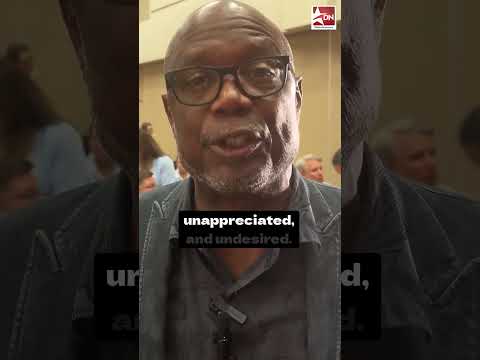
“I was raised in Fifth Ward. We’ve had Barbara Jordan, Mickey Leland, Sheila Jackson Lee, Sylvester Turner and many other great leaders,” said Jackie Greene, a 65-year-old lifelong Houstonian. “It’s so many things already that we are at a disadvantage. If we get someone that doesn’t know us and doesn’t care for us, who will never get the assistance we need in the community.”

Others echoed Greene’s concern, pointing out that redistricting could mean that representatives who understand local issues, like aging infrastructure, affordable housing, or criminal justice reform could be replaced by outsiders who are indifferent to the community’s needs.
“I want you to understand that they believe that they can trample upon our voices and our rights in Texas. That is why they are coming for Texas,” said Congresswoman Jasmine Crockett at the rally. “This is about race and it’s about fairness and equity…I’m gonna need you to show up because unfortunately, we haven’t been showing up.”
Limited options for the public
For individuals worried about losing representation, the avenues to resist these changes are narrow.
At the hearing, the public was told there would be no maps presented and that testimonies must be marked “neutral” due to procedural rules, despite attendees overwhelmingly expressing opposition to redistricting.
“I just want to advise the public that they would not be testifying on a revised congressional redistricting plan, because there is no revised congressional redistricting plan,” clarified State Rep. Senfronia Thompson.

Others saw the process as a political performance.
“I worked in corporations for over 30 years where there were dog and pony shows,” said Karen Washington, who testified at the hearing. “A dog and pony show is where you go out and pretend to wanna hear genuinely what your constituents have to say and then all along knowing what the plan’s going to be…It is racist.”

State Rep. Jolanda Jones asked Committee Chair Cody Vasut how residents can testify how they will be impacted by redrawn maps if no maps were filed to begin with and if they would have the chance to voice their opinion once the maps were available.
“1,000%,” Vasut replied. “There is no proposed map pending this time for which public testimony can be offered. But we’ll have a hearing if such a matter is filed.”
No strategy, no plan
Even among elected officials, the redistricting strategy appears fractured.
Some Democratic legislators expressed frustration that there is no unified plan to counter the Republican effort. Others said they were unwilling to “break quorum,” a tactic used in 2021 to stall restrictive voting bills, without a clear legal or political path forward.
Aside from attending the Hearings and testifying why redistricting should cease, Jones told the Defender earlier that the path forward looks grim.
“We do not have a plan. Let me be clear. We do not have a plan,” she said.
Although State Rep. Ron Reynolds said he is “ready, willing and able to get into good trouble by breaking quorum when justice is on the line,” such tactics have been met with resistance from colleagues across the aisle.
“If Democrats ignore their duty to their constituents by breaking quorum, they should be found and arrested no matter where they go,” said Attorney General Ken Paxton. “The people of Texas elected them to do a job, not run away and hide like cowards… My office stands ready to assist local, state and federal authorities in hunting down and compelling the attendance of anyone who abandons their office and their constituents for cheap political theater.”
Some representatives said proposed penalties of $500 a day when they make $600 a month would be too much for them and that they would not pursue that route.
Community leaders and policy advocates say residents still have a few tools at their disposal, though all are uphill battles.

Democratic representatives demanded new hearings for the new proposed maps, without which hearings serve no functional purpose.
While the Department of Justice raised concerns in its July letter, many doubt whether the federal agency will take decisive legal action, especially under pressure from conservative leadership.
Congressman Green read the letter during the rally. It states that the Attorney General reserves the right to seek legal action against the state under the 14th Amendment.
