


When Burna Boy made history as the first African artist to perform live at the Grammy Awards earlier this month, he sang “Sittin’ on Top of The World,” alongside R&B legend Brandy and rapper 21 Savage. Let’s just say the song title is befitting for the level Afrobeats has reached globally.
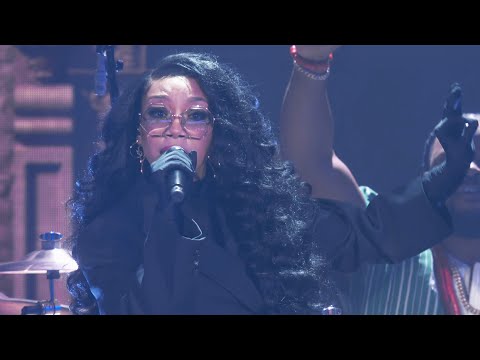
While Grammy wins aren’t new for African-born artists, considering those previously nominated were in the Global Music Album category, the Best African Music Performance category signifies a monumental impact. It declares that Africa’s musical influence isn’t a passing trend but an enduring cultural powerhouse, dispelling the one-dimensional view of Afrobeats.
Jazz, R&B, hip hop, and other genres are combined to create the hybrid genre known as afrobeats. Amapiano, a South African subgenre with powerful percussion bass sounds, has recently been included in Afrobeats jams. The blend of sounds within the genre may account for its widespread appeal among millions of listeners worldwide. Spotify reports that 13 billion Afrobeats songs were streamed in 2022.
Afrobeats is more than music, it is a way to unite Africans at home and in the diaspora.
As the genre continues to expand, the Defender wanted to highlight MC Frosh, an emcee and independent artists, Emma Nyra, veteran singer and songwriter, and rapper John-Patrick Egbo. These Houston-based artists are contributing in various ways that are moving the genre forward.

How did you first become interested in Afrobeats, and what drew you to this genre?
MC Frosh : It all started from the church. My parents were pastors. I became a choir director in my dad’s church. In the background that I came from, you would not listen to [secular] music. The only thing close to Afrobeats that I could hear a little bit at that time was Fela Kuti, the father of Afrobeat music. I fell in love with it. I wanted to be like Fela, who takes pride in speaking in his native tongue, Yoruba. His songs gave me the confidence to do the same. I wanted to switch from gospel music, but the journey wouldn’t be easy. My journey has taken me from different parts of Africa, growing my skills, touring, and building my fan base. I remember the first time I made money off of music. It was $300 then, and I was so happy, I couldn’t believe it. Upon coming to the U.S. in 2018, I was connected to Afro Vibes Radio, became a presenter, and decided to push as an independent artist. I’ve been working to uplift upcoming artists and give them the support necessary to advance the Afrobeats culture. I aim to use my industry knowledge to prepare people for the future.

Emma Nyra : I went to Texas Southern University. I used to do talent shows on campus. I also performed during the annual Nigerian Reunion 10 or 15 years ago. Nigerians from across the country unite and have a good time. When I graduated, I knew I wanted to make music a career. I had to make a move to Lagos. That’s what I did in 2012. I started with Ovie [Head of Content] of NotJustOk, he connected me with fellow artist Iyanya, and before he released his first official single, we started a label called Made Men Music Group. We were self-made, we did everything ourselves and distributed our music. We were still building an industry where there could be residuals and royalties. Plus, Lagos is considered the Hollywood of Nigeria. If you can successfully build a base here, it will follow you wherever you go.
John-Patrick Egbo : There are two different levels of being an artist. One is just creating art for yourself and just creating art as a form of expression. But then the other side is when you’ve taken it as a serious venture to grow your audience and share your art with the world. So, depending on which one, my “why” has changed because I started as the first one. As I built my confidence and saw what I was doing was needed, it turned into the second one. So, music and art were just therapy for me. It was a form of expression. My signature isn’t something I can describe because Afrobeats as a genre is very broad. As an African making African music, I fit into that category. I’m not making traditional African or Afrobeats music. My sound has evolved into a fusion between American sound and African sound.
Can you share your journey as an Afrobeats artist in Houston? What challenges have you faced ?
MC Frosh : When you’re in this business, some people try to bring you down, especially if you’re an independent artist. I started from scratch and hustled my way to be where I am. I had no connections to make this journey easy for me when I started. In the past, the biggest challenge was working with promoters. They appreciate shipping popular artists outside the country instead of investing in upcoming talent here. After all, the popular artists of today started from somewhere, right? Even among mainstream artists, there isn’t enough support for artists like me. But all that has passed. I’m bringing a new perspective into the industry. Call me the Katt Willams of the industry. I stand my ground on everything and speak out on things that don’t push us in the right direction.
Emma Nyra : It was a little bit difficult back then. There weren’t many major labels that had women back then. It’s interesting for me to see how it’s developed now. I was in this industry before Instagram. We had YouTube and Facebook. I stayed in Lagos for five years. I dealt with an industry that didn’t know how to cater to female artists. We had to navigate blindly because it wasn’t normal for there to always be female artists or makeup and hairstylists around. Initially, we had to write the script on what we women needed. Now that I’m back in the US, the genre is getting much bigger, and releasing music from here is easier than before.

John-Patrick : I started off making strictly American rap music. It sounds weird to say in this context. I was playing by American rules when I was clearly different. In hindsight, I can see that I was limiting myself. Many people would tell me that I’m successful with some songs because I was able to build community. The community I built was mostly Africans. It was almost as if I was running away from something that was always following me. One of the challenges is that music is so saturated. Everybody wants to be a rap star or a singer. The one thing that could separate me was the one thing I was suppressing, and that was to tap into my African heritage. Being in Houston gave me the advantage to do so. Another challenge is that Houston is a very “create on your own” atmosphere. I’m speaking in general. Collaborations are going on, but not as much. If it’s a collaboration, it’s probably with someone you grew up with or a friend. Africans are natural collaborators. Community centric. We don’t do enough of that here. It’s our biggest disadvantage.
In what ways have you seen the Afrobeats scene grow in Houston?
MC Frosh: Yes! I am the progress. More young people are getting in tune with Afrobeats now than ever before. It’s nice to have people in the community appreciate my contributions over the years. It would be amazing to see more of this. I’m very big on uplifting others. I’ve recorded and shot videos with local talent who I believe are stars in their own right. And I would do this free of charge. If we can all unite, we can make Houston number one in the world. Major artists live in this city. The entertainment scene is growing.
Emma Nyra : In college, there were a couple of places in the US where Afrobeats was making noise. New York, Houston, and Atlanta. You were guaranteed to have shows in those three places. Now, you can go into the American clubs, and they must have at least 20 minutes of Afrobeats. The evolution of Afrobeats is doing well. Fela Kuti was big in Europe and America. He fused African music and jazz. Today, American music is imitating African music. There is a connection. People feel more at ease with our culture. We aren’t as separate as before because we simply didn’t understand one another. The music scene in Houston is vibrant. There are so many female artists now. I’m glad to be one of the pioneers that fought hard for this sound to gain traction.
John-Patrick : Houston is the number one spot for Nigerians to thrive. There is so much opportunity here. I don’t think we’ve properly come together to reach our full potential. Personally, we can’t glue everyone together, and at some point, we will have to adopt a collaborative spirit. As a consumer of African music, I think our music here sounds secondhand or watered down. Not to toot my own horn, but my song “Kwenu” wasn’t an American trying to sound African and vice versa. A Nigerian American showed what that nuance sounds like on a genuine track. If more Africans in Houston tap into their duality, we wouldn’t have to compete with what’s happening in the motherland.

After this year’s Grammy Awards, what were your thoughts overall?
MC Frosh: Africans finally having their own category is major progress. We must look at the bigger picture even if a Nigerian didn’t win. Grammys have their voting system, and they know what is appealing to the American listener. People need to be educated on the Grammy process. There are award ceremonies that celebrate African music and entertainment, the question is, why aren’t we doing enough to support those platforms and give them value like we do to the American award programs?
Emma Nyra : I went to LA for Grammy weekend. The inclusion changed. Some years ago, the BET Awards still announced African artists in the International category. We weren’t collecting our awards on stage during the live tapings. Big artists like Wizkid boycotted because of the unfair treatment. Fast forward, the Grammys had their first African artist perform on the main stage, which was Burnaboy. On the other hand, so many Nigerian artists were nominated, and none won the award. Tyla repped Africa, but to promote the Grammys for the weekend, we had an Afrobeats brunch and an Afrobeats honoree party, and YouTube honored the culture as a whole. Still, there needs to be more recognition for what our music is doing worldwide. We still have other African countries that deserve recognition as well.
John-Patrick : The fact that there was an African, African music award at the Grammys dispels what everybody’s talking about. The only problem is that most of the people talking are from Nigeria. If you take a step back and appreciate that the award is there and that it’s not a one-time award, Next year it’ll be there, and be happy that Americans are, are finally recognizing Africa specifically and not putting us in a global category, you’ll realize how much of a win, we really had this year, 2024. This is people pushing what they love and changing the narrative. Grammys had to bend to the will of the people. At the same time, this isn’t the African music category in Africa. This is America. You have to think about the average American. What have they been exposed to? What can they understand? You’re talking about a song fully in English versus one with African inflections. It takes time for African language to cross over and be accepted. We need to understand it from that standpoint before pointing fingers at who didn’t deserve the award. I was very divisive.
As for us as a people supporting African award shows, the problem is we value foreign award shows before we value our own. It’s a condition that we need to fight. Also, we can’t excuse the disorganization of those African Award shows and how the planners of those events undervalue themselves. That plays a major part too.

How do you envision the future of Afrobeats in Houston and its impact on the broader music landscape in the U.S.?
MC Frosh : The world is changing for independent artists. Keep putting yourself out there, record that content, and post daily. We are breaking boundaries through technology and social media, and it works. It doesn’t matter the number of followers you have as long as you are consistent and build your community. You never know who is watching. The future is bright for independent artists.
Emma Nyra : I feel like we have no limit. We have the potential to go as far as we want to go. In America, we have systems set up where we can monetize off of our work. In Africa, we’re still struggling to put our streaming services together. Artists in Africa should be able to make it a lifelong journey to pursue music. Most money comes from concert sales and appearances instead of actual streaming money. We have a streaming hub in Africa that we need to tap into. The future for artists has to be sustainable.
John-Patrick : I see myself becoming one of the biggest artists in the world. I have an advantage coming from two nations, the US and Nigeria. There is space for artists like me who were born and raised in America but still speak from the heart of the people back home. The lane is wide open, and their spots are to be filled.
