


The Houston Livestock Show and Rodeo, the largest of its kind on the planet, draws more than 2 million visitors to NRG Stadium each year for three weeks of competitions, concerts, and Texas-sized entertainment.
But there’s a story that doesn’t always make it into the spotlight: The undeniable role that Black cowboys and cowgirls have played in shaping the American West itself.
Historians estimate that 20 to 25% of cowboys in the American West were African American, challenging the typical portrayal of the Wild West in popular films and literature, which often overlooks the diverse contributions of Black cowboys to the western frontier.
As RodeoHouston gears up for another unforgettable season, here are a few Black pioneers that you should know.
Bill Pickett
Texas-Born Cowboy | Creator of Steer Wrestling | First Black Inductee into the National Rodeo Hall of Fame
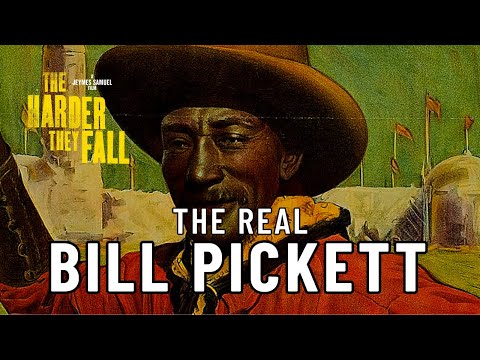
Long before steer wrestling became one of rodeo’s signature events, it was simply a Black cowboy from Texas doing something no one had ever seen before. Bill Pickett was born in 1870 in Travis County, the son of a formerly enslaved man, and he grew up working ranch land, learning to ride and rope before most boys his age had left school. He only made it through the fifth grade himself, but what he lacked in formal education he more than made up for in raw, revolutionary talent.
Pickett’s signature move, “bulldogging,” was inspired by watching herding dogs subdue cattle by biting their upper lips. He taught himself to leap from a galloping horse, wrestle a steer to the ground, and bite down on its lip to complete the submission. The move was equal parts shocking and electrifying, and it launched him into Wild West shows across the United States, Canada, Mexico, South America, and England, where he performed under the billing of “The Dusky Demon.”
His bulldogging technique evolved into the steer wrestling event that thrills RodeoHouston crowds to this day. In 1972, nearly 40 years after his death, he became the first Black cowboy inducted into the National Rodeo Hall of Fame.
Myrtis Dightman Sr.
Professional Bull Rider | ‘The Jackie Robinson of Rodeo’ | First Black Cowboy to Compete in the National Finals Rodeo

Raised in Crockett, Texas, Dightman became one of the most celebrated bull riders of his era and a significant figure in the history of American rodeo. In the 1960s, he became the first Black cowboy ever to qualify for and compete in the National Finals Rodeo, the sport’s highest competitive stage. The achievement earned him the title that has followed his legacy ever since: “The Jackie Robinson of Rodeo.”
His path was not paved with welcome mats. Like many Black competitors of his generation, Dightman faced open hostility and systemic exclusion at mainstream rodeo events. He endured the indignities that came with competing in a world that didn’t want him there, and he competed anyway, brilliantly. His performances proved beyond any reasonable doubt that Black cowboys belonged not just at the margins of professional rodeo, but at its very pinnacle.
In 1957, he and co-founder James Francis launched the Prairie View Trail Riders Association, the first Black trail-riding group to join the Go Texan Day Parade in Houston for RodeoHouston, doing so under armed guard protection because the city was not yet ready to welcome them. He was later inducted into the Pro Rodeo Hall of Fame. His story is one of courage, excellence, and persistence in the face of forces that would have broken lesser people.
Myrtis Dightman Jr.
Trail Boss | Prairie View Trail Riders Association | Keeper of Black Cowboy Tradition

Myrtis Dightman Jr. understood that before he could fully articulate it. Raised on a farm in Crockett, Texas, and placed on a horse by his father before he could walk, Dightman Jr. grew up watching his dad become a rodeo legend.
He absorbed not just the skills of horsemanship, but the deeper mission: keeping the tradition of the Black cowboy alive and visible for generations to come. Today, Dightman Jr. serves as Trail Boss of the Prairie View Trail Riders Association, the organization his father co-founded in 1957. Each February, he leads hundreds of Black cowboys and cowgirls on a week-long ride toward Houston, camping along the way, hosting cookoffs and parades, and ultimately riding into the city, past more than a million cheering spectators, to kick off RodeoHouston’s Go Texan Day. The association has won the prestigious Outstanding Trail Ride honor at the Houston Livestock Show and Rodeo, a remarkable achievement for the oldest Black trail-ride association in Texas.
Howard Middleton Sr.
Agricultural Leader | Co-Founder, Houston Livestock Rodeo Black Heritage Committee

The Houston Livestock Show and Rodeo is one of the largest scholarship-producing organizations in the United States, having awarded hundreds of millions of dollars to Texas students. And the committee that has helped ensure Black communities are part of that generational investment traces directly back to one man’s determination not to let his community be left out. Middleton was a Houston-area agricultural leader who recognized early on that Black Houstonians had insufficient visibility and inclusion within the Houston Livestock Show and Rodeo, one of the city’s most powerful civic and economic institutions.
Concerned that the African American community was not receiving the exposure and recognition it deserved, Middleton worked alongside fellow community leaders and eventually with allies, including Congresswoman Sheila Jackson Lee, to establish the Black Heritage Committee, which was formally organized in the early 1990s. The committee became the institutional home for Black Heritage Day at RodeoHouston, an annual celebration that now draws thousands of students, features performances by HBCU marching bands, Greek organizations, choirs, and nationally known artists, and anchors a yearlong commitment to scholarships, mentorship, and agricultural education.
Verna Lee “Boots” Hightower
Barrel Racer | First Black Woman to Compete at the Houston Livestock Show and Rodeo | Civil Rights Pioneer
Verna Lee Booker developed such a fierce love of horses and the outdoors as a girl that people started calling her “Boots” and the name never left her. After her parents divorced, her mother moved the family to Houston, where Boots would eventually build a life, a family, and a legacy that changed the face of rodeo forever. After getting married, Boots threw herself into training and competing with total dedication, riding the barrels morning and night, gaining a reputation as a fearless competitor who never slowed down as she approached the turn.
She honed her craft at the Diamond L Ranch, a South Main rodeo arena built by Black cowboy J.L. Sweeney that served as a gathering place for Black cowboys and cowgirls from across the country. It was there that Houston’s Black rodeo community forged its identity, and where Boots first gained wide recognition for her extraordinary talent.
In 1969, Boots made history as the first African American woman to compete in barrel racing at the Houston Livestock Show and Rodeo, held that year at the Astrodome. She and her son Gerald also competed in Western Pleasure and the American Quarter Horse Cutting Contest, making their family the first African Americans listed as “trainers” and “owners” of livestock at the HLSR. She went on to compete again in 1970. In 2007, she was inducted into the National Multicultural Western Heritage Museum’s Hall of Fame.
