Though it’s already late July, and this year is zooming by like nobody’s business, we still have plenty of summer left – hello, Black August!
Plenty of time to go to Galveston Beach, regardless of Charles Barkley’s diss. Plenty of time for a jaunt to some foreign city (or U.S. city foreign to you). From Houston, New Orleans is always doable. And don’t forget about a nice in-state trip or even a staycation.
And if those travel options don’t move you, you can also…
- Dissect “Not Like Us” some more
- Do what Biggie says, and “Party and Bullsht and Party and Bullsht
- Sit around waiting for some cooler fall weather
- Work the J-O-B because we stopped having summer breaks when we entered the world of “adulting.”
Here’s another option: let’s make this the Blackest summer ever.
Freedom Summer of ‘64
In 1964, the Student Nonviolent Coordinating Committee (SNCC) launched its Freedom Summer project designed to draw the nation’s attention to the violent oppression experienced by Blacks in Mississippi who attempted to exercise their constitutional rights. The project also worked to develop a grassroots freedom movement that could be sustained after student activists left Mississippi.
Civil Rights Movement legend and SNCC activist Robert Moses launched a voter registration drive in Mississippi in 1961 and in the summer of 1963 called for northern student volunteers to take part in a large number of simultaneous local campaigns in Mississippi during the summer of 1964.
Many from Mississippi and northern states answered the call. Some were murdered by white domestic terrorists, including James Chaney, a Black Mississippian, and two northerners, Michael Schwerner and Andrew Goodman.
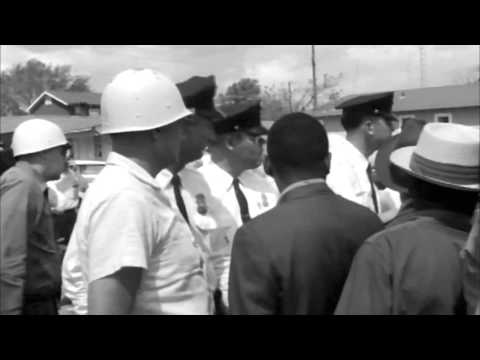
Later that summer, the Mississippi Freedom Democratic Party (MFDP) challenged the all-white Democratic delegation at that summer’s Democratic National Convention in Atlantic City, New Jersey. Additionally, SNCC ran 41 Freedom Schools, a movement designed to address Mississippi’s separate and unequal public education system. That effort impacted more than 3,000 young Black students throughout the state who took classes in math, reading, and other traditional courses, along with sessions on Black history, the philosophy of the civil rights movement, and leadership skills to continue the movement once the summer volunteers departed.
These and many more happenings went down in 1964. The point: Black people faced serious political, social, economic, educational, etc. challenges, and we organized to do something about them. Then, we acted upon those organizing ideas.
Summer of 2024 and Beyond
It’s safe to say that right now in 2024, we face an abundance of challenges; issues that call for the same level of commitment to strategizing, organizing, and acting in ways that provide solutions to problems.
We are at a pivotal point in a polarized country. We must retrace our steps to build upon the foundations of justice left by previous generations.
Bishop Vashti McKenzie, NCC President and General Secretary
In St. Louis, individuals and organizations are using this summer, the 60th anniversary of Freedom Summer 1964 and the 10th anniversary of the murder of Michael Brown Jr., to engage in political and voter rights education and advocacy.
Beyond St. Louis, the National Council of Churches (NCC) is equipping its members and partners to embrace modern technology and use it to inspire a new wave of social justice activism similar to that experienced 60 years ago.
“In 1964, NCC, with a deep sense of urgency, immersed itself into the troubled waters of racial injustice in Mississippi to engage in direct action in the struggle of African Americans for racial justice,” NCC President and General Secretary Bishop Vashti McKenzie said in a statement.

“There was a belief that it was going to be a decisive moment in American history. As it was then, so it is now. We are at a pivotal point in a polarized country. We must retrace our steps to build upon the foundations of justice left by previous generations.”
Rev. Dorothy S. Boulware, the Religion reporter for Word In Black, shared in a recent article that the NCC’s Freedom Academy is a key part of this effort designed to train and mobilize faith leaders to inspire and guide their communities to become socially active people of faith – and action.
The NCC’s Freedom Academy is also utilizing a Sunday school-style Bible study curriculum to “provide theological grounding” for this call to social action. That effort, as reported by Boulware, was led by Rev. Stephen A. Green, pastor of the Greater Allen A.M.E. Cathedral of New York.
“On the 60th Anniversary of Freedom Summer, I am honored to lead the Freedom Academy for the National Council of Churches,” shared Green. “This milestone reminds us of the enduring legacy of those who fought tirelessly for civil rights and social justice. As we reflect on their sacrifices and achievements, we are inspired to continue their work with renewed vigor and dedication. Our mission is to educate and empower leaders who are committed to advancing social change and justice in our communities… to equip a new generation of advocates with the knowledge and tools necessary to drive meaningful progress.”
“The Freedom Summer of 1964 led to the passage of the Voting Rights Act of 1965 making it possible for thousands of disenfranchised to vote,” said Bishop Elizabeth A. Eaton, chair of NCC’s Governing Board. “In 2013, the Supreme Court gutted the Voting Rights Act enabling new restrictions to the constitutional right to vote. The Freedom Summer of 1964 turned deadly. The Freedom Summer of 2024 is still a matter of life and death. We dare not stand idle — too much is at stake.”
Reasons to make this the Blackest summer
With a presidential election fast approaching in November that pits one candidate and an entire political party (Trump and the GOP) against any who stand for criminal justice reform, healthcare access, equitable educational funding, environmental justice, women’s rights, voting rights, equal protection under the law, gun reform, religious freedoms, labor rights and humanity in general, making this the Blackest summer ever is not really an option – it’s an imperative.
Here are just some of the ways to use this summer, and the fall too, to have the Blackest impact possible on the nation’s and world’s current state of affairs.
Fight to educate our own
Fight to make local ISD accountable to area citizens, but don’t rely solely on what’s being taught in schools to educate our children. This is still America, and U.S. institutions have never in history had the interests of Black people at heart. Educating our children is on us.
We deserve some Black joy
The struggle for our human rights and empowerment is not a struggle for struggle’s sake. The work we put in to bring solutions to problems is so that we and our children and elders can enjoy this one life we have to live. We deserve Black joy. Our existence as a people is not defined by trauma, though it often feels that way. We were full, free, and empowered humans long before there was even a thing called Western “civilization” or the people who claim it. Working for a better Black reality is working for our right to liberation, power, freedom, joy and full humanity outside the restrictive definitions of actors responding to the traumas laid upon us by oppressive forces.
Put in work for future generations
The work we do today lays the foundation for the world we and our children and our children’s children live in tomorrow. The work we fail to do, the challenges we refuse to address, and the problems we turn our back on today, will all remain and grow and create an untenable reality for our future.
Find an organization or a movement working towards realities and focusing on issues important to you, and get busy.
Local control, “nation within a nation,” starts now
Think globally, act locally is an old saying, but it carries a lot of weight. Whether you’re weighed down by international issues or national challenges, the best way to impact them is by making a change in your own neck of the woods. There are plenty of opportunities to do so. Find the one or ones that jibe best with your spirit, and get to work.
Democracy’s last hoorah
History is replete with examples of people who never imagined in their wildest dreams that the rights and privileges of citizenship they enjoyed would or could ever be stripped away… yet, they were. Our challenge as Blackfolk in 2024 is, we are those people today. Very few Blacks think it’s possible we could lose our right to vote, have our land, homes, and businesses seized, or worse. But each of those things have happened to whole races (and to our own people) within the past century. So, it’s not like these things can’t happen. They already have. And there is an entire white nationalist movement seeking to do them again.
Using our Black genius, grit, creativity, and spiritual fire, including connecting with that wellspring of knowledge held by earth and our ancestors, we can create the kind of future we need and deserve. But a much-needed “start” has to take place right now.