


Traditionally, Black History Month in the U.S. offers K-12 students and others a surface-level, cliff notes edition of the lives of a handful of people. The full impact of Black people in America is generally ignored, with only contributions of a select few, usually between the 1920s and 1960s, making the cut.
However, there is no world history without Black History; more specifically, Pan-African history, a history that includes Black people from ancient Africa and their members of the global Pan-African diaspora.
Scholars like Dr. John Henrick Clarke, Dr. Asa Hilliard, Dr. Cheikh Anta Diop, Dr. Ivan Van Sertima and countless others have shown that assertion to be true through their scholarship.
So, as badly as the contributions of Black people in America need to be extended far beyond the usual parameters, the focus must go international to do Black History Month justice. And it must extend beyond Black people’s arrival on these shores.
To that end, the Defender gathered critical pieces of Black History – African proverbs – that have been used for eons to order the steps of members of the Pan-African global community.
The goal: To see if and how such ancient wisdom sayings speak to the needs and issues Black people are facing in 2025. In other words, can these elements of Black History impact the quality of Black life today?
Here’s what those interviewed shared by way of African proverbs and their contemporary relevance.
“A lion does not stop for barking dogs—it knows its strength.”

Local activist and member of the National Black United Front (NBUF) Krista Folade Madzimoyo contends this proverb contains a powerful lesson for Black people in 2025.
“With Trump back in office, racism and oppression are louder than ever,” said Madzimoyo. “But we must not be distracted by fear and division.”
Madzimoyo views this wisdom saying as a call to action to silence much of the politically divisive and anti-Black noise coming from the nation’s capital.
“Now is the time for unity and action. Instead of reacting to every attack, we must build real power—economic independence, community defense and cultural and political strength. The barking will continue, but lions do not answer to noise. Lions move forward and take what is theirs,” added Madzimoyo.
“No matter how beautifully the chicken dances, it never pleases the hawk.”

Dr. Earle Fisher, pastor of Abyssinian Baptist Church (Memphis), is nationally known for his progressive political activism and use of African proverbs, including the one listed above.
He sees a direct correlation between the animals of the proverb and Black people today.
“So many Black folks feel they need to pander to the oppressor in order to progress,” Fisher told the Defender. “But they fail to realize nothing we do will suffice for them to see us as worthy of full humanity.”
“The child who is not embraced by the village will burn it down to feel its warmth”
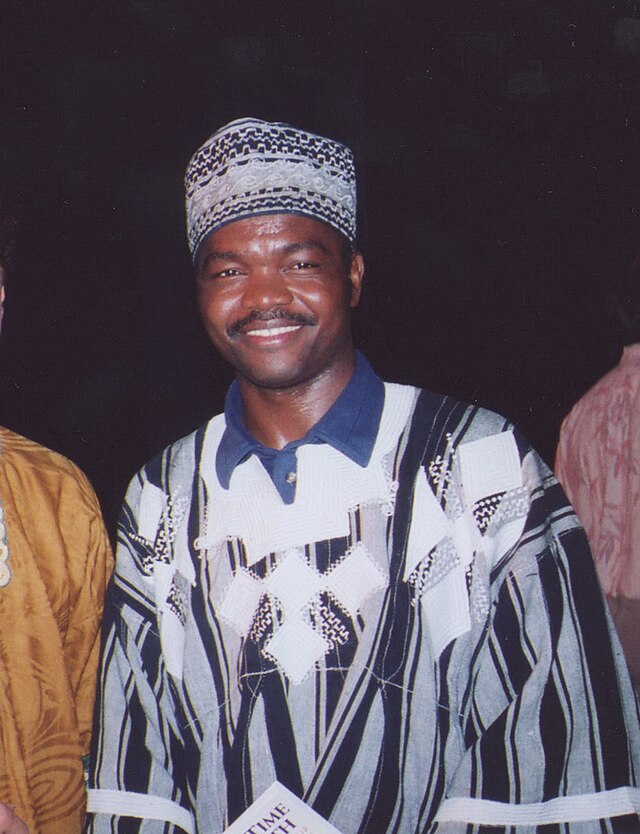
Noted West African Elder, griot and author, Malidoma Somé Ph.D., shared these words about the importance of community: “Without community, you cannot be yourself. The community is where we draw the strength needed to effect changes inside of us. What one acknowledges in the formation of the community is the possibility of doing together what is impossible to do alone.”
Somé mentions this point in several of his best-selling books, including “The Healing Wisdom of Africa” and “Ritual.” He makes the connection between much of the brokenness found in Black life, and especially with Black youth, to the absence of community (the village).
Though Somé passed away in 2021, his interpretation of the village burning serves as a reminder to Black people about the work required today and into the future.
“A roaring lion kills no game.”
Christopher Whaley, DJ and host of “The Soul Brother Show,” contends this African proverb best describes how we should move through these challenging socio-political times. Whaley’s explanation of this proverb’s current relevance also serves as a call-out to not be impressed or intimidated by loud, over-the-top political directives and executive orders.
“Success isn’t found in noise or spectacle, rather it’s built in the quiet, through steady, intentional effort,” shared Whaley.
