


Adrian Garcia’s story begins in Houston’s Northside, where he grew up as the youngest child of Mexican immigrants. He never imagined that he would someday represent over a million people as Harris County Commissioner for Precinct 2.
Garcia attended public school but did not speak English. He recalled spending his youth in his father’s Lindale Park auto repair shop, watching him lend a hand to those in need. This upbringing still informs how he approaches equity in governance today.

From serving 23 years with the Houston Police Department to becoming the first Latino sheriff in Harris County, his career was shaped by struggle and service alike. In 2003, Garcia was elected to the Houston City Council, where he chaired committees on Public Safety and Minority/Women Business Enterprise.
Today, as commissioner, he carries lessons from his upbringing, decades in law enforcement and community roots into his leadership of one of Texas’ most diverse precincts.
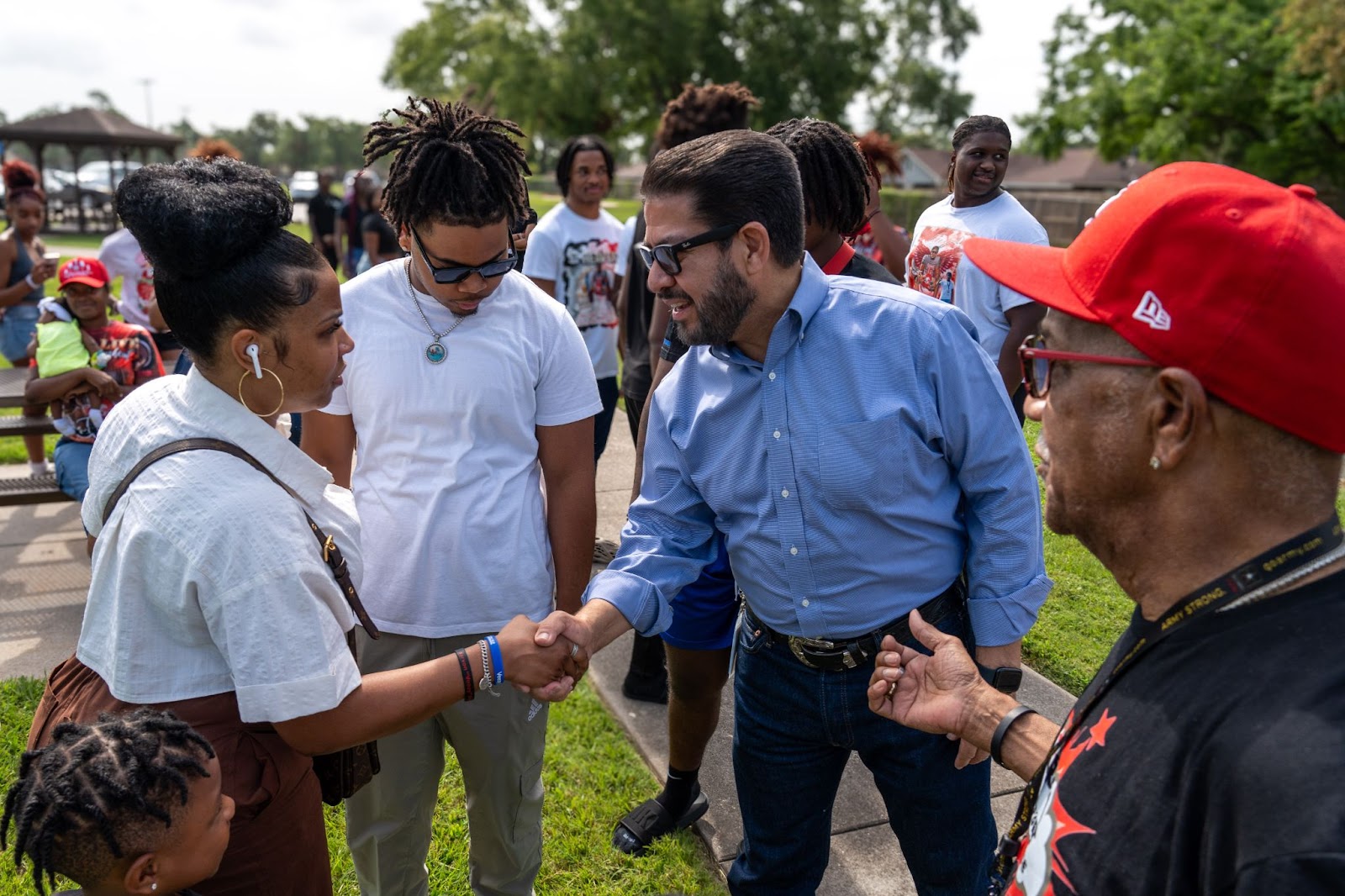
“It comes from being in the front seat of a patrol car, because as a young police officer, I would drive into neighborhoods that have been neglected,” Garcia told the Defender. “You could look around and see that at one time these neighborhoods were thriving, but were then somewhat abandoned, possibly by city government.”
Reforms
As the Harris County Sheriff, Garcia tackled chronic jail overcrowding, implemented efficiencies that saved over $200 million and added 200 officers.
Though an unsuccessful mayoral run in 2015 paused his political trajectory, he returned to public office as a county commissioner in 2018, serving a Latino-majority precinct demographic.


One of his hallmark achievements is in parks and green spaces. In 2021, Garcia’s team transformed James Driver Park in East Aldine into an inclusive park for children with disabilities.
He also launched Revive to Thrive, a $50 million neighborhood revitalization program aimed at restoring long-neglected areas without displacing longtime residents. He describes it as an anti-gentrification strategy to protect communities rather than price them out.
“I demonstrate to them that government does work for everybody, not just the affluent,” Garcia explained.
He also secured about half a billion dollars for critical neighborhood drainage projects and oversaw cleaning 1.2 million feet of roadside ditches to reduce neighborhood flooding. Coupling infrastructure fixes with park improvements and community beautification, Garcia’s approach is rooted in not forgetting where he comes from.
As Texas braces for cuts to FEMA funding, Garcia has been outspoken about the risks for local governments. He co-chairs the National Association of Counties’ Intergovernmental Disaster Reform Task Force, advocating for more reliable federal support.
“That [FEMA cuts] is frightening because we’ve already seen that this governor wants to work against local government, strictly because of politics,” he said. “I am very concerned that Harris County may be punished for being a contemporary county. I will continue to do the things that will help my community be resilient with the resources that I have against weather events.”
Focusing “aggressively” on health, affordable housing, education and economic opportunity in Precinct 2’s underserved areas is also high on Garcia’s priority list. During his first Commissioners Court meeting, he motioned to boost funding for the Harris County Hospital District by $5 million, addressing years of neglect in healthcare funding.
Under his leadership, Precinct 2 provided more than 3,600 health services and screenings at its Access2Health SmartPods and advocated for Medicaid expansion to cover uninsured Texans.
Garcia’s precinct now also offers free SAT and ACT prep classes to help more local students get into college.


He approved Harris County’s first-ever Office of Economic Opportunity to foster a “competitive and diverse environment” in county contracting for women and minority-owned small businesses and launched Biz2Empower accelerator program to teach small business owners how to bid for government contracts and scale up their companies.
Balancing budgets
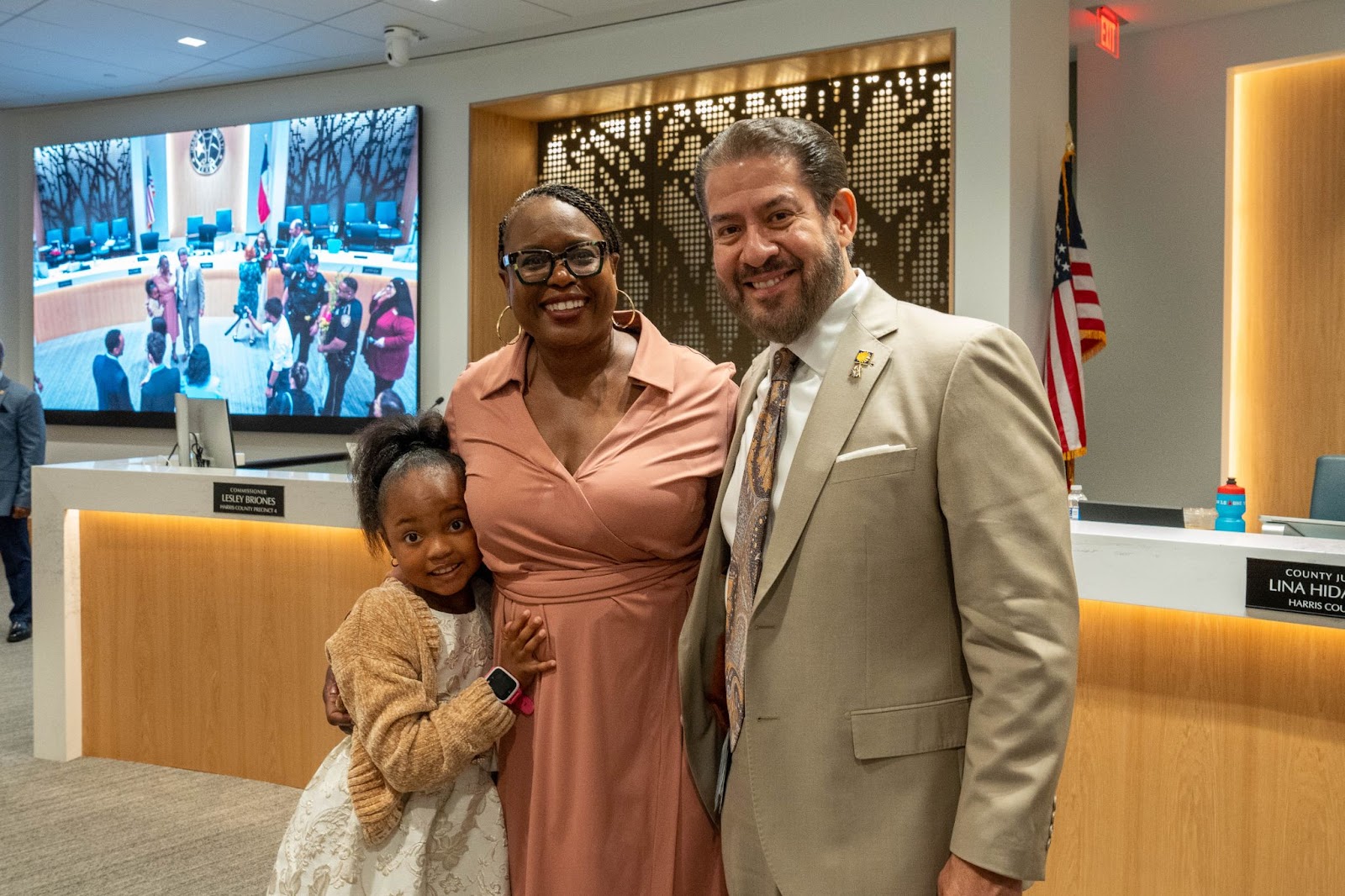
While keeping a close eye on fiscal responsibility amid Harris County’s budget shortfall and political battles over taxes in recent years, Garcia says matching spending with revenue is crucial.
As a former sheriff, he has been adamant about the county’s support for law enforcement without wasteful spending. Following a heated debate, the Commissioners Court recently approved a motion to increase wages for deputies ($140 million) by 2026.
“Some may look at it strictly in terms of the money that’s being invested, but rather, I’m the only person on the court who has been a police officer on the streets,” Garcia said. “When the city went through a critical economic downturn, I saw the crime rate explode. I saw the homicide rate reach its highest in history. I know what can happen if we do not invest in public safety.”
Looking ahead: vision for Harris County’s future
After decades of service, Garcia’s thoughts on his legacy hinge on being remembered as a public servant who, like his father, always gave back and never forgot his roots.
“I want to be known as someone who recognized the challenges in every neighborhood across the precinct, not leaving anyone behind, working hard to solve complicated problems,” he said. “I want to be known as a commissioner who looked at the entire picture of what his precinct needs.”
