Landy Watley’s career felt secure right up until it wasn’t.
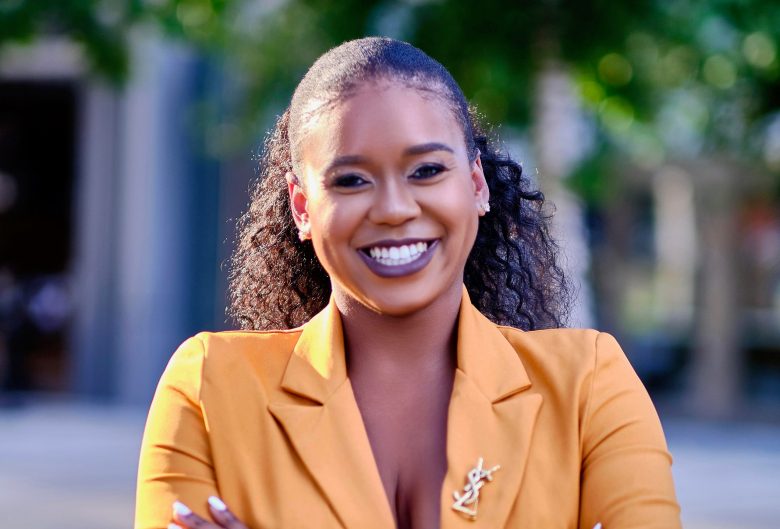
She held a doctorate and worked at the National Endowment for the Humanities, helping design programs that expanded access to federal grants for historically Black colleges and universities and Hispanic-serving institutions. She had joined the agency in 2021, after first interning there in graduate school.
The job blended public service with scholarship. It was exactly what she wanted.
Watley had braced for change after the 2024 Presidential election, expecting her office to be dissolved.
Instead, in April 2025, the reduction-in-force notices arrived. Managers with decades of tenure were let go alongside newer staff, with little distinction made between them.
“I am outraged about that because you feel like you do everything they tell you to do,” she said. “You try to follow the right path…and you’re blindsided. What I see happening around me, the attacks on institutions, the attacks to change, erase, and alter history from what it was…if we can’t face what we were, there’s no way to improve who we are and who we’re going to be.”
By the numbers
Watley is not alone.
Roughly 300,000 Black women lost jobs between February and July of 2025 under the Trump administration, the largest share of any minority group affected, according to economist Katica Roy, who found that white women, Latina women, and white men gained 365,000 jobs in the same period.
The number rose to 600,000 during the fall of 2025.

To put the impact into context, Dr. Jamila K. Taylor, president and CEO of the Institute for Women’s Policy Research, said that the layoff of Black women puts “entire communities” at risk and reflects policy choices that undervalue the labor of Black women.
“The numbers don’t lie. In addition to navigating systemic and structural barriers on the road to economic security, Black women are being forced to endure the consequences of an administration that willfully ignores the benefits of a knowledgeable and diverse workforce,” Taylor said. “We know that Black women are often the primary breadwinners for their families. So, when we are disproportionately pushed out of the workforce, the stability of entire communities is at stake.”

Federal work has long been a dependable route into the middle class for Black women, offering pay scales and protections rarer in the private sector.
When the Department of Government Efficiency, or DOGE, led by Elon Musk, pushed sweeping cuts across agencies and contractors, Black women accounted for more than half of all female job losses tied to the cuts, despite being only 14% of the female workforce.
DOGE estimates stated that its operations saved taxpayers $110 billion, but an Aug. 6 report from the Government Accountability Office (GAO) deemed them to be unsupported claims.
More than a year later, Watley is still searching for full-time work.
Doubting her own application materials, she had recruiters review them. They pointed instead to broader economic headwinds. In the meantime, she has pieced together an income through adjunct teaching at Howard University and the University of Houston, and is developing an English curriculum for a summer program. Her salary at NEH was $110,000. Now she brings in about $45,000, less than half of what she used to make.
The damage extends beyond her paycheck. Watley has drained much of her savings, pulled roughly $15,000 from retirement, and lost her employer-sponsored health insurance. She applied for SNAP benefits and was denied after months of paperwork and phone calls. She considered selling her car but held off.
“It’s like the system has not only fired me, but the system is consistently and perpetually working against me,” Watley said.
Still, she’s refused to let unemployment define her.
In June, she launched For the Record, Where Culture Speaks, a storytelling and civic-engagement venture; one of its early projects, “Baldwin and Bourbon,” pairs literature with public dialogue.
“I’m going to keep applying,” she said. “I hope that it changes. It has to change.”
A mother without an apartment
Watley’s experience is part of a much larger pattern.

Erinn Rochelle, a Houston-area fraud and AML specialist with more than two decades in compliance, learned she had been terminated the same way, alerted by a locked system and a three-sentence email thanking her for her “hard work and dedication.”
Her position had been tied to a Treasury Department fraud operations contract that ended abruptly around the same time that DOGE pursued government-wide cost-cutting efforts, including within the Treasury Department. As a contractor, she was not eligible for the severance protections offered to full-time employees.
“I lost everything. I lost my home. I lost my car,” Rochelle said. “I was in shock because I went from $50 an hour to zero overnight. That’s a significant blow to anyone. Because we were contractors, we weren’t entitled to the federal payout that they were offering federal employees. They didn’t give any reprieve, not even so much as a ‘sorry this happened.’ It was absolutely disgusting how they treated us.”
Since losing her job, Rochelle has relied on part-time delivery gig work to make ends meet. But it was not enough to pay for rent.
Facing eviction, she relied on a friend to help finance a move to a cheaper apartment. Her daughter left private school. For a moment, she thought her son might not return to South Carolina State University this fall due to failure to pay tuition. But his professors made it possible for him to receive a scholarship and return to his classes.
After nearly 1,800 job applications, Rochelle, who holds a legal degree along with her fraud examiner credentials, landed a job, paying $20 an hour. A recruiter responded to Rochelle’s plea on LinkedIn.

“Black people are educated,” Rochelle said. “We spent the last 50 years educating ourselves because we were told that in order for us to advance in the system, we needed to have an education and prove ourselves. We have to do twice as much to get half of what they have.”
Losing her job led Rochelle down a “very dark tunnel” during which she was suicidal.
Neither Rochelle nor Watley expected careers built on years of education and public service to unravel this quickly. Both say the experience has permanently changed how they think about work.
But they ask Black women who are on the same boat as them to keep their hopes alive.
“Please know that you are not alone, that you did not do anything wrong,” Rochelle advised. “That was one of the hardest things that I had to do…get over my own self-doubt and anger at myself because I felt like a failure. And you’re not a failure, my sister. You just happen to be a beautiful Black woman, and they’re terrified of that.”