


Where can Houstonians go to learn about Black history is a relevant and pressing question. This is especially true when realizing that the teaching of Black history is under attack in Texas and across the United States.
Texas has enacted laws and policies designed to restrict how racism and Black history are taught in schools, including efforts aimed at banning so-called “critical race theory” and limiting discussions of slavery and systemic racism.
At the federal level, similar moves have included reduced funding for schools inaccurately accused of teaching CRT (a subject only taught in a minority of law schools), banning books by Black authors, and removing or editing historical displays at institutions such as the Smithsonian National Museum of African American History and Culture, national parks, and military cemeteries.
Yet long before Black history was formally included in K-12 or college curricula, it was being recorded, shared, and taught by communities determined to preserve “our story.” Our ancestors made a way.
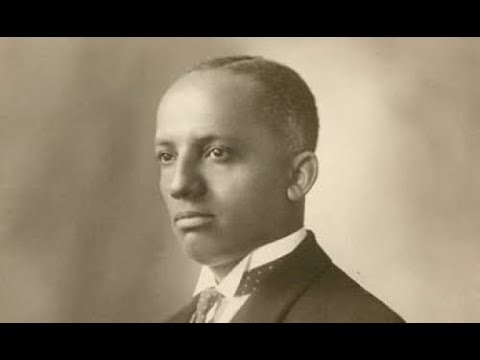
This year marks the 100th anniversary of Black History Month (originally Negro History Week), founded by Carter G. Woodson in 1926, and the 50th anniversary of President Gerald Ford’s formal national recognition of Black History Month in 1976. Even before that, formally and self-trained Black scholars were documenting Pan-African struggles during eras marked by lynchings and sharecropping.
Today, many Houstonians refuse to let present-day challenges stop them from learning, teaching, and honoring Black history. Across the city, there are multiple spaces—formal and informal—where Black history is alive and accessible.
Museums and art exhibits

Houston-based artist Reginald Adams teaches Black history through murals and artistic renderings that have gained international attention. One of his most notable works is the Juneteenth mural, Absolute Equality, in Galveston.
Reflecting on its meaning, Adams said, “For enslaved Blacks in Texas, you couldn’t have told them that at some point they would be on the side of a wall… It told me we have come a long way since 1865, and yet we have so much more work to be done because of the social and racial inequities that are a direct result of institutional slavery.”

Museums also provide powerful entry points. Veteran Donald Sparks recalls discovering the Buffalo Soldiers National Museum in its original location in the Third Ward in 1991.
“I’d been in the Army three years but never knew the legacy and history of Black troops,” Sparks said. “This museum opened my eyes, and I steadfastly learned more about our history in defending this nation.”
Stacey Allen is all about celebrating Black history through the arts.
“Dance and music have always been ancestral forms of communication for Black communities,” said Allen, founder of Nia’s Daughters Movement Collective. “We create opportunities for audiences across the Gulf Coast to learn Black history by centering Texas Freedom Colonies, performance, education, and my children’s book D is for Dance: Dancing Through the Diaspora as critical interventions against erasure.”

This year, Allen’s organization is preparing for the 2nd Annual Official Juneteenth Return, a pilgrimage to Galveston rooted in land, memory, and liberation. Allen also choreographed Suite Ms. Jewel for Houston Contemporary Dance, honoring the life and music of Houston legend Jewel Brown.
“And I’m bringing Houston’s Black history to a national stage at the International Association of Blacks in Dance conference in Atlanta (Feb. 4 – 8),” she added.
Naomi Carrier founded the Emancipation Historic Trail Association for teaching purposes.
“People love the way we re-enact stories in costume, with music,” said Carrier. “We re-live the Underground Railroad, a wedding, or a Pullman Porter.

“We also prefer action to lecture, but we do both.”
Community centers
SHAPE Community Center has earned the nickname “the United Nations of the Hood” for its wide-ranging programming that serves youth, parents, elders, and activists. The center spotlights Black history year-round, not just during February.
“The first thing we’re doing is living progressively and positively to move forward in our struggle for liberation,” said SHAPE executive director and co-founder Deloyd Parker. “But we cannot do that unless we understand that a people without the knowledge of their past history… is like a tree without roots.”
Through after-school programs and weekly elder gatherings, SHAPE creates intergenerational learning spaces.
“The elders are helping the children to understand it,” Parker said. “And the children are grasping it.”
The Freedom Tour

One of SHAPE’s most impactful efforts is its long-running Freedom Tour. For more than 30 years, the center has taken youth on a journey retracing the Civil Rights Movement across the South. Participants travel from Houston to cities such as Jackson, Montgomery, and Selma, walking across the Edmund Pettus Bridge where Bloody Sunday took place.
“We don’t just march across the bridge,” Parker explained. “We tell our children about what happened… They were able to march in the footsteps of those who came before them.”
Festivals

Festivals also play a key role in teaching Black history. Juneteenth celebrations—from Emancipation Park to neighborhood parades—are filled with learning moments.
“My family participates in those every year,” said retired educator Sylvia Bradshaw.
Bradshaw, who also attends MLK Day events, believes there is room for deeper education.
“There is little educating going on about Dr. King beyond his ‘I Have a Dream’ speech,” she said. “But there was so much more to him than that.”
SHAPE’s annual Pan-African Cultural Festival intentionally broadens the lens.
“Our history didn’t start here in Babylon, I mean, America,” Parker said. “Our history started in the motherland.”
Classes and field trips

For those seeking structured learning, community-based classes and field trips offer valuable options. Karen Hickman recommends history discussions at the Shrine of the Black Madonna Cultural Center. National director Nailah Nelson noted that the Shrine hosts Enter the Black Whole every first and third Saturday, a class examining Black history and current global realities affecting Black people.

Field trips also leave lasting impressions.
Janey Udoewah Brown recalled visiting the Eldorado Ballroom through the Houston Black Leadership Institute.
“It showcased the sophistication and success of the Black community during segregation,” she said.
For some, history began at home.

“My father was into Black history and our roots,” said Vannessa Wade. “I learned so much at home.”
Personal stories
One often underappreciated way to learn Black history is through personal stories. At SHAPE’s Elders Institute of Wisdom, elders—some over 100 years old—share firsthand accounts.
“They talk about their history, their past, what happened to them,” Parker said, emphasizing that these stories come directly from those who lived them.
Black bookstores

Black-owned bookstores, too, remain essential learning hubs.
“Black history is American history. Black history is world history. Before there was a ‘when’ and a ‘where’, Black people were here,” shared David Landry, co-owner of CLASS Bookstore. “What better way to get it than in a bookstore?”
