The Texas Veterans Network, powered by Combined Arms, is expanding its food assistance efforts with a new monthly distribution site in Fort Bend County, aiming to address persistent food insecurity among veterans and active-duty service members in the Houston region.
The free distribution is held on the second Monday of every month at Parkway Fellowship in Richmond, through a partnership with CHRISTUS Health US Family Health Plan, the Michael E. DeBakey VA Medical Center, Family Hope, Parkway Fellowship, and MAD for Vets.
Organization leaders say the need extends beyond VA patients, with outreach identifying increasing demand among active-duty service members and military families.
“These are not one-time events. They are recurring touchpoints,” said Mia Garcia, TVN executive director and U.S. Marine Corps veteran. “Every distribution, every VetConnect, is a place where a veteran can walk in with a need and walk out with a next step. That continuity matters. It builds trust, and trust is what makes the broader network work.”
By the numbers
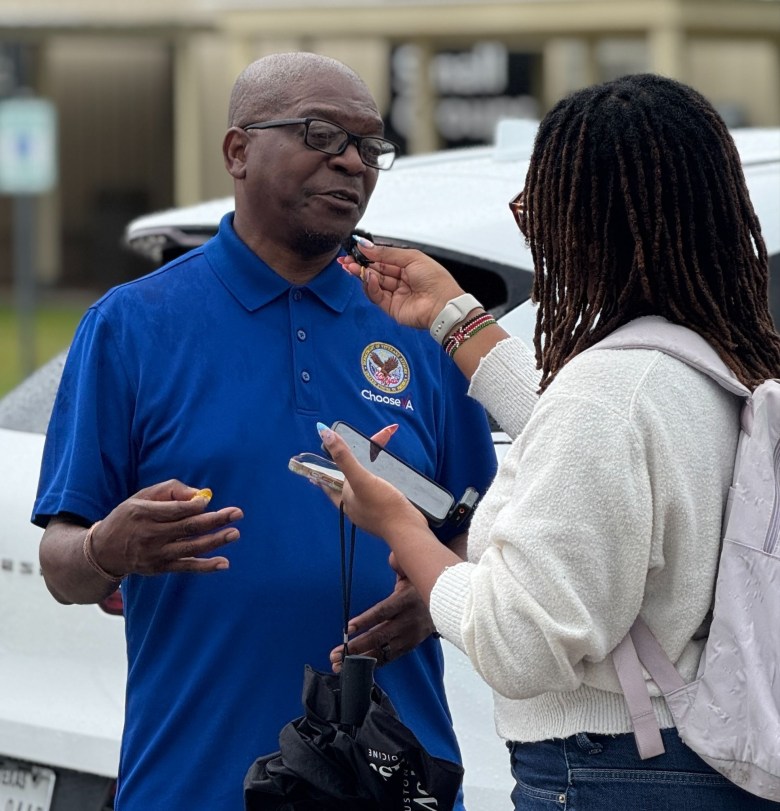
Nationwide, for Black veterans, the end of military service marks the beginning of hardships. Over 227,500 Black veterans in Texas, including thousands in Houston, continue to face psychological and economic challenges.
Housing instability remains an urgent issue. Black veterans account for over one-third of homeless former service members, while representing only 13% of the total veteran population.
They face economic barriers and mental health conditions, particularly post-traumatic stress disorder (PTSD) and depression.
Nationally, veterans entering VA homeless programs remain disproportionately older and male. According to the U.S. Department of Veterans Affairs, 11% of working-age veterans lived in food-insecure households from 2015-2019.
Veterans are also more likely to experience food insecurity than non-Veterans, which may contribute to increased rates of depression and suicidal ideation. Approximately 55,000 South Texas veterans are food insecure. Additionally, more than 30,000 U.S. military veterans are homeless, per the latest government “point in time count” data. The number has gone down thanks to housing-first policies.
What will the food distribution program do?
The Fort Bend program is expected to serve about 100 military-connected families and individuals each month in an area that organizers say has limited access to food banks.
Since 2015, Combined Arms has connected more than 100,000 individuals, including thousands in Galveston and Montgomery counties.
The expansion builds on a statewide effort that has accelerated this year. Combined Arms said its Military Connected Community food distributions have served more than 10,000 people across Texas in 2026, including thousands in Galveston and Montgomery Counties, at the Houston headquarters, at the Ellington Joint Reserve Base, and in Midtown and East Houston.
“Every distribution, every VetConnect, is a place where a veteran can walk in with a need and walk out with a next step.”
Mia Garcia, TVN executive director and U.S. Marine Corps veteran
The need for those services remains significant in Harris County, home to more than 150,000 veterans, according to the U.S. Census Bureau. While comprehensive county-level data on veterans receiving SNAP benefits are not publicly available, several indicators point to ongoing economic hardship among local veterans.
Houston-area homelessness providers counted 3,325 people experiencing homelessness across Harris, Fort Bend, and Montgomery counties during the 2025 Point-in-Time Count, while the Houston VA reported permanently housing 985 homeless veterans during fiscal year 2025 through the Michael E. DeBakey VA Medical Center.
Veterans, service members, and military families can register for the Fort Bend food distribution through Combined Arms before attending. Organizers say participants will also be screened for additional services, including employment assistance, VA benefits enrollment, housing resources, and mental health support, with the goal of connecting families to longer-term stability beyond emergency food assistance.