For decades, the voices of college students have served as the moral compass of the nation.
Because college students have traditionally believed that a world without injustice was both preferable and possible, they have taken on countless causes over the years. Issues of social justice, human rights, environmental racism, and global conflicts have been rallying points for young adults past and present.

The Civil Rights, Black Power, Anti-War, Free Speech, and women’s rights movements all gained national and international traction because students refused to remain silent. And those are just examples from the 1960s and 70s.
So, what happens to social justice, equity, and democracy itself if student voices are limited or even silenced? This is no longer theoretical. Across the country, local, state, and federal decisions are constraining the very demographic that has been one of the most consistent sources of civic energy in modern American history.
Student freedoms under pressure
According to the ACLU and other observers, students today face mounting restrictions on speech (online, in classrooms, and in public forums) along with censorship of curriculum and books, limits on religious and political expression, and discriminatory policies. Students, faculty, and staff are increasingly reporting that they feel unable to express their views without fear of retaliation from peers, administrators, or even government officials.
And examples are unfolding close to home.
The University of Houston SGA crisis

At the University of Houston, students allege that administrators have not only silenced their voices but stripped them of meaningful representation in determining how student fees are spent.
UH students have historically participated in these decisions through appointments made by the Student Government Association (SGA) to the powerful Student Fees Advisory Committee (SFAC). That structure, students say, has now been dismantled.
Joshua Sambrano, an honors public policy junior and lead organizer of the Get Back SFAC movement, explains that after a series of student suicides in 2023, SFAC “recommended an approximately $1.5 million reallocation from our athletics department to Counseling and Psychological Services in a move aimed to save lives.”
The committee also recommended an external review of athletics spending; oversight administrators argued students “didn’t need.”
Months later, UH mandated SGA rewrite its constitution, bylaws, and election code. Students voted the proposed constitution down twice. As Sambrano notes, “Our SGA was dissolved in Spring 2025.”
Under state law, that should have triggered a campus-wide election to fill SFAC vacancies. Instead, UH “made a private, unelected, hand-picked, unnamed group of students” to select SFAC members—an option not provided by law.
Sambrano says this struggle mirrors broader patterns.
“Everyday, hardworking members of our society are being ripped off of their representation in the same way UH seeks to undermine our student representation,” said Sambrano.
The impact, he adds, falls heavily on Black and Brown students who already struggle to afford tuition, parking, housing, and food.
“Stealing their voice on how their money should be spent” compounds existing inequities.
State legislators are now asking why UH still lacks an SGA and why legal mandates for elections were ignored.
Most recently, State Representative Penny Morales Shaw sent a letter to UH’s President Renu Khator, asserting the institution’s need to comply with state law.
“As you know better than most, Texas Education Code 54.5062 provides specific guidance on student representation for matters involving student service fees,” stated Shaw in her letter dated Nov. 25, 2025. “The statute reflects the Legislature’s belief that students should have a meaningful voice in decisions affecting the more than $25 million in annual student service fees at UH. While I deeply respect UH’s autonomy in managing its affairs, I want to ensure we’re on the same page regarding the statutory requirements for student representation.”
Get Back SFAC and allied student groups are demanding the elections that Sambrano says UH students were deprived of in the fall.

“The only legitimate solution is an election for SFAC held in January,” shared Sambrano, “so UH can follow state law for the sake of our student representation.”
Former SGA president Benjamin Rizk says this is part of a troubling pattern.
“This isn’t the first time they’ve done this,” said Rizk. “They actually shut down the student government two and a half years ago at UH-Downtown.”
Rizk argues administrators are violating the 1991 state law establishing SFAC, which clearly states that if no student government exists, committee members “shall be elected by the students enrolled in the university.”
Ignoring that requirement, he warns, removes the last vestige of student power.
“[Without the SFAC], students have no power at UH. Whatever power they used to have is completely gone,” stated Rizk.
UH American literature professor Maria Gonzalez, a specialist in Mexican-American and Chicana lesbian writers, sees the threat as part of a larger erosion.
“Anytime a voice gets muted or repressed or silenced or disregarded or disenfranchised, I step in,” said Gonzalez. “The prerogatives and responsibilities of student representation, faculty representation… are under attack.”
Gonzalez notes SB 37 has already weakened faculty governance across Texas by allowing administrators to appoint representatives rather than allowing faculty to elect them.

“Appointing someone is different from being elected to represent someone,” she says. “That’s not democracy.”
She remains troubled that UH has not explained why legally required elections were not held.
“I still have not been able to get a coherent statement from anyone as to why they couldn’t hold an election,” she added.
UH Vice President for Student Affairs Paul Kittle defends the decision, saying the interim committee ensured students “remained represented” until SGA elections in 2026, but critics argue that the statute requires elected, not appointed, SFAC members.
Statewide and national pressures
At the University of Texas, student freedoms are under new threat from Senate Bill 2972, which restricts expressive activities, guest speakers, and even the hours during which protests may occur.
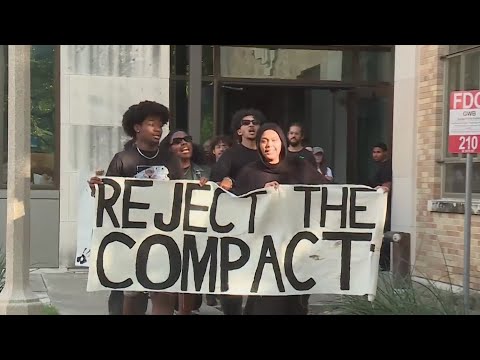
A federal judge has temporarily blocked the most restrictive aspects, finding they likely violate the First Amendment.
The Foundation for Individual Rights and Expression (FIRE), which sued UT, argues the law gives administrators “a blank check to punish speech,” especially speech they find unpopular.

Meanwhile, the White House’s proposed “Compact for Academic Excellence” raises alarms among UT students and faculty, who warn it could exchange federal funding for ideological control.
Students say the compact is “anti-free speech” and “anti-affirmative action,” threatening programs such as Black studies, gender studies, and ethnic studies. Scholars from across the political spectrum argue the compact represents “political extortion” that would undermine academic freedom.

Across Texas, including K-12 districts, similar trends appear: book bans, student walkout punishments, administrative overreach, and increased student self-censorship.
The case of Darryl George, a Black high school student suspended by Barbers Hill ISD over his hairstyle, is an example of how young people learn early that expressing their identity or dissent can carry real consequences.
A national crossroads
Student voices have shaped some of the most transformative movements in American history. To suppress those voices—whether through administrative maneuvering, state legislation, or federal pressure—is to undermine democracy itself. The question is not whether students will continue to speak. It is whether institutions will allow them to be heard.
Best colleges for free speech:
1. University of Virginia
2. Michigan Technological University
3. Florida State University
4. Eastern Kentucky University
5. Georgia Institute of Technology
6. Claremont McKenna College
7. North Carolina State University
8. Oregon State University
9. University of North Carolina, Charlotte
10. Mississippi State University
Worst colleges for free speech:
242. Pomona College
243. Indiana University
244. University of Texas, Austin
245. University of Southern California
246. Syracuse University
247. Barnard College
248. University of Pennsylvania
249. New York University
250. Columbia University
251. Harvard University
[Source: College Free Speech Rankings by the Foundation for Individual Rights and Expression and College Pulse, Sept 5, 2024]. For more information on student rights, visitwww.aclu.org/know-your-rights/students-rights.