A new era of political leadership is taking shape across America following the 2026 midterm elections, as sweeping Democratic victories and historic wins by Black candidates promise to shift the balance of power in Washington and state capitals, potentially reshaping policies affecting millions of Americans.

From Georgia, where former Atlanta Mayor Keisha Lance Bottoms became the first Black woman elected governor in American history, to Florida, where Republican Byron Donalds became the state’s first Black governor, the election produced milestones that crossed party lines. Meanwhile, a Democratic surge in congressional races put House Minority Leader Hakeem Jeffries on the verge of another historic first: Becoming the nation’s first Black Speaker of the House.
The results represented a significant setback for President Donald Trump and congressional Republicans, as voters expressed frustration over the economy, rising costs, and the direction of the country. Democrats captured key Senate and House races, strengthening their position in Washington and raising the possibility of a major shift in congressional power during the final two years of Trump’s presidency.
But beyond the partisan victories, Election Night 2026 will be remembered for the barriers broken by Black candidates and the changing face of political leadership in America.
Keisha Lance Bottoms makes American history
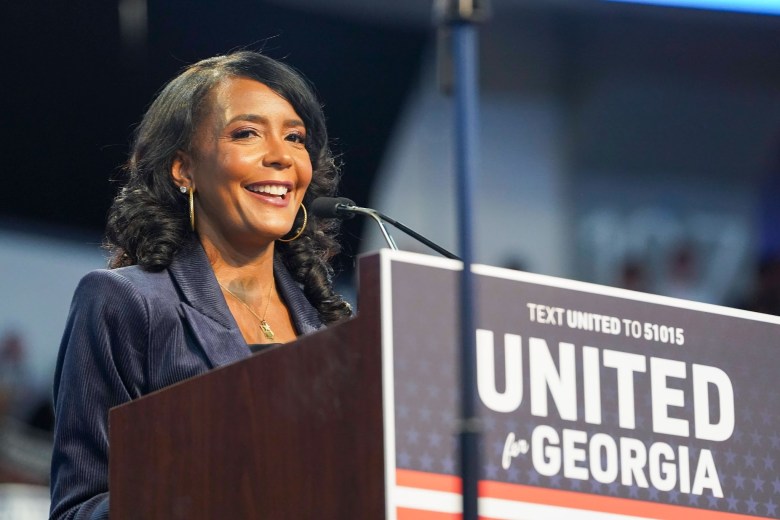
In one of the night’s most significant victories, Bottoms defeated Republican businessman Rick Jackson to become Georgia’s next governor. The victory also made Bottoms Georgia’s first female governor and returned the governor’s office to Democratic control for the first time since 1998.
Bottoms, who served as Atlanta’s mayor from 2018 to 2022 and later held a senior position in President Joe Biden’s administration, campaigned on affordability, education, health care and economic opportunity.
Her victory carries particular significance in Georgia, a state deeply connected to the civil rights movement and the struggle for Black political representation.
For decades, Black women have served as the backbone of Democratic organizing, leading voter registration drives, mobilizing communities and helping elect candidates at every level of government. Yet until Tuesday, no Black woman had ever won a gubernatorial election in the United States.
Bottoms shattered that barrier.
Her victory also comes years after former Georgia gubernatorial candidate Stacey Abrams helped bring national attention to voting rights and Black voter mobilization in the state. Abrams’ unsuccessful gubernatorial campaigns in 2018 and 2022 helped demonstrate both the political influence of Black women and the obstacles they have faced in seeking statewide office.
Bottoms’ election marks a new chapter in that history, placing a Black woman in charge of one of the nation’s most politically competitive states.
Byron Donalds breaks a barrier for Black Republicans
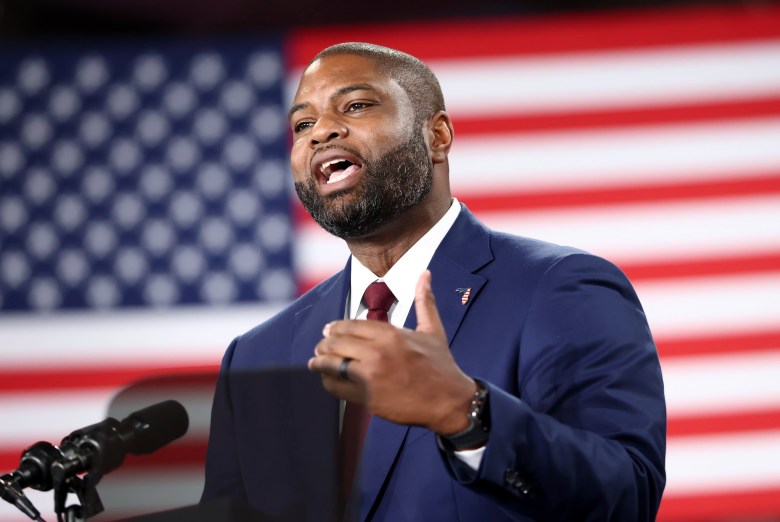
While Democrats celebrated their victories, Republicans also made history in Florida, where Donalds, a U.S. Representative, defeated Democrat David Jolly to become the state’s first Black governor.
Donalds, a staunch Trump ally and one of the Republican Party’s most prominent Black conservatives, will succeed term-limited Gov. Ron DeSantis.
His election marks a significant milestone for Black Republicans, who have historically held a small share of elected office nationwide. Donalds also becomes the first Black Republican elected governor in American history.
A former Democrat who later embraced conservative politics, Donalds built his political career around limited government, economic opportunity, parental rights, and support for Trump’s agenda. His victory underscores the political diversity within Black America, where voters and elected officials hold a range of views on economic policy, education, criminal justice and the role of government.
Hakeem Jeffries moves closer to historic speakership

Perhaps the most consequential development in Washington was the Democratic surge in House races, which positioned Jeffries (D-N.Y.) to potentially become the first Black speaker of the U.S. House of Representatives.
Jeffries, who became the first Black lawmaker to lead a major party in Congress when he was elected House Democratic leader in 2022, has spent the past several years working to unite Democrats and regain control of the chamber.
“America is back….We’re going to fight for Black and Brown communities all across America. This is a change election, and we understand as House Democrats that we need to deliver dramatic change. We need a Congress that puts the American people first,” Jeffries said in a press conference following the victories.
Now that Democrats have reclaimed the House, Jeffries is expected to be the party’s choice for speaker when the new Congress convenes in January. He would become the first Black person to hold one of the most powerful positions in the federal government.
The speaker controls the House’s legislative agenda, plays a central role in negotiations with the White House and Senate, and stands second in the presidential line of succession after the vice president.
For Black Americans, Jeffries’ potential elevation would represent another milestone in a political journey that has included the election of Barack Obama as the nation’s first Black President and Kamala Harris as its first Black vice president.
It would also place a Black lawmaker at the center of congressional efforts to challenge the Trump administration on federal spending, immigration, health care, voting rights and government accountability.
Democrats deliver major victories nationwide
The historic gubernatorial victories in Georgia and Florida unfolded alongside a broader Democratic surge that extended into congressional races across the country. But the 2026 midterms also marked a significant moment for Black political representation, with African American candidates competing for governor’s offices in an unprecedented number of states.
In the U.S. Virgin Islands, Democratic Rep. Stacey Plaskett made history as the territory’s first Black female governor. Plaskett, who has represented the Virgin Islands in Congress since 2015, brought national recognition to a race that could place another Black woman in a top executive position.

Maryland Gov. Wes Moore, who made history in 2022 as the state’s first Black governor and only the third Black person elected governor of a U.S. state, secured a second term. His reelection reinforced his standing as one of the Democratic Party’s most prominent rising leaders and a potential national contender in future elections.

In Wisconsin, Milwaukee County Executive David Crowley, a Democrat, beat Republican U.S. Rep. Tom Tiffany in a closely watched gubernatorial contest. Crowley, who made history as Milwaukee County’s first Black executive, will become Wisconsin’s first Black governor.
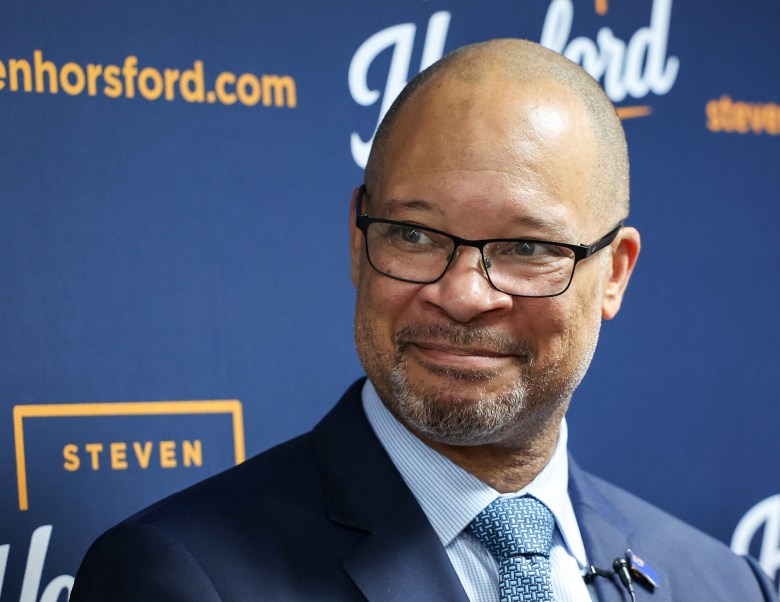
Nevada Attorney General Aaron Ford, a Democrat, challenged Republican Gov. Joe Lombardo in a race that could make Ford the state’s first Black governor. Ford, who became Nevada’s first Black attorney general in 2019, campaigned on affordability, public safety, and the protection of residents’ rights. That race had not been called by press time.
The gubernatorial contests demonstrated the expanding presence of Black candidates in statewide politics, including within the Republican Party. While Black voters have historically supported Democrats by overwhelming margins, candidates such as Donalds, Demuth and James illustrated the ideological diversity of Black political leadership.
Meanwhile, Democrats scored significant victories in congressional races. In North Carolina, former Democratic Gov. Roy Cooper won a U.S. Senate seat, giving Democrats an important pickup in their effort to challenge Republican control of the chamber.
In Georgia, Democratic Sen. Jon Ossoff won reelection, maintaining his party’s hold on another closely watched Senate seat in a state that has become central to national political competition.
Democrats also made gains in House races across several states, including New Jersey, Pennsylvania and North Carolina, while successfully defending competitive districts targeted by Republicans.
The results reflected voter concerns about the country’s economic direction, particularly rising household expenses, housing costs and the affordability of everyday necessities. For Democrats, the victories offered an opportunity to regain political momentum after President Donald Trump’s return to the White House in 2025.
For Republicans, the results raised questions about the party’s ability to maintain congressional support amid economic uncertainty and growing public frustration.
Still, the election’s significance extended beyond which party gained or lost seats. From Black women breaking barriers in executive leadership to Black candidates competing for governorships in states that have never elected an African American to office, the 2026 midterms underscored the changing face of American political power.
The outcome of several closely contested races remained unresolved late Tuesday, leaving the final balance of power in Congress and the full scope of the election’s historic milestones subject to additional vote counting.