

It’s bad enough that America has yet to reconcile with its deeply racist past. The nation was founded on slavery, genocide and systemic exclusion, yet history classes, museum exhibits and national commemorations have long presented a sanitized version of that truth. The brutality of slavery—its central role in building America’s wealth, institutions and global standing—has been reduced to a footnote or distorted into a story about resilience without reckoning.
Revival of racist “history”
But in 2025, the stakes have shifted. The Trump administration isn’t just ignoring America’s racist past—it’s reviving it, rebranding it and celebrating it as “unpoliticized history.” Textbooks are being scrubbed, national parks are rewording exhibits and museums are quietly editing out any reference to slavery’s cruelty, Jim Crow’s violence or the Black freedom struggle’s radical demands. This is not just erasure—it is an intentional rewriting of the past to fit a white supremacist narrative.
Erasing Africa’s legacy

And it isn’t new. For more than a century, the African foundations of human civilization have been erased. Schoolchildren are rarely taught about Kemet and the Nile Valley civilizations that birthed science, mathematics, medicine and architecture. They are not taught that the empires of ancient Ghana, Mali and Songhai were global leaders in education, trade and governance. Nor do they learn that Africans—the Moors and others—pulled Europe out of multiple Dark Ages. This long-standing erasure of Black genius has been normalized.

Silencing Black realities today
However, what makes this moment equally damning is not only the suppression of our history, but also the erasure of our present. The realities of Black life today are being ignored, silenced and gaslit at every turn.
Demonizing “Woke”

Take the rebranding of “woke.” Once a term of pride, rooted in Black vernacular as a call to stay aware of systemic injustice, it has been turned into a slur. Right-wing politicians and media pundits wield it as shorthand for anything they dislike: racial justice, gender equity, even common decency. Its transformation from a term of vigilance to a bogeyman of mockery is part of a broader project to delegitimize Black thought and activism.
CRT Bogeyman
The same can be said for the weaponization of Critical Race Theory (CRT). CRT is an academic framework taught primarily in law schools, examining how laws and policies often fail to undo racial inequality. It is not taught in K-12 schools, despite claims to the contrary. Yet, the far-right demonized the phrase and turned it into a catch-all for any honest discussion of race.
As critics have noted, the fear is that white children might confront the violent actions of their ancestors and communities. Somehow, teaching about lynching, firebombed Freedom Riders or mobs screaming at Ruby Bridges is deemed more harmful than those acts of terror themselves. This is gaslighting of the highest order—portraying truth-telling as the problem, while excusing the violence it seeks to address.
Voting rights on chopping block
And then there’s voting. Mid-decade redistricting is being packaged as an attempt to make maps great again by removing racial considerations. In reality, it is a strategy to dilute Black and Brown voting power, ensuring outsized political dominance for white voters. The language of “fairness” here is a mask for disenfranchisement.
Erasing Black excellence
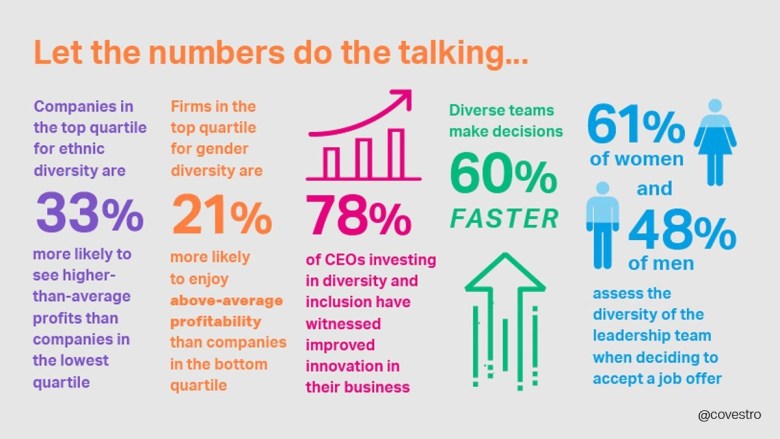
Employment is another front line of erasure. The rise of the phrase “DEI hire” is meant to brand Black professionals as unqualified tokens who “stole” jobs from more competent white candidates. The facts say otherwise. As SiriusXM host Lurie Daniel Favors often reminds us, “DEI math” means that Black people who secure these positions tend to be four times more qualified because they had to work twice as hard to get half as much. Supreme Court Justice Ketanji Brown Jackson is a clear example: Her judicial experience and academic record surpass those of many of her peers, yet she has been dismissed as nothing more than a diversity appointment. This isn’t just insulting—it’s another way to erase Black excellence in plain sight.
Silence on Black death
And what of Black safety? In Houston alone, the growing number of Black bodies found in local bayous has been met with a deafening silence from city officials. This silence communicates what too many of us already know: that Black suffering, even death, is often treated as unworthy of acknowledgment or public concern. When activists raise alarms about this pattern, they are targeted, surveilled or dismissed as conspiracy theorists. This too is erasure—of life, of grief, of truth.
Coordinated whitewashing
What we are witnessing is a coordinated effort. On one side, history is sanitized so the nation can avoid accountability. On the other hand, the present is whitewashed to obscure ongoing harm. Together, these erasures do more than distort memory—they endanger futures.
When Black triumphs are minimized, Black challenges are ignored and Black truths are silenced, the nation is robbed of both honesty and possibility. Our children inherit a double theft: The knowledge of who they have been and the acknowledgment of who they are now.
Why this matters
The normalization of racist hate speech—from college coaches like Bruce Pearl to political figures like Stephen Miller to the Trump machine itself—emboldens this climate. By attacking historical truth-telling and mocking current Black reality, they hope to render both invisible. But invisibility is violence. It is not a passive act. It is an active stripping away of humanity.
The erasure of our history means the attempted theft of our memory. The erasure of our present means the attempted theft of our dignity, our safety and our future. Both are devastating. Both are unacceptable. And both require resistance.
Because if America continues to erase us—past and present—it won’t just fail Black people. It will fail itself.
