


Houston’s bayous have long been described as the city’s arteries—carrying its rain, its runoff, its reflections.
But lately, they have also carried too many Black bodies. The unsettling rise in deaths of Black people found in Houston’s bayous has sparked whispers, questions and fears.
Some wonder if this is the work of a serial killer. Others insist the deaths are tragic coincidences.
But whether these deaths are the result of foul play or not, the larger and more enduring issue remains the same: America’s historic disregard for Black life—and death—continues to shape how these tragedies are discussed, dismissed and dealt with.

Dismiss dismissiveness
For far too long, Black humanity has been treated as an afterthought. When Black people raise legitimate concerns about the safety of our communities, we are too often ignored, ridiculed or told to “calm down.”
That pattern was on full display recently at a Houston City Council meeting when respected community activist Travis McGee dared to ask questions about the bayou deaths. McGee, who has spent years advocating for safer neighborhoods and government accountability, voiced what many in Houston’s Black community have been thinking: Could these deaths be connected? Could there be something sinister at work?
“We have to find out what’s really going on in these bayous. It is not normal for people to just keep popping up within a five-day span,” McGee told Mayor John Whitmire and council members. “I’m just one of many Houstonians who are very concerned. I don’t think it’s smart for us to assume that everyone is homeless, everyone is suicidal, everyone is dying of natural causes. We keep hearing we shouldn’t be alarmed, but when should we be alarmed?”
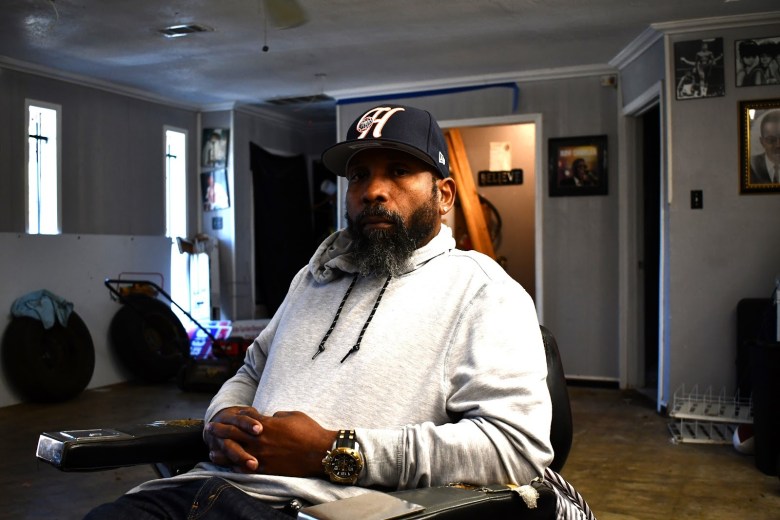
Instead of being met with empathy or curiosity, McGee was scolded and dismissed. The tone of the exchange carried an old, familiar message—that Black people have no right to question, no right to be heard and no right to demand accountability without being treated as agitators.
The irony is bitter: For more than 400 years, Black folk have had to contend with nefarious actors—slave traders, lynch mobs, police brutality, environmental neglect and systemic indifference. For anyone to act as if such suspicions are unreasonable is to ignore the history written in our blood, sweat and tears.
A legacy of disregard
This is not merely about the bayous. It’s about the larger landscape of indifference that has long surrounded Black life in America. When our children go missing, their cases receive less coverage. When we die mysteriously, our deaths are quickly labeled “accidents.” When we demand justice, we are labeled “troublemakers.” That’s not paranoia—it’s a pattern. And patterns, when ignored, turn into pathology.
Houston’s bayous are crying out, and not just because of the bodies found within them. They cry out because they reflect the way this city—and this country—often refuses to see Black people fully. The bayous mirror our collective conscience. They ask us, `How many more will you let sink before you start to care?’
The real killer: Anti-Blackness
It’s not just the deaths that should disturb us—it’s the reaction to the deaths. The debates on social media, the speculative chatter, the finger-pointing—all of it reflects how easily Black pain becomes a public spectacle rather than public concern. Instead of compassion and collective problem-solving, we get gaslighting and gossip. Instead of transparency from officials, we get silence and deflection.
To be clear: Whether there is or isn’t a serial killer at work, the real killer stalking our community is apathy. It’s the same anti-Blackness that allowed Reconstruction-era lynchings to be photographed as community picnics. It’s the same anti-Blackness that lets redlining, mass incarceration and police killings go unchecked. It’s the same anti-Blackness that lets elected officials (as if they aren’t our employees) speak down to us when we dare to demand answers.
As Black people, we cannot afford to absorb that same inhumanity. We cannot internalize the message that our lives—and our deaths—don’t matter. We cannot allow ourselves to be bullied or disrespected into silence. When we lose our ability to question, we lose our ability to protect.
We must remember that caring for our people—both living and dead—is sacred work. Our ancestors built entire rituals, songs and societies around honoring the departed because they understood the deep spiritual truth: How we treat our dead says everything about how we value the living. If we accept indifference toward Black death, we invite indifference toward Black life.
Call to action
So, what must we do?
- Demand accountability and transparency. The City of Houston owes its citizens clear, consistent communication about these deaths—who is investigating, what resources are being used and what safeguards are being put in place. City leaders must engage with community members with respect, rather than reprimanding them.
- Educate and protect ourselves. Black Houstonians should learn safety measures around the bayous—avoid walking near them alone at night, let loved ones know your whereabouts and advocate for improved lighting, signage and surveillance in vulnerable areas.
- Reclaim the narrative. Don’t let others define our fears or our hopes. Use our platforms—churches, community centers, podcasts, social media—to tell the truth about what’s happening and why it matters.
- Honor our lost brothers and sisters. Organize memorials, art installations and libation ceremonies at the bayous where lives were taken. Say their names. Mourn them publicly. Celebrate their humanity. Refuse to let their stories wash away unseen.
- Love one another fiercely. Check in on our elders, our youth, our neighbors. The same spirit of unity that sustained us through slavery and segregation must now sustain us through these modern storms.
Rise, remember & reclaim
The bayous may carry away our rain, but they should never carry away our people—or our will to fight for them. To heed the cry of the Houston bayous is to hear the echo of our ancestors urging us to rise, remember and reclaim our humanity. Because until Black life—and death—is treated with the dignity it deserves, none of us can truly call this city home.
