


Since we’ve been in this Babylon, the Black Church has been foundational to our individual and collective well-being. However, over the years, the Black Church has been steadily losing ground in terms of its centrality to Black existence. And over the past decade, there seems to be a growing exodus, with Black millennials and Gen Zers often choosing to practice their faith in other places, or not at all.
Here are five reasons for this exodus, which can be seen by members and leaders of Black Churches as challenges, but also as opportunities to creating an atmosphere more welcoming of and attractive to our grown children, nieces and nephews.
Judgmental and unaccepting
In the article “Millennials aren’t skipping church, the Black church is skipping us,” the authors recounted when the rumored girlfriend of a recently deceased woman in the church came in late to worship service. The pastor seemed to switch her topic and began ranting against the evils of homosexuality, a switch in topics that seemed directed at the woman who walked in late. The result: the church lost that targeted worshipper and a few others.
“We are leaving (the Black Church) in search of a practice(s) that is overtly inclusive of our sexuality, ancestral practices, and race — both in who we see or interact with in the congregation, as well as the pictorial representation in worship spaces.”
And yo, it’s 2022, and there are still Black churches restricting women from entering the pulpit and/or the ministry. What’s crazy about that, Jesus had female disciples. Women were part of his movement. In fact, they were a critical part of it. At least one sister was a major financial contributor. Others were considered part of the growing fellowship of disciples. And when everything hit the fan, and all the brother disciples fled, it was the Black women who were there with Jesus unto the cross. Lord have mercy. I can preach that message! And when Martha was having issues with her sister for staying in the room and listening to Jesus teach, the Bible very interestingly says Mary “sat at the foot of Jesus.” This is ancient symbolic language signaling a teacher/student relationship. And when Jesus told Martha to stop tripping because Mary chose the better path, he was saying, “I know society says womenfolk are supposed to leave the room when the bruhs gather together and start talking politics and religions. But my Father and I see what society is too slow and pig-headed to see—that all of God’s children, men and women, are fully worthy and fully capable of receiving God’s blessings and answering God’s call.” Why some folk in the Black church don’t want to listen to Jesus, I don’t know. Go ask your pastor.
What can our churches do to be less judgmental and more accepting of every flavor of person? For starters, review ways and practices that may erect walls rather than open church doors. Each congregation will have to answer this in ways that resonate with their own theological beliefs.
Choosing traditional spiritual paths
Many Black teens and young adults are opting for religious congregations and faith systems that reflect more traditional spiritual practices. Ifa, for example, the faith system of ancient Yorubaland, is one path that has communities across the country and world. There are also countless faith systems from the Motherland and across the Pan-African diaspora that our young folk are learning about in school and/or on their own. And they are practicing these on their own or in small groups. Attacking and/or demonizing these faiths, which are part of our history as a people, is viewed as the church being close-minded and unaccepting of new ideas or historical information found in books other than the Bible (more on this momentarily). The opportunity here for Black Churches is to courageously dive into learning more about our history as a people before we were brought to these shores. Our ancient and long global story is something that resonates with many Gen Z and Millennial members. And for good reason. It allows them to better learn about who they are. And “man/woman know thyself” is a spiritual directive found in all the world’s major religions, including Christianity. And it just so happens to trace its roots to Africa. The alternative for Black churches is to stand firm in ignorance and reject such a learning opportunity, which will only confirm for our young folk another reason why they are leaving their parents’ and grandparents’ church.
Anti-intellectual/Closed to new info
One longtime minister and divinity school graduate often says, “When Black people of all levels of intellect and accomplishment enter the church, they are expected to leave their brains in the vestibule.” That was his way of sharing the critique mentioned above — that the Black Church, too often, is so married to its dogma and traditional (read “ancient”) way of doing things, that it is closed to a universe full of new discoveries, ideas and revelations, and thus, chooses not to incorporate this new information into the church’s body of beliefs. Another lover of the Black church pointed out that in every field imaginable, new information and new discoveries are brought in and adjusted to, so those business and organizations can operate effectively in an ever-changing world, and not fossilize and go the way of the dinosaurs. The challenge for many a Black church is to recognize that God’s “unchanging hand” is not only welcoming of the new, but the originator of it. I mean, if God is not dead, if God is yet alive, then God is still creating, still revealing, still active, still pouring out new info and new opportunities for growth for God’s children. Wrestling with new info, new awarenesses and new discoveries isn’t easy, but neither is our faith walk. And if entering into such conversations will provide a pathway for welcoming our youngfolk back home, then it’s worth the effort.
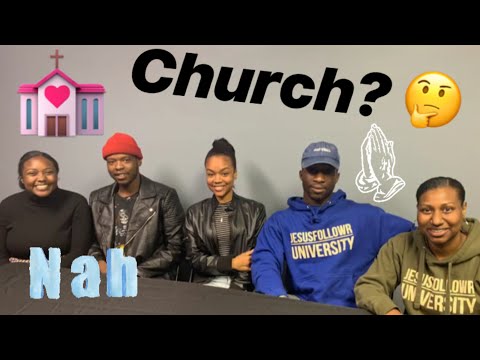
Apolitical
One of the most often restated pieces of “churchspeak” says we are “in this world but not of this world.” And there have been legions of Black preachers who warned their congregants against the evils of focusing on worldly issues (i.e. being too much “in this world”). For many Black churches and Black churchgoers, this meant continuing to have a good time in the Lord’s house, while turning their backs on the issues and movements impacting Black people. One myth that has lived too long in Blackworld is that all Black churches were involved in the Civil Rights Movement. Painfully, that was just not the case. Sure, there were Black churches whose leadership and membership helped out in numerous ways during the Civil Rights Movement and all our movements before and since. But for every one Black church that helped, there were hundreds that chose not to mix the sacred and the secular. Funny thing about that though, historically, our people saw no distinction between the two. They believed everything was sacred. The not-so-funny thing about that is, everything is political, as well. To this point, the iconic activist Audre Lorde said, “Caring for myself is not self-indulgence, it is self-preservation, and that is an act of political warfare.” Wow. Think about that. In a society that promotes and benefits from anti-Blackness, for a Black man, woman or child to choose to care for their mind, body and spirit health is not only healthy for us, but a powerful political statement. And so too then is our choice to sing, shout, hear the word and praise the Lord. Our worship experiences over the centuries have allowed us to hold onto hope when we had no rational reason to hold onto hope. But us holding onto the promise of a better tomorrow was and still is as radical and as political as it gets. And don’t get me started on the mission of Jesus being to create a kingdom of God/heaven here on earth, and the Hebrews constantly fighting to end their earthly oppression and obtain a promised land existence of self-determination. What’s more “political” than that work which was spurred on by their faith? That’s the Jesus and the Christianity young people see when they read about or hear about that brother Jesus—someone who cared enough about the conditions of his people and their living to commit his all to better their reality on earth and eventually in heaven. The question is, do they see that Jesus in you…and your fellowship? The challenge for many Black churches (not all, because some are extremely invested in service to us folk who are “in this world”) is to search for the Messiah who was about confronting the big issues of his day. Our millennials and Gen Zers see that Messiah plain as day, and wonder why us more “seasoned” saints can’t.
Peers missing
Wondering how to “attract” more youngfolk is not a problem that’s unique to any one church. It’s an issue with Black churches, temples and mosques. It’s an issue for Latinx, Asian and white ones too. Everyone is trying to figure out how to keep their younger ones connected to the family and community and faith institutions of their fathers, mothers, forefathers and foremothers. Social scientists had discovered through exhausting research what our gut already tells us — you attract who you are. If you’re a conservative, Generation X dominated congregation, you’re more often than not going to attract a bunch of conservative-leaning 50-somethings. Recognizing this, many churches have moved to hire younger ministers to join the pastoral staff. Some churches have even chosen to hire younger and young senior pastors. These churches recognize the reality that you attract who you are. But having a young or young-ish minister isn’t the whole answer or even any part f the overall answer. News flash: Young people feel at home when they see other young people. I mean, just think about those moments when you were in predominantly non-Black spaces for hours, days, weeks or longer, and then you happen to see one of the us-es. I know when I was an undergraduate at UT back in the ’80s when the campus was only 2% highly melanated, when I saw one of my people on campus, in the bookstore, rocking the student center or in Jester (east or west), it was like a celebration. We all nearly broke our arms waving so hard. There’s something about seeing the familiar that makes us feel more at home, more welcomed, more wanted. The challenge for Black churches interested in attracting, keeping and ministering to and with younger Blackfolk is to do as many things as possible to welcome them, engage them, meet them where they are. I’m not saying, old church heads, go out and buy a bunch of hair dye and use words you think youngfolk use (please, Lord don’t do that). But what I am suggesting is to reflect on the list here, and any other lists out there on the subject, and have conversations with your church family about what things align with your beliefs that also align with who, what and where our 15- to 40-year-olds are mentally, emotionally, educationally, sexually, professionally and spiritually.
