Sixty-one years after President Lyndon Johnson signed the Voting Rights Act on Aug. 6, 1965, civil rights leaders and politicians in Texas are warning that the law’s protections have been effectively dismantled and that Texas has become ground zero for what comes next.
The anniversary this year falls in the shadow of the U.S. Supreme Court’s decision in Louisiana v. Callais, which found Louisiana’s congressional map to be an unconstitutional racial gerrymander, a ruling some argue has made it significantly harder to draw majority-minority districts anywhere in the country.
“Essentially, the voting rights of 1965 have been gutted completely, like it’s been annihilated,” said Rev. James Dixon, pastor of the Community of Faith Church and president of the NAACP Houston Chapter. “We need to understand that that is the biggest issue for us is that we cannot elect leaders who represent us based on racially determined districts and precincts.”
The VRA and redistricting efforts

Dixon traced the current moment back to Texas’s mid-decade congressional redistricting last year, which he said began “when Governor Abbott [was] yielding to the demand of President Trump, who said he wanted five more Republican seats.”
The redraw effectively consolidated Houston’s two Black-held congressional seats into one, while preserving one Hispanic-held seat.
Dixon added that the fight is inseparable from the pulpit.
He pointed to a Houston-based organizing effort called Freedom Rising 2026, which is working with churches and civil rights groups on voter registration and turnout ahead of November. He argued that voting rights cannot be separated from a broader pattern he sees playing out, such as the rollback of DEI policies and the removal of Black historical figures from public recognition.
“If any of us are going to be free, all of us have to be free,” he said.
A historical viewpoint

Congressman Christian Menefee cited a 2016 federal court ruling from a decade ago that found Texas lawmakers had targeted Black voters “with almost surgical precision” through a voter ID law. Menefee said Tennessee’s move to redraw Memphis-area districts after the Callais ruling shows the pattern spreading nationally, and argued that Houston’s own loss of a congressional seat is a preview of what other Southern cities can expect.
“I will never forget the day the decision came out,” Menefee said of the Callais ruling. “I saw two Americans in the House of Representatives. I saw a Republican side in the House of Representatives who were joyful that people had had their right to vote taken away. I saw a Democratic Caucus that was in strategy mode, trying to figure out how to combat this. Then I saw a Congressional Black Caucus who saw the faces of their grandparents, who heard the voices of the ancestors as the right to vote was being stripped right there in real time.”
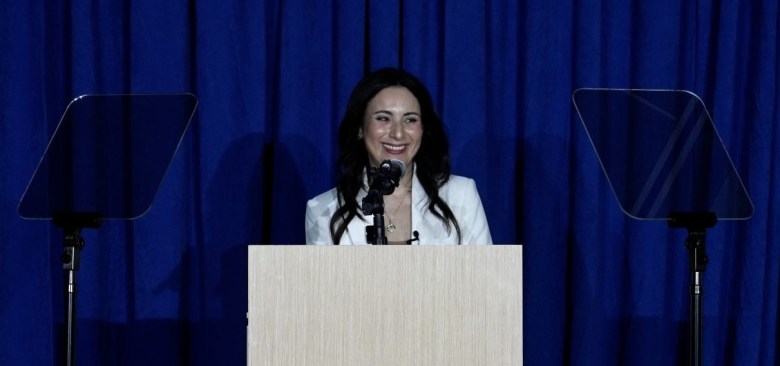
At a Houston campaign stop for Democratic gubernatorial nominee Gina Hinojosa framed the VRA as the foundation for gains ranging from Barbara Jordan’s election to Congress in the 1970s to the expansion of Latino political power in South Texas.
She warned that with the VRA weakened, Texas Republicans are positioned to redraw maps again in the next legislative session, and again after the 2030 census, when Texas is expected to gain additional congressional seats.
“When an election is decided before a single ballot is cast, it does not matter which party you belong to. We all lose,” Hinojosa said, pledging to veto any gerrymandered map if elected governor.
“If any of us are going to be free, all of us have to be free.”
Rev. James Dixon, pastor of the Community of Faith Church
The Houston remarks echoed a broader national reckoning with the anniversary. Eric Holder, the former U.S. attorney general who now chairs the National Democratic Redistricting Committee, said the country is experiencing “a modern-day political Jim Crow” where “too many Republicans act with impunity to dilute the voting power of Black and Latino communities across the country.”
“Our nation now finds itself at a crossroads, and the outcome of the November elections will determine whether we continue to repeat a sordid history or if we can seize the necessary political power to put our country back on a path toward Martin Luther King Jr.’s Promised Land,” Holder said in a statement.
The League of Women Voters, meanwhile, reported that more than 6,600 people turned out for nearly 400 events nationwide during an Aug. 8 “Unite & Rise for Voting Rights” Day of Action tied to the anniversary.