Houston and Harris County leaders are supporting a partnership helping people living unsheltered in West Houston move toward permanent housing. The program pairs law enforcement outreach with nonprofit case management and temporary hotel placement, among other services, to remove barriers to long-term stability.
The initiative brings together the Energy Corridor District, WHAM, Harris County Precinct 5 deputy constables, and a network of hotel partners.
Supporters of the program include Mayor John Whitmire; Precinct 4 Commissioner Lesley Briones; Council Members Tiffany D. Thomas, Amy Peck, Mary Nan Huffman, and Twila Carter; and Precinct 5 Constable Terry Allbritton.
Energy Corridor Vice President Zach Miller said the effort grew out of frustration with the traditional response to homelessness, including “citation, ticketing, and then eventually a visit to jail.”
A turning point came when a Precinct 5 sergeant spent hours after his shift trying to find a shelter bed for a mother and young son fleeing domestic violence.
“There simply are not enough shelter beds to go around,” said Miller, adding that what people often need most is “a safe place to stay where they can recover.”
The realization led the Energy Corridor District to launch a pilot with WHAM and Precinct 5 constables in August 2025, initially backed by $30,000 from the district’s board.
Based on early results, the board has since doubled its commitment to $60,000 a year. Miller said he believes the model “is working, it’s cost-effective, and it’s highly replicable.”
The five-step approach includes identification through law enforcement outreach, assessment and case management, temporary hotel placement, wraparound support, and permanent housing placement.
Council Member Tiffany Thomas, who chairs Houston’s Housing and Affordability Committee, contributed $30,000 from her office. Agape Christian Fellowship invested $45,000, while the Church Without Walls invested $10,000.
“This is hard work for a hard population,” Thomas said. “We’re here to do the hard things. I’m probably more transformed than the people that we’re serving. I walk away with the work that we’re doing, to see what they are dealing with, and I get to return to security and stability. Let us all be transformed. Don’t talk about what you’re gonna do, just do it.”
Describing a difficult year for her organization, WHAM CEO Sonya Scott explained her staff’s philosophy.
“WHAM wasn’t the building,” Scott said. “It’s the people…We don’t ask what happened to you. We ask, what do you need and how can we help?”
Program participant Akilah Sisk told the crowd she was evicted last year and ended up “living on a friend’s couch” with nowhere to go. She said WHAM “immediately called me, got me into the program,” and helped her cover a deposit and rent while she got back on her feet.
Commissioner Lesley Briones noted that Harris County has invested “approximately a hundred million dollars” over the past five years addressing homelessness, and said there are “over 3,000 unhoused individuals” in the county on an average day.
“We look forward to continuing these investments,” Briones added. “We’re particularly focused on the permanent supportive housing piece and wraparound services.”
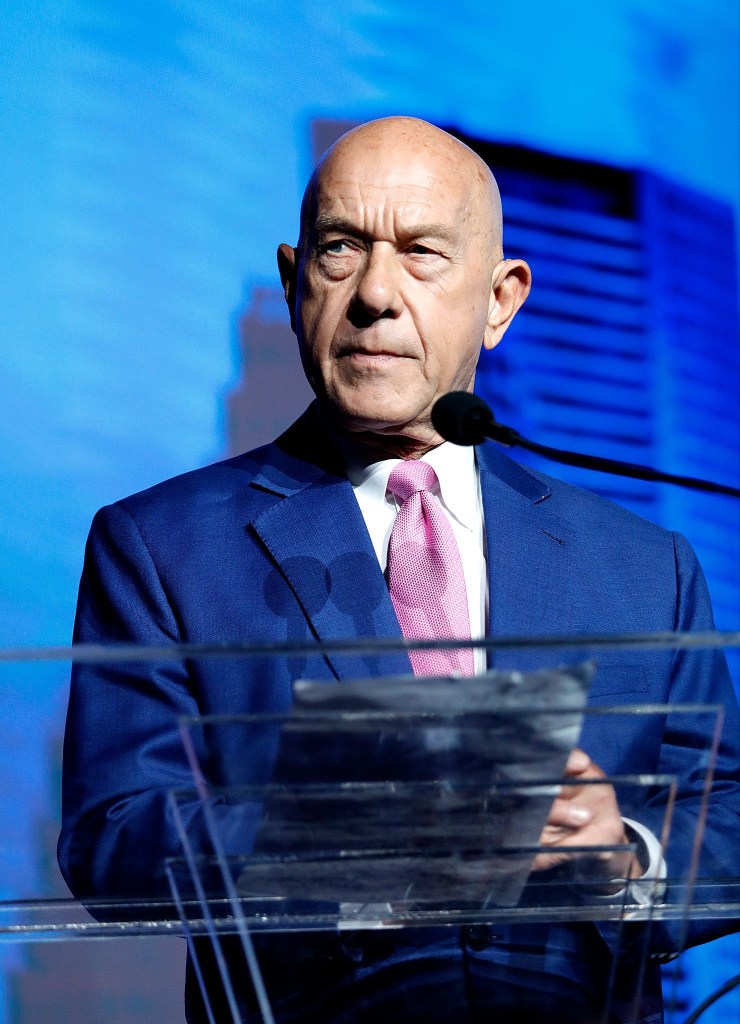
“Homelessness is a very complex issue, involves a lot of mental health, certainly addictions, but it also involves some individuals and families that just need a lift at that moment,” said Mayor John Whitmire. “Often it’s an abusive relationship, and all they need is temporary housing.”
Whitmire also praised Thomas for how she “speaks up for West Houston,” and said the city is working regionally with county partners and the homeless coalition to expand the response.
Council Member Twila Carter, an at-large member, said she found funding for WHAM despite at-large members lacking dedicated district service funds, pointing to the strong overlap between domestic violence and homelessness.
“Seventy percent of all calls to law enforcement in Harris County are family violence.” Council Member Mary Nan Huffman added. “It’s a privilege to be able to contribute to WHAM to benefit a lot of the work I do every day, which is on domestic violence.”
Meanwhile, Council Member Amy Peck called homelessness “a community issue that requires compassion, coordination, and real solutions.”