


Every year, the Library of Congress makes a quiet but profound declaration about what America sounds like, and who built that sound.
Recently, the institution announced its latest class of 25 recordings inducted into the National Recording Registry, honoring works deemed worthy of preservation for all time based on their “cultural, historical or aesthetic importance in the nation’s recorded sound heritage.”
This year’s class spans seven decades of music from a 1944 novelty record to a 2014 pop blockbuster and stretches across genres from jazz and R&B to funk, hip-hop, country, and even a landmark sports broadcast.
Nine of the 25 selections are by Black artists whose genres have shaped the nation’s cultural identity. The Library’s choices remind us that so much of what this country calls its soundtrack was born from Black genius.
Ruth Brown
“Teardrops from My Eyes” (1950)
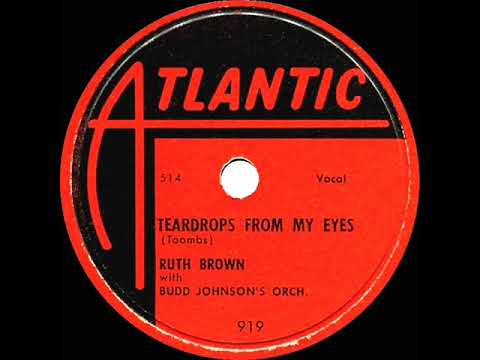
Ruth Brown’s 1950 song “Teardrops from My Eyes” is recognized in part for helping lay the foundation for what we know today as Atlantic Records. Brown was so central to the label’s early commercial success that Atlantic was nicknamed “The House That Ruth Built.” Her recording career helped establish R&B as a dominant American genre at a time when Black artists were rarely given their due by mainstream music institutions.
Oliver Nelson
The Blues and the Abstract Truth (1961)

Jazz musician Oliver Nelson drew inspiration from concert composers Aaron Copland and George Gershwin for this landmark 1961 album, which is today considered an essential post-bop recording. Nelson was a composer and saxophonist, and The Blues and the Abstract Truth was one of the defining records of the post-bop era. The album’s track “Stolen Moments” has become a jazz standard taught in conservatories worldwide.
Ray Charles
Modern Sounds in Country and Western Music (1962)

Ray Charles’ Grammy-winning 1962 album Modern Sounds in Country and Western Music stands as one of the most boundary-defying recordings in American music history. By reimagining country music through the lens of R&B and gospel, Charles shattered the rigid genre boundaries of the era and produced one of his best-selling albums. The project remains a landmark example of how Black artists have continually expanded and transformed American musical forms long considered outside their domain.
The Winstons
“Amen, Brother” (1969)
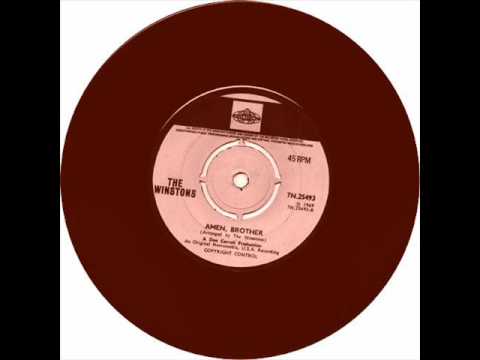
The Winstons’ 1969 track “Amen, Brother” contains what is known as the “Amen break”, a six-second drum solo that became the most sampled audio clip in history. That brief percussion break became the backbone of entire genres, most notably hip-hop and drum and bass, making it one of the most consequential recordings ever captured on tape. Its induction into the Registry is a long-overdue acknowledgment of just how deeply one moment in Black music rewired popular sound worldwide.
“The Fight of the Century: Ali vs. Frazier”
Radio Broadcast (March 8, 1971)
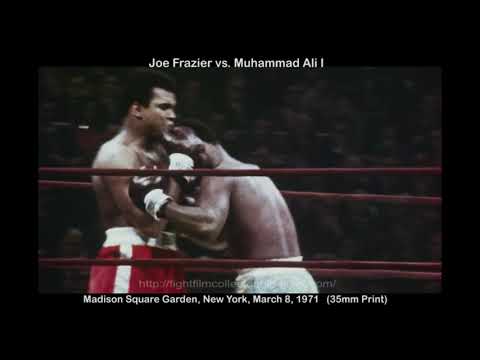
The sole non-musical selection in the 2026 class is the 1971 radio broadcast of “The Fight of the Century” between Muhammad Ali and Joe Frazier at Madison Square Garden. The bout between two undefeated heavyweight champions, both Black men, fought at the height of the Vietnam War and the civil rights movement, was one of the most politically charged sporting events in American history. An estimated 300 million people worldwide tuned in. Ali and Frazier were more than athletes; they were symbols of an era.
Gladys Knight and the Pips
“Midnight Train to Georgia” (1973)
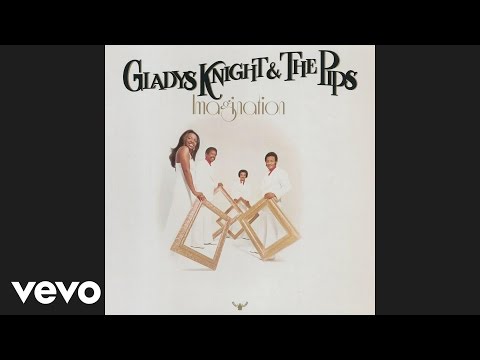
Gladys Knight, often called the “Empress of Soul,” along with her renowned backup group the Pips, achieved their first number one with this now-classic song, a skillful blend of soul, rhythm and blues, gospel, and country-style storytelling. The song moves through a variety of issues of great emotional complexity, economic uncertainty, race, upward mobility, and the power of personal choice, while never losing its soul. The recording won the group a Grammy for Best R&B Vocal Performance by a Duo or Group.
Chaka Khan
“I Feel for You” (1984)

“I Feel for You” is widely recognized as a moment where R&B, funk, pop, and early hip-hop completely converged. Written by Prince, who recorded it himself in 1979, Khan and her collaborators reimagined it as a massive crossover hit. The song stands alongside early hip-hop classics like “Rapper’s Delight” in its role as an envoy for bringing a hip-hop vocabulary to the mainstream, and though Grandmaster Melle Mel handles the rap duties, the focus remains, in true icon fashion, on Khan, a vocalist Aretha Franklin once labeled “one of a kind.” The recording earned Khan two Grammy Awards.
Jamie Principle and Frankie Knuckles
“Your Love” (1986/1987)
This underground Chicago house music track, first circulated as a cassette tape in 1986 before its wider release in 1987, is widely credited as one of the genre’s foundational recordings, born in Black and LGBTQ+ Chicago clubs. Jamie Principle wrote and performed the song, and Frankie Knuckles, the legendary DJ known as the “Godfather of House,” produced it. Its induction recognizes not just a song, but an entire cultural movement whose roots run through the Black experience on the South Side of Chicago.
Beyoncé
“Single Ladies (Put a Ring on It)” (2008)
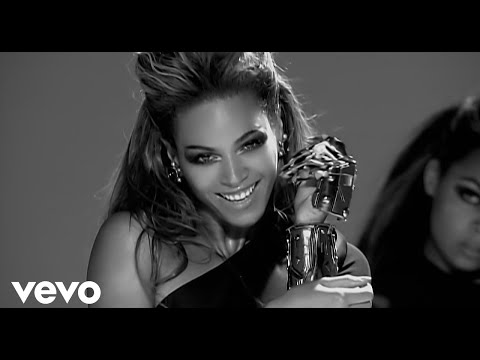
The 2026 selections mark the first recording by Beyoncé chosen for the National Recording Registry. “Single Ladies (Put a Ring on It)” won three Grammy Awards in 2010, including Song of the Year, and topped the Billboard Hot 100 for four non-consecutive weeks. In December 2024, the RIAA certified the song for sales of more than 11 million copies. A proud daughter of Houston, Texas, Beyoncé’s induction is a milestone moment and a source of particular pride for fans in her hometown.