


Black history is taught as a story of great men. What rarely gets told is who made those men. Who sat with them at kitchen tables and taught them they were somebody before the world tried to convince them otherwise.
Who buried their children in public when the country wanted them buried quietly? Who kept campaigns alive for decades when everyone else had moved on.
These women existed. Their contributions are documented. Their names are real. They are simply not in the version of history most of us were taught.
Here are seven Black mothers whose decisions, sacrifices, and refusal to be silent helped shape the America we live in today, and whose names deserve to be known.
Alberta Williams King
Mother of Dr. Martin Luther King Jr.

A classically trained musician, church organist, and educator born in Atlanta in 1903, Alberta King was the first person to teach her son that he was somebody in a world determined to tell him otherwise. Dr. King credited her repeatedly in interviews as the foundation of his sense of dignity and worth, yet her name rarely appears in the history books that celebrate his. She was assassinated in 1974 while playing the organ at Ebenezer Baptist Church, the same church where her son had preached. Her story is the story of every Black mother who quietly shapes greatness at great personal cost.
Louise Norton Little
Mother of Malcolm X

A Grenadian-born Pan-Africanist organizer and member of Marcus Garvey’s Universal Negro Improvement Association, Louise Little was Malcolm X’s first political teacher. She held UNIA meetings in her own home, instilled the ideology of Black pride and self-determination in her children, and endured surveillance, harassment, and eventual institutionalization by white welfare officials who forcibly separated her family. Malcolm X’s political worldview — Black nationalism, Pan-Africanism, the refusal to accept white supremacy — was planted in him by his mother years before he ever heard of the Nation of Islam.
Mamie Till-Mobley
Mother of Emmett Till

When 14-year-old Emmett Till was murdered in Mississippi in 1955, his mother, Mamie, made the most consequential decision of the Civil Rights Movement: she insisted on an open casket funeral so the world could see what had been done to her son. More than 50,000 people viewed Emmett’s body over the course of the funeral, and the photographs Mamie authorized for publication in Jet magazine sent shockwaves across the nation. Rosa Parks later said she thought of Emmett Till when she refused to give up her seat on a Montgomery bus just 100 days after his murder. Mamie Till-Mobley spent the next four decades as an educator and civil rights advocate. Her grave marker reads: “Her Pain United a Nation.”
Berdis Baldwin
Mother of James Baldwin

An artist and deeply spiritual woman who raised nine children largely alone in Harlem, Berdis Baldwin nurtured her eldest son James’s love of literature, storytelling, and language from infancy. Baldwin himself wrote that his mother was the most important person in his creative and spiritual formation. She lived to 87 and attended the publication parties for many of her son’s books. Like Alberta King and Louise Little, her story has been systematically overlooked, despite the fact that one of America’s greatest literary voices credits her as his foundation.
Monemia McKoy
Mother of Millie and Christine McKoy

One of the most extraordinary and least-told stories in Black maternal history. Monemia was an enslaved woman in North Carolina whose conjoined twin daughters, Millie and Christine, were sold into a circus sideshow as toddlers and shipped to Europe. In a staggering act of maternal determination, Monemia traveled across the Atlantic Ocean to find them, and a British court granted her full maternal rights, one of the rare moments in 19th-century history where a Black mother’s legal claim to her own children was recognized. She brought her daughters home, and they eventually purchased the land where they were born.
Coretta Scott King
Wife of Dr. Martin Luther King
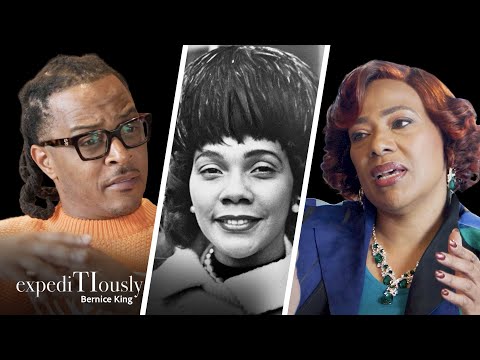
After her husband’s assassination in 1968, Coretta Scott King raised four children alone while leading one of the most sustained civil rights campaigns in American history. For 15 years, she lobbied Congress, organized rallies, and helped collect a six-million-signature petition to establish the Martin Luther King Jr. federal holiday, which President Ronald Reagan signed into law in 1983. She founded the King Center in Atlanta just months after her husband’s death, marched against apartheid, and advocated for LGBTQ+ rights decades before it was politically safe. She was not simply the guardian of her husband’s legacy. She was a movement leader who happened to also be a mother of four.
Betty Shabazz
Wife of Malcolm X

When Malcolm X was assassinated in February 1965, shot in front of her and their children, Betty Shabazz was four months pregnant with twins. She never remarried. Instead, she returned to school, earning her doctorate in education administration from the University of Massachusetts in 1975, and became a professor and administrator at Medgar Evers College in Brooklyn, where she mentored generations of working-class Black students for more than two decades. She raised six daughters. She built her own name. Betty Shabazz did not survive by leaning on a legacy; she created one.