Cinema has not always been kind to Black women.
For too long, Hollywood offered them only a narrow corridor of roles. The sassy sidekick, the suffering mother, the nameless background figure in someone else’s story. But in spite of that, and increasingly, in defiance of it, Black women filmmakers, writers, and performers have carved out a body of work so rich, so layered, and so profoundly human that it stands among the greatest achievements in American film history.
This list is a love letter to that legacy. Whether you are settling in for a solo night with a glass of wine, hosting a watch party with your crew, or introducing a younger generation to stories that should have been required viewing decades ago, these films need to be on your watch list.
The Color Purple (1985)
Directed by Steven Spielberg | Drama
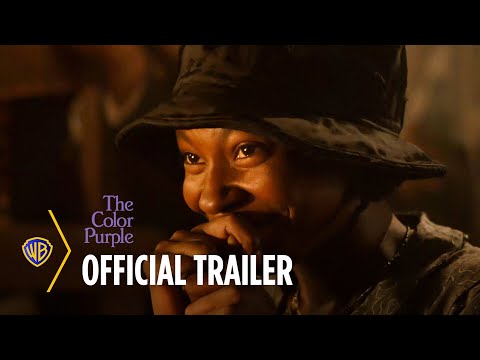
Few films carry the emotional gravity of Steven Spielberg’s landmark adaptation of Alice Walker’s Pulitzer Prize-winning novel. Set in the rural American South across the early decades of the twentieth century, the story follows Celie, played by Whoopi Goldberg, as she endures poverty, abuse, and family separation while slowly, painstakingly discovering her own worth.
Oprah Winfrey brings explosive energy to Sofia, a woman who refuses to be broken, while Shug Avery, played by Margaret Avery, represents a kind of free-spirited liberation Celie has never been permitted to imagine for herself. What makes this film a classic is its refusal to let suffering be the final word.
The Color Purple is ultimately about the stubborn persistence of dignity, the radical act of a woman choosing herself when the world has consistently told her she is nothing. Nearly four decades later, it remains one of the most important films ever made about the interior life of a Black woman, and a reminder that survival without self-love is only half the journey.
Waiting to Exhale (1995)
Directed by Forest Whitaker | Drama / Comedy

Based on Terry McMillan’s beloved bestselling novel, this 1995 film is funny, heartbreaking, and fiercely unapologetic in its centering of the full emotional complexity of Black women’s lives. Whitney Houston, Angela Bassett, Lela Rochon, and Loretta Devine play four friends in Phoenix who are all, in their own way, waiting for their lives to finally make sense.
Each woman carries a different wound. A marriage that has quietly eroded, a romance built on someone else’s lie, a love that asks too much, and a loneliness so entrenched it feels like furniture. What Forest Whitaker captures so brilliantly is the way these women sustain and save each other even when their individual worlds are falling apart.
Angela Bassett’s now-iconic car scene is one of the most cathartic moments in American cinema, and Whitney Houston’s performance reminds us of how naturally she moved between music and film. More than a love story, Waiting to Exhale is a friendship story, and that is precisely what makes it timeless.
Eve’s Bayou (1997)
Directed by Kasi Lemmons | Drama

If you have somehow missed this 1997 masterwork, stop everything. Kasi Lemmons’ debut feature is one of the most achingly beautiful and narratively daring films in American cinema, Black or otherwise. Set in the Louisiana bayou of the 1960s, it tells the story of ten-year-old Eve Batiste (Jurnee Smollett), who witnesses something she cannot fully understand and spends the rest of the summer trying to process what she saw.
The film is soaked in Spanish moss, voodoo, memory, and moral ambiguity. It refuses easy villains and easy victims. Debbi Morgan is devastating as Mozelle, Eve’s aunt, a woman haunted by her gift of second sight and by the string of men she has outlived. What Lemmons understands is that childhood grief is its own particular species, shaped by partial truths, mythology, and the terrible need to make meaning. Eve’s Bayou is a film about the stories families tell themselves and the ones they bury. It lingers long after the credits roll and rewards every rewatch with something new.
Dreamgirls (2006)
Directed by Bill Condon | Musical Drama

There is before Jennifer Hudson performing, “And I Am Telling You I’m Not Going,” and there is after. Bill Condon’s dazzling adaptation of the hit Broadway musical traces the fictional rise of a Motown-era girl group through the glitter and grit of the American music industry, drawing unmistakable parallels to the story of The Supremes.
Beyoncé is luminous as Deena Jones, the polished face the industry decides to sell, while Jamie Foxx commands the screen as the calculating manager who shapes and distorts them all. But the film belongs entirely to Jennifer Hudson, a former American Idol contestant who arrived on the world stage fully formed and absolutely ferocious. As Effie White, the big-voiced, big-hearted woman pushed aside in favor of someone more commercially palatable, Hudson took up space. Dreamgirls is also a sharp meditation on the politics of Black beauty, ambition, and who gets to define what a Black woman should look and sound like. It is spectacular, and it still hurts in the best way.
Hidden Figures (2016)
Directed by Theodore Melfi | Historical Drama
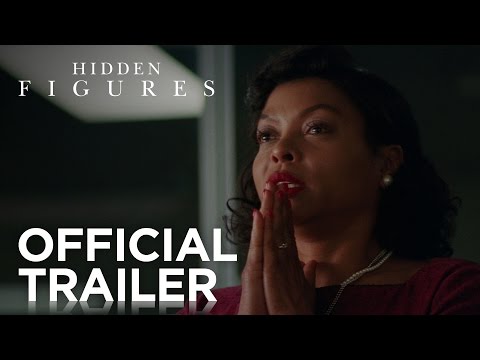
It is a genuine outrage and a profound gift that most people had never heard of Katherine Johnson, Dorothy Vaughan, and Mary Jackson before this film. Theodore Melfi’s crowd-pleasing and deeply moving adaptation of Margot Lee Shetterly’s nonfiction book pulls back the curtain on three Black women whose mathematical brilliance was indispensable to the early American space program, even as they were forced to use segregated bathrooms and ride separate buses.
Taraji P. Henson brings warmth and quiet fire to Katherine Johnson, the human computer whose calculations NASA couldn’t afford to doubt even when its own prejudices tried to sideline her. Octavia Spencer gives Dorothy Vaughan the steel spine of a woman who decides that if the institution won’t promote her, she will simply teach herself the future. And Janelle Monáe is captivating as Mary Jackson, whose pursuit of an engineering degree required a literal court order. Hidden Figures insists that history is incomplete when Black women are edited out of it. These women didn’t just work at NASA. They helped put the stars in reach.
Harriet (2019)
Directed by Kasi Lemmons | Historical Drama
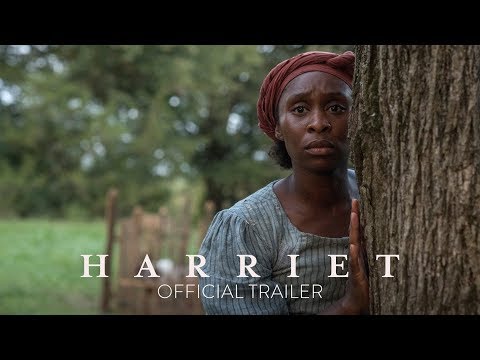
Harriet Tubman’s story waited far too long for a full cinematic treatment, and when it arrived, it came in the form of Cynthia Erivo, a performer of such concentrated intensity that the screen can barely contain her. Kasi Lemmons brings a mythic quality to the life of Araminta Ross, the enslaved woman who escaped bondage in 1849 and then returned, again and again, to liberate hundreds of others along the Underground Railroad.
The film is not interested in making Tubman a comfortable icon. It renders her as what she actually was: A visionary, a strategist, and a spiritual warrior who believed her divine visions were tactical intelligence from God. Erivo earned an Academy Award nomination for Best Actress, and her physicality in the role is extraordinary. She runs as though freedom itself is chasing her from behind. What Harriet ultimately argues is that courage is not the absence of fear but the refusal to let it be the last word. This woman freed herself, then went back for everybody else.
The Woman King (2022)
Directed by Gina Prince-Bythewood | Historical Action Drama
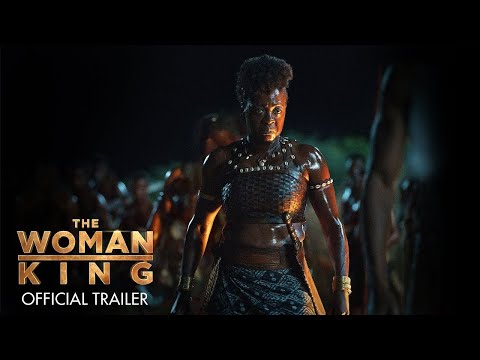
Gina Prince-Bythewood’s sweeping epic is everything Hollywood kept insisting wasn’t commercially viable, a big-budget historical action film led entirely by Black women, and it is absolutely magnificent.
Viola Davis plays General Nanisca, the fierce and battle-scarred commander of the Agojie, the real-life all-female warrior corps that protected the eighteenth-century West African Kingdom of Dahomey. This is Davis as you have never seen her, muscles carved, jaw set, executing choreography that required months of intensive training and delivering it with the same raw authority she brings to every film and stage.
The Woman King is a story about the cost of violence on the women who must commit it, about loyalty to a kingdom versus loyalty to one’s own conscience, and about the complicated legacy of a society that was both extraordinary and, at times, complicit in the regional slave trade.