How it started
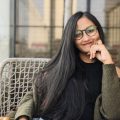
When Terri Hamm started reading books, Black characters had the same lives and mimicked each other in idiosyncrasies. Then, when her younger daughter took to reading, nothing seemed to have changed. The epiphany hit — these cannot be the only books with Black characters for teenage middle-graders. Even local bookstores did not have the range of books they were looking for.
In 2021, Hamm took matters into her own hands. She started an online bookstore to test the market waters. Turns out, it was not just Hamm and her daughter who felt the dearth of authentic Black literature that upheld the true essence of the community.
Today, the store features renowned Black authors, including bestselling author and managing editor of the Houston Defender ReShonda Tate’s most recent work,The Queen of Sugar Hill: A Novel of Hattie McDaniel, the story of the first Black person to win an Oscar for her role as Mammy in the classic Gone With the Wind.
Many have felt the need for a literary space that celebrates marginalized voices from authors of color. Project Row Houses, a nonprofit community platform for artists in Houston’s Historic Third Ward that supports marginalized communities, invited Hamm to participate in a small business incubation program, which helped with overhead costs and provided a subsidized rent rate to test out the business plan.
Kindred Stories opened a physical bookstore on Third Ward’s Stuart Street in September of that year. The idea was simple: to make literary spaces available in Black neighborhoods.

The store’s logo depicts three hardcover books turned to their side with heads on them, signifying “book people.” The design, says the store’s general manager, Chanecka C. Williams, weds a “family-based exploration of literature” with finding one’s roots within the written word.
Soon, the team started to grow. Stevens Orozco, a Houston-based writer, photographer, and archivist, is now the store’s main bookseller and community liaison. Williams was an avid reader and book shopper before Kindred Stories was a physical bookstore. When her custom orders made their way into the physical store, Hamm knew it was time for her to join her as a book buyer. Williams, who was already “planning an escape,” left her full-time job as an educator in 2022 and joined the organization.

In myriad ways, Hamm and Williams’ journeys as readers aligned. Born to Jamaican immigrant parents and raised by a single mother, Hamm always had books around her. Williams also saw her teen mother work full-time jobs but also make time to read. “We both see it as an act of self-care, and I think it’s even more an act of self-care in this day and age of book bans,” Williams told the Defender.
Celebrating the culture of Black-owned businesses and Black authors in Houston
Next door to Kindred Stories in the Project Row Houses complex is Gulf Coast Cosmos Comicbook Co., a Black-owned comic bookstore. When people walk in, they are “floored,” Williams has observed. Often, visitors share their amusement with the sheer number of Black writers in one place. She tells her staff to “see” the people walking in. “To see all of the Blackness in one place, people are shocked. “So many people are looking for community and safe spaces for themselves in this political climate that we try to be intentional about seeing them,” she said.
Kindred hosts books by Black and BIPOC (Black, Indigenous, People of Color) authors alike. A conscious decision features behind the store’s collection: avoiding books on Black, Asian and Latino history by authors who do not belong to the community.
“I do not understand how we are still publishing books by folks who do not look like the people they are talking about,” Williams said. “We are still seeing this consistently with super popular historical figures that are still being written by white authors. Those are not gonna be books that we carry in our store.”
For those engaging with academic texts or unwilling to read books on history, she recommends reading historical fiction that serves as a window into a culture. While doing so, she says readers should also put pressure on publishers to “stop allowing folks who do not look like us, who have not experienced what we have experienced, to write books.”
“Kindred Stories is a community space and bookstore that doesn’t just highlight Black literature but celebrates our stories in all their diverse and genre-spanning glory. Every book on the shelves is written by a Black author or other marginalized voice, and every display can spotlight a unique aspect of Black storytelling and craft,” notes the store’s website.
To have each other’s back
Kindred Stories organizes events to unite the community — author and book-focused events, and those that create a literary community where readers discuss ideas in literature and participate in workshops or documentary viewings.
Readers in the literary scene in Houston also participate in book clubs, workshops, and readings across the city, including those hosted by Inprint, a literary arts nonprofit organization. Its 15,000 readers and writers across genres engage in activities, such as the Margarett Root Brown Reading Series, which has featured more than 400 writers from 38 countries, comprising Nobel and Pulitzer Prize winners.
“It’s been beautiful to see the community show up for these authors and to see the conversations that happen between authors in the community,” Williams said. “Having that moment or providing the space has been a pleasure because this business doesn’t exist without community.”
She says these conversations can also be a healing experience and feel like “group therapy,” as the characters’ lives in the books can sometimes act as mirrors that reflect our innermost musings.
Project Row Houses’ book club Houston Reads, formed by Emerson Zora Hamsa in 2020, also chooses a Black woman author every season and reads the entire body of their fiction (and at times, nonfiction) works. Currently, the club is delving into Zora Neale Hurston’s literature.
Kindred supports them in several ways, from showing up with book sales to facilitating conversations with the community with the common aim of “liberation through art.” The bookstore is also a regular at the George Floyd Memorial lecture series hosted by the University of Houston.
When a book club at Kindred started in 2022, Williams remembers reading Saidiya Hartman’s Lose Your Mother. The book had a profound impact on the club.
“In the Black community, we don’t know what home is, we don’t have a real sense of what will happen once we get to the ‘motherland,’” Williams recollected. “To have this conversation with 15 other people, asking ‘Have you been? What was your reception? How does that make you feel to think about going home?’ Those conversations were buried inside of a lot of us.”
What was even more pleasantly surprising to the Kindred team was the participation of non-Black folks who showed up for the events, holding down the fort “on the back end.”
Then, while reading Assata Shakur’s autobiography, the club went through a reimagining of who she is. A leading figure in the Black Liberation Army, Shakur was charged with crimes several crimes, including two bank robberies in New York, a drug dealer’s kidnapping and murder, armed robbery, and the attempted murder of policemen.
She was given life for murder in 1977. Readers in the book club had perceptions of Shakur, but the book challenged their notion, portraying the radical revolutionary woman as “quite tender.” “How do these two people exist?” wonders Williams.


Defiance of book bans
Texas has banned more than 800 books in 22 school districts — the highest among any other state in the U.S. While it does not mean no one is allowed to read these books in the state it does mean that those books will be removed from public school classrooms and libraries.
According to the World Population Review, most of the targeted books have characters of color or identify as a member of the LGBTQ community and engage in discussions on race or discrimination. More than 2,500 book bans were enacted in the 2021-22 school year, impacting students in around 140 school districts across 32 states across the country.
Last year, Kindred Stories opposed book bans in its own way with Banned Wagon, a partnership among Penguin Random House, Freedom to Read Foundation, Pen America, and Little Free Library that aims to distribute banned books in communities where censorship has affected education. Together, these organizations distributed 350 such books.
“Unfortunately, I feel that it’s going to be Black and Brown kids that are impacted the most… providing increasing access to books for those populations is one of the reasons why Kindred Stories chose to become Kindred Stories, which is why we chose to show up in Third Ward specifically,” Hamm had then told the Houston Chronicle.
The Houston Public Library, Harris County Public Library, American Civil Liberties Union-Texas, Collective Action for Youth, The Reading Room, and The Mahogany Project supported this endeavor.
“It’s detrimental to those kids who are marginalized because they don’t see another way of existing,” Williams said. “To not have access to those stories can be a death sentence. Unfortunately, a lot of people don’t see the value of libraries and books. Using a library meant for reading, exploration, imagination, and finding yourself has turned into a place where you’re basically in solitary confinement. It’s so unfortunate. We need librarians, we need books.”


As a former educator, she feels children need access to books in schools and at home, as reading impacts reading scores and their worldviews. She remembers the times her mother took her to the public library every few weekends, despite her busy schedule, to check out books.
She recalls her years as a teacher when her students came to her classroom to read instead of taking their lunch break. Sometimes, she would even bring them books from her personal collection, as the library in her school at the Houston ISD was being used as a college workshop.
“I can’t imagine that something that made me feel whole and feel pleasure was now banned, or I could no longer do it. Our kids deserve so much more,” Williams said.
This is why independent bookstores are important, she says, applauding publishers that take a stand in stark opposition to book bans. The availability of books you cannot find in libraries and schools is more often than not found there, as a personal library does not need to adhere to laws and stipulations. In this case, per Williams, owning a book becomes a political act.
Kindred Stories recommends — Chanecka’s favs this season
- James by Percival Everett: Everett’s twist on the Mark Twain classic Adventures of Huckleberry Finn. The main character, Jim, retells the story from his perspective. A laugh-out-loud satire that highlights the lack of Black folks as main characters until the twenties.
- I Finally Bought Some Jordans: Essays by Michael Arceneaux: A collection by the Houston-based author, now living in LA as a screenwriter and a cultural critic. The book tackles the things Black millennials dealing with grief and inflation can understand, with humor and authenticity, says Williams.
- Quicksand by Nella Larsen: This is a reprint a few months ago for Larsen’s book, most well-known for her book Passing, a Black classic. “We are a little obsessed with some of the classics that are being reprinted. One of the things important to us at Kindred Stories is rediscovering classics,” Williams said. “We did not get to read these things when we were kids or even young adults because they’ve been out of print. So, we’re really passionate about reintroducing them to the community.”
- This Could Be Us by Kennedy Ryan: A recommendation for “romance girlies.”
- Bright Red Fruit by Safia Elhillo.
Becoming a reader
Williams says turning a “reluctant” reader into an avid reader takes a single thought — there is a story for everyone.
“We want people to know that there is something at Kindred Stories that is going to leave a lasting impression on you,” she said. “We do not have bestseller tables at our store because we are interested in people coming to explore themselves and look at what interests them. We are trying to capture people in their bodies in this moment and in this time.”