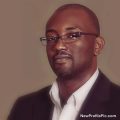
When Houston entrepreneur Jerome D. Love appeared recently on “The Kelly Clarkson Show,” he wasn’t there to promote a new app, book, or investment product.
He was there to ask a deceptively simple question—one that sits at the heart of American ambition and anxiety alike: What is rich?
That question anchors Love’s new YouTube docuseries, “What Is Rich?”, which explores how Americans define wealth beyond money through candid conversations about purpose, health, faith, family, and community.

Executive produced by Emmy Award–winning producer Rushion McDonald—best known for his long-running role on “The Steve Harvey Show”—the series is co-created by Love, an NAACP Image Award winner as host of “The Black Money Tree” podcast. In the process, Love and the city of Houston continue to help shape a national conversation about entrepreneurship and modern success.
The timing is telling. According to Charles Schwab’s 2025 Modern Wealth Survey, Americans believe it takes about $2.3 million in net worth to be considered rich. Financial advisors often define “high-net-worth” as $1 million in liquid assets, with higher tiers beginning at $5–10 million and $30 million-plus. Perception varies widely: Boomers set the bar at around $2.8 million, while Gen Z is closer to $1.7 million. In high-cost cities like San Francisco, residents believe it takes more than $4 million to be wealthy, while Houston and Dallas hover near the national average.
Yet, Love’s docuseries suggests that even those numbers miss the point.

A moment that changed the question
The genesis of “What Is Rich?” traces back to a deeply personal experience. In 2014, Love’s father was diagnosed with cancer and called his son one morning, asking for help getting to a medical procedure. Love left work immediately and was able to be there.
“Later on, I thought about it, and I just couldn’t stop thinking,” Love recalled. “I said, ‘Man, what if I had a traditional job and I asked my boss and he told me no?’”

That realization stayed with him.
“A lot of times, people say that they want to be rich or they want money, but really, what they want is what money brings—security, freedom, and the ability to choose your own destiny,” Love said. “So many people don’t have that God-given right because they don’t have the resources.”
That insight pushed him to create something educational, designed to help people understand money not as an end in itself, but as a tool for building lives, businesses, and communities.
Redefining ‘rich’
For Love, the defining moment came later that same day, over a dinner conversation with his father about their views on what constitutes success.
“You needed me, and I was able to be there for you,” he said. “With that, I think this right here is success. Everyone wants to create better lives for their families, and you can’t do that without the financial means.”
But the series argues that financial means are only one layer.
Carol Guess, chair of the Texas Association of African American Chambers, defines rich as something far more profound.
“I define rich as being at peace with yourself and with God,” she said. “Shalom peace—fullness in every area of your life.”

Bria Fuller, a personal trainer and healthcare professional, views richness through the lens of health.
“I’m going to define rich as the care we give our bodies and the benefits we receive from that care,” she said, noting that longevity, mobility, and freedom matter more with time than material possessions.
For Jene Washington, Ph.D., a retiree and board member of Manna House (a food pantry located across the street from Texas Southern University), richness is rooted in service and human connection.
“Rich is not just about money,” she said. “It’s about giving back, accepting people where they are. There are people with no money who are just as rich as a billionaire.”
Washington sees that richness every time she volunteers at the Manna House.
“People drive up to our Manna House and thank us just for being there, and they consider themselves rich,” she said.
Marcus Davis, owner of the Breakfast Klub and tbk Holdings, expands the definition to collective power.
“When a community can sustain itself—investing in our businesses, banks, HBCUs, and institutions—that’s what’s rich,” he said. “When a community can depend on itself.”
Even NBA star C.J. McCollum draws a distinction.
“Rich is more short-term,” he said. “Wealth is a long-term strategy.”

Myths about money
Several voices in the series and within the Houston community caution against confusing money with fulfillment. Fuller notes that in later years, what matters most is health. Guess, who works closely with high-net-worth individuals, is even more direct.
“Things cannot bring fullness,” said Guess. “There are people with money who still feel insecure, unsettled, or emotionally unstable.”
Guess points to public examples—wealthy influencers, entertainers, and executives undone by pressure or despair.
“Mo’ money, mo’ problems,” she said, quoting Biggie Smalls. “Unless it’s obtained through purpose.”
Without spiritual and emotional grounding, she argues, money can amplify paranoia and mistrust instead of peace.
Road to real riches
Across the series, a common truth emerges.
“You’re not rich because of what you have,” Love said. “You’re rich because of the choices you can make.”
He emphasizes systems over windfalls.
“If I give you $10 million without a framework, it’ll be gone,” he said. His own wealth-building philosophy—“Attitude, Action, and Achievement”—focuses on mindset, movement, and maintenance.
For others, the path includes faith, service, and discipline. Washington credits her church community (Pilgrim Congregational United Church of Christ) for reinforcing a life of giving. Fuller advocates consistency over extremes—30 to 45 minutes of daily movement, paired with proper nutrition and hydration.
Where to watch
“What Is Rich?” premiered on YouTube on Jan. 12 and is available via The Black Money Tree channel by searching “What Is Rich.” Love says larger distribution deals are in progress, with the potential to reach nearly 100 million households.
In the meantime, the series offers something more valuable than a dollar figure. It reframes success as freedom, purpose, health, peace, and community—measures of wealth that compound over time and can’t be lost in a market downturn.