Ikechi Ojore, a musician, educator, and social media influencer, recently posted, “I love being Black. It’s dangerous AF, but it’s dope.”
And certainly, many can agree, it’s “dope.” But it’s the “dangerous AF” part that leads to so many negative daily realities and outcomes (re: health, economics, education, etc.) that have Black men, women, and children at the wrong end of nearly every quality of life indicator.

Enter the army of Black people who are rediscovering mindfulness practices, and using them to combat these cultural/racial challenges.
WHAT IS MINDFULNESS
Mindfulness practices are activities and skills that help a person focus their awareness (attention) on the present moment, calmly acknowledging and accepting their feelings, thoughts, and bodily sensations. These practices have been shown via scientific research to be proven therapeutic techniques that can increase the sense of gratefulness, reduce stress, improve attitude, increase metabolism, and a host of other benefits.
Mindfulness practices include yoga, meditation, walking, gardening, and other activities that allow a person to be fully in the moment. Even dietary practices aimed at improving one’s health can be considered a mindfulness practice.
Yoga instructor Onica says mindfulness is not only what you practice while on the yoga mat, but what you do once you end the session.

“Mindfulness to me is, as you’re leaving, how you respond to different things… It’s teaching you how to deal with the real world, how to respond to things, like traffic or anything that could set you off normally.”
Here are how these practices are showing up in the Houston area.
YOGA/MEDITATION
Though yoga and meditation are ancient holistic health practices, millennial and Gen Z members are the ones making the big push to incorporate these practices in more traditional Black churches. However, many “seasoned saints” are finding the practices right up their alley. And that makes sense, seeing that these two practices are “go-at-your-own-pace” activities.
And because there are so many different kinds of yoga practices, it is possible for anyone to start.
“Whether you’re a couch potato or a professional athlete, size and fitness levels do not matter because there are modifications for every yoga pose and beginner classes in every style,” says Dr. Natalie Nevins, DO, a board-certified osteopathic family physician and certified Kundalini Yoga instructor in Hollywood, California (source: osteopathic.org).
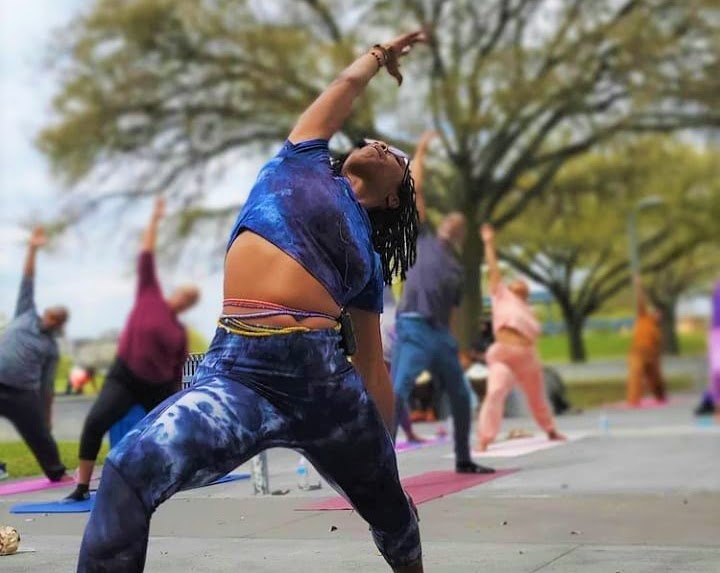
“The idea is to explore your limits, not strive for some pretzel-like perfection. It is a great way to get in tune with your body and your inner self.”
Here are some of the physical benefits of yoga:
- lessened chronic pain (i.e. lower back pain, arthritis, headaches and carpal tunnel syndrome)
- lowered blood pressure
- reduced insomnia
- increased flexibility
- increased muscle strength and tone
- improved respiration, energy and vitality
- maintaining a balanced metabolism
- weight reduction
- cardio and circulatory health
- improved athletic performance
- protection from injury
Onica, who teaches a yoga class every first and third Saturday from noon to 1p.m. at the Shrine Cultural and Events Center, sees other benefits.
“I just love the sense of community that naturally forms as I lead classes. And I think that’s really important to find kind of your tribe, and to have a place to feel safe to release.”
Amanda, a sound healer, adds the ancient Egyptian practice of sound meditation to Onica’s yoga classes to enhance the mindfulness experience.
“When the sound bowls are played it not only opens up the chakras, it allows for the energy to move and clear energy blockages that may cause stress, unease, and make it harder to fall asleep.”
DIET
Diet is a great place to start according to healthcare professionals. Jennifer Jones, founder/owner of JENuine Nutrition and a certified integrative, holistic nutrition health coach, personal trainer and wellness educator, lives by the dual mottos “Love yourself to better health” and “Live with intention, eat with intention.”
“Not only can what we eat improve our mental and emotional well-being, but things we do to improve our mental health and what we think can then lead to better food choices,” said Jones.
And she’s not alone.
“Chronic diseases, whether it’s diabetes or heart disease or obesity, they’re caused by our diet and lifestyle,” said Dr. Munish Chawla, who with his wife Dr. Bandana Chawla, are physicians who are board certified in lifestyle medicine, and founders of their nonprofit, Peaceful Planet Foundation. “We need to fix that. Otherwise, we can throw all the pills, all the procedures [at them, but] we’re not addressing the root cause.”
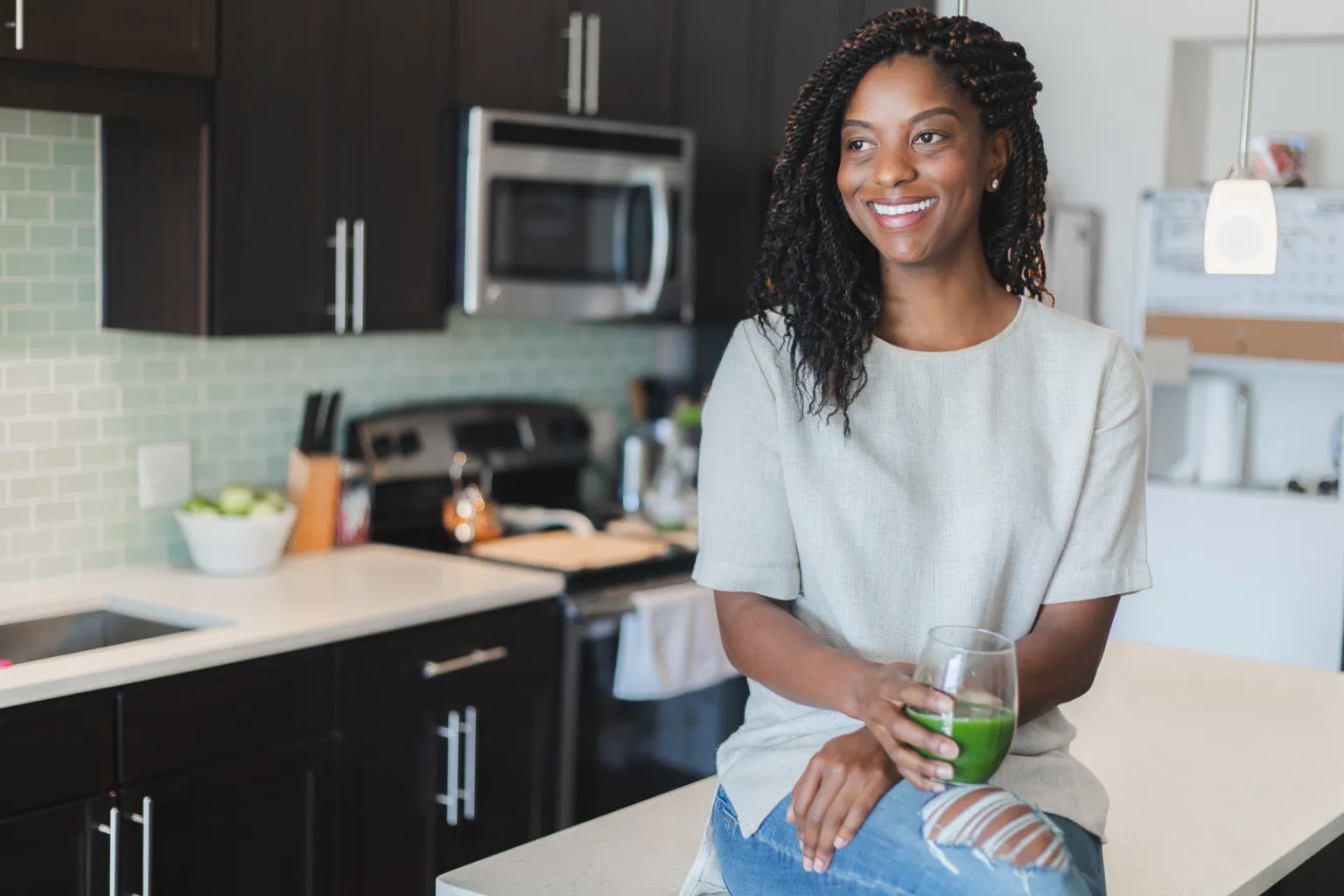
According to the CDC, the benefits of eating healthy for adults are as follows:
- Keeps skin, teeth, and eyes healthy
- Supports muscles
- Boosts immunity
- Strengthens bones
- Lowers risk of heart disease, type 2 diabetes, and some cancers
- Supports healthy pregnancies and breastfeeding
- Helps the digestive system function
The benefits for children include many of the same things, along with the plusses of supporting brain development and healthy growth. And there are additional benefits, as well, for persons of all ages.
EXERCISE/WALKING
Several organizations offer exercise sessions and classes for members and the larger community. SHAPE Community center offers regular exercise sessions for their Elders Institute of Wisdom members. Tia Norman, pastor of The Awakenings Movement, not only preaches holistic wellness, she’s a yoga teacher and a meditation guide.
Girl Trek groups can be found in multiple sister circles, including sororities, friend groups, and houses of faith, like First Metropolitan Church.
“We started a Girl Trek small group, inspired by a sermon from a past summer about the topic of mind, body and spirit health,” said Quinita Ogletree.
The benefits of walking alone are astounding. Here are a few:
- Maintain a healthy weight and lose body fat
- Prevent or manage various conditions, including heart disease, stroke, high blood pressure, cancer and type 2 diabetes
- Improve cardiovascular fitness
- Strengthen your bones and muscles
- Increase energy levels
- Improve your mood, cognition, memory and sleep
- Improve your balance and coordination
- Strengthen immune system
- Reduce stress and tension
OTHER
There are other local initiatives not run by faith communities, but movements that call upon groups of faith to participate in health-improving activities.

The Women’s Resource Center, founded by Dr. Willie Mae Lewis, leads the ImaniFaith Health Initiative to get pastors, trusted community leaders and voices, to lead their members to take mindfulness practices, and thus, their health, more seriously. The WRC offers a bevy of programs including a slate of Saturday offerings that train groups in self-management (stress and conflict resolution), healing arts, mental health, health food prep workshops, health monitoring and much more.
The Emancipation Economic Development Council’s (EEDC) Faith in Action Workgroup also supports mindfulness activities in the form of urban gardens, health fairs, health monitoring and more.
ADDITIONAL BENEFITS
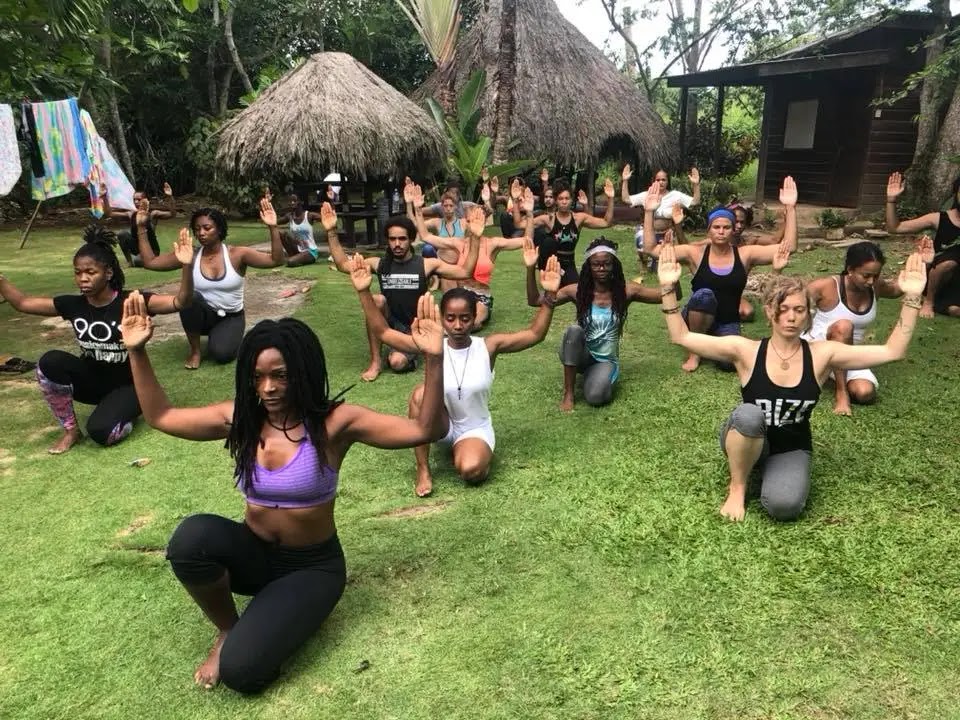
Mindfulness offers a wide variety of benefits, from anxiety and stress reduction to improved sleep and even improved attention span and focus. Although results vary, the emotional, mental, and physical health benefits of mindfulness are well-documented.
These benefits include 1) better communication, a foundation for improved relationships; 2) higher sense of gratefulness, 3) feeling better about yourself by reducing negative self-talk; 4) increased enjoyment of meals by reducing distractions while you eat, which in turn improves digestion.