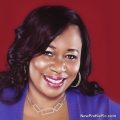
It was just another school day when my 17-year-old son texted me from Elkins High School in Fort Bend, Texas.
His message was short, but the disbelief was clear: Mom, your book is banned. I stared at my phone, stunned. What had I done? More importantly, what had my book done to warrant this kind of censorship?

As it turns out, my debut novel, My Brother’s Keeper, was among several titles quietly removed from school libraries due to a so-called “internal audit.” (I’m on book #54 now). My name appeared on a list of banned books—right under Octavia Butler, one of the most prolific voices in African American literature. The idea that my work and hers were being erased felt both personal and deeply systemic.
Texas has emerged as the national leader in book ban attempts, fueled by recent legislation and growing concerns among parents and educators. According to the American Library Association (ALA), book challenges have surged across the state, with 2023 seeing an unprecedented 4,240 titles challenged. While book bans are not new, Texas has positioned itself at the forefront of this troubling trend.

The legislative push to silence stories
The catalyst for this surge appears to be the enactment of HB 900 on September 1, 2023. This law mandates school library vendors to assess and rate books based on sexual content and requires the recall of those categorized as sexually explicit. However, the law’s vague language and rushed implementation have led to chaos. The next battle looms as Texas lawmakers introduce HB 183, which would grant the State Board of Education sweeping authority to ban books from school libraries statewide. If passed, this could mean even greater censorship, affecting thousands of students who rely on literature to see themselves and their histories reflected.
Several Houston and Austin bookstores, alongside organizations such as the American Booksellers Association and the Authors Guild, have challenged HB 900, citing constitutional concerns and logistical hurdles. The Texas State Teachers Association (TSTA) and other educators have also voiced their disapproval, highlighting the potential for overreach and censorship.
Anne Russey of the Texas Freedom to Read Project put it bluntly: “Your board has adopted the most restrictive policy we’ve seen in the whole state. They’re eliminating books promoting gender or racial stereotypes’—but we know what that means. They’re not talking about white people or cisgender people. They’re targeting trans people and people of color.”
Even more alarming, school districts have adopted secretive review processes that exclude trained librarians. Instead, district administrators—who often lack literary expertise—arbitrarily determine which books stay and which are removed. Russey noted that in some districts, any mention of sex, sexual abuse, or even historical racial injustice is grounds for removal.
“Books aren’t being evaluated in context, which is what Supreme Court precedent requires,” she said. “They’re just being thrown out.”
Who Gets Erased?
The implications of these policies are significant. Nearly half of the challenged books represent voices from racial minorities and the LGBTQ+ community. Titles like Sold, The Bluest Eye by Toni Morrison, and The Perks of Being a Wallflower have been notably targeted.
In Fort Bend ISD, my book was reportedly flagged due to two “sexually explicit scenes.” This was news to me. I don’t write sexually explicit material. The suggestion that my work could be deemed inappropriate raised a larger question: Who is making these decisions, and why?

It turns out that 25 books have already been removed from my district alone under the so-called internal audit, and there is no transparency about the review process. Librarians and educators have been sidelined, and parents—except for those lodging complaints—are largely left in the dark.
“The people making these decisions aren’t trained to evaluate literature. In some districts, they’re literally just checking a box. If a book contains any mention of sex—context be damned—it’s automatically out. That’s not how literature works, and it’s certainly not how we should be educating students.”
Anne Russey, Texas Freedom Project
The broader impact and the fight ahead
These book bans are not just about individual titles; they are about erasing experiences and perspectives that challenge the dominant narrative. They send a chilling message to students: Certain voices don’t belong, certain histories shouldn’t be told and certain identities should remain invisible.
This fight is personal to me. I refuse to let my work—or the works of authors like Octavia Butler, Toni Morrison, and Jerry Craft—be erased without resistance.
Russey and her organization are already taking action. “We use public information requests to track these bans, to expose what’s happening behind closed doors,” she said. “We work with national organizations to raise awareness, and we support local communities in fighting back. But this isn’t just about book bans—it’s about a much larger effort to reshape education into something that excludes marginalized voices.”
When my son first texted me, I told him, “I want to be the voice for all of them.” And I mean it. This isn’t just my fight—it’s a fight for every writer, every student, and every person who believes in the power of storytelling.
If we don’t push back now, what’s next?