This Sunday marks the beginning for what many Black chefs and food growers hopes to be an ongoing movement of taking back what is ours.
Kulture: A Black Chef Table seeks to offer a unique dining concept that ushers in the re-opening of the popular Kulture restaurant (701 Avenidas de las Americas, Suite A, 77010), which has been closed since the early days of the pandemic, with a culinary experience spotlighting African/African American food purveyors and chefs identifying as Black Indigenous and People of Color (BIPOC).
“This series is important because our story is important, our voice is important, our culinary contributions both historically and present-day are important,” said Marcus Davis owner of Kulture and The Breakfast Klub, and co-organizer of the series. “Lastly, access and opportunity are important.”

This first round of this series kicks off Sunday, Nov. 7 at Kulture and will feature Chef Michelle Wallace, executive chef of Gatlin’s BBQ and owner of Between the Slices. Next up will be Chef Shawn Osbey of OWN Network, Shawn Osbey Catering and the Awaaba Bed and Breakfast on Nov 12-13. Chef Reggie Scott of Uncle Reggie’s International BBQ will be preparing meals for participants Nov. 19-20, while chefs James Haywood and Ross Coleman of Kitchen 713 will close out 2021 events Dec 3-5.
The first round of Black Chef Table, however, will culminate in Feb 2022 with food prepared by the event’s curator, Chef Keisha Griggs of Ate Kitchen and Bocage Catering.
All events will take place at Kulture and will feature multi-coursed meals. However, this food will be served with generous portions of history, culture and pride.
“Kulture: A Black Chef Table is dedicated to supporting the diverse culinary landscape and the vast spirit, wine, beer makers, and Black-owned food purveyors by providing a space to cultivate, incubate and promote talent,” said Griggs. “It will provide an opportunity for BIPOC gastro artists to showcase their talents and illustrate their culinary perspective on the national platform.”
Davis, best known across the country for his popular, award-winning restaurant The Breakfast Klub, wants Black culinarians to rise to the same heights as non-minority chefs, and he believes the James Beard Nominated Kulture provides an optimal vehicle to do so.
“Ujamaa – the principle of cooperative economics – has long been the foundation upon which we’ve built the offerings of our family of brands,” said Davis. “Collaborating with Chef Griggs to present Black Chef Table is a natural extension of that work. We want to utilize our platform to highlight the ever-growing landscape of Black culinarians in a way that acknowledges our contribution to world cuisine, leverages our buying power, and benefits our economy.”
For Davis, this event strikes a nerve in a good way.
“When we opened Kulture it was to fill a void in he market, to fill that representation void that highlights the diversity of Black chefs,” said David, who points out that the racism that historically and continually overlooks the wide variety of Black food preparer genius merely mirrors the racism and BIPOC lack of representation in the larger society.
“We want to give Black chefs the space to tell their story through their food.”
Davis said that just a mere five years ago, a Black chef couldn’t cook Black food without being “pigeon-holed” as a soul food restaurant.

“The Breakfast Klub is not a soul food restaurant. To be a soul food restaurant you have serve greens, yams and macaroni & cheese, none of which we have on the menu. We’re breakfast food establishment, but we’re rarely compared to La Peep and La Madeline. We’re lumped into the soul food category.”
And Davis is in no way throwing shade at soul food. Quite the contrary. He sees it as a category of food that deserves the same level of respect as any other, as well as those who prepare the meals.
Davis added that until recently, Black chefs couldn’t cook traditional southern (soul food) dishes and receive the much-deserved recognition for their skills, sharing that one of the nation’s top Black chefs was only able to open a highly successful and critically-acclaimed soul food restaurant after he established a successful restaurant that featured Italian cuisine.
Griggs envisions Black Chef Table turning on its head that small-minded view of what Black chefs can do and what types of meals are to be appreciated. And her fire stems from a desire for Black people to reclaim what is ours.

“Black food and Black people aren’t a monolith,” said Griggs. “So, the idea that Black food ‘looks like this’ is something that I want to bring awareness to, like, ‘No, it doesn’t.’ We have Caribbean chefs, we have African chefs, we have Asian Black chefs, we have Spanish Black chefs. And all of those influences impact the types of foods that they cook. And I want it to be able to be a part of a movement if you will, to promote that and where we source our food from.”
And it’s the sourcing of food that should certainly not be overlooked, as it is a huge part of the Black Chef Table pop-up series. Hence, the series is spotlighting Black food producers (purveyors), including Fresh Life Organic, Ivy Farms, Sweetwater Farms, Captain Seafood, Captain Fred Seafood, Edelman Meat, PPF Farm and Plant It Forward.
“I wanted to be able to bring in and promote and start the thinking that we should be sourcing, as restauranteurs and as chefs, from Black purveyors here in our city,” shared Griggs.

The event is timely, as it speaks to current issues that go beyond a good meal.
“Right now, we’re in the middle of a global crisis, as far as food. And I’ve been asked, ‘How has that impacted you?’ But if you source locally, you don’t care if there’s a ship off of the coast of California having issues, because you’re sourcing locally and you’re keeping our Black dollars circulating in our Black communities. So, with Black Chef Table there are multiple dates, pop-up dinners, highlighting chefs of color and how each chef is tasked to utilize food from all Black purveyors, ranchers, farmers, fishermen, so we’re sourcing from them for each dinner.”
Like Davis, Griggs believes BIPOC chefs have been pigeon-holed, but sees a change in the dynamic currently afoot.

“I think that now with the documentary High on the Hog, we, as Black chefs and Black food purveyors, we’re taking a step back and saying, ‘Wait a minute, one, farming and agricultural started from us. American food is really African food, and it’s been picked up and interpretated in all different ways.’ There’s a reason why we all eat corn, we all eat sweet potatoes, we all eat okra, we all eat black-eyed peas across the diaspora. There’s this reason why plantain shows up in Caribbean food and in Mexican food. Our food spans the world. African food is global food. So, to be able to tell the story that we all have snippets of throughout the diaspora is important.
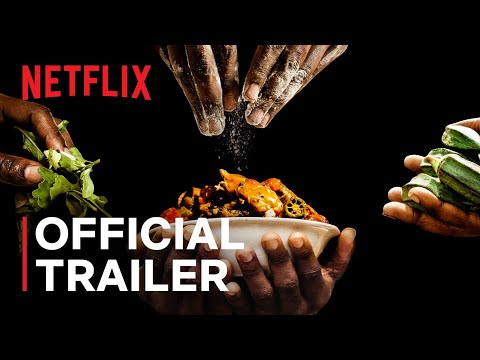
“It doesn’t all look like soul food. It looks like tamales and pasteles. There’re empanadas across the board. There’s a version of a hush puppy across the board, which is cornbread. So, telling the story of how diverse our food is, is important. BIPOC chefs, we’re telling our story, and it looks different than traditional soul food or Creole food or pasta.”
Griggs is genuinely just as excited, if not more so, about the history that will be shared via Black Chef Table as she is the good food and fellowship that will be enjoyed by participants.
And she’s not concerned about the lack of recognition from outside our communities.
“It’s not given to us, we’re taking it. I think that we’re in a time now where our voices, we’re on a megaphone and we are taking a step back and then moving 20 steps forward and saying, ‘We kind of own this. We’re kind of the originators of cooking in America and agricultural, planting and growing food in America.’ When the Europeans came here, Indians and Africans taught them how to plant and how to grow and how to look at the seasons and what seasonality is and harvesting seeds.

“We brought rice from Africa here. Why do you think rice is here? These are the histories that we’re not taught. I thought, before I got into food, that rice was something that was from Japan. No, no, no. Rice, watermelon, etc. are from Africa. That’s why we have all of these strong ties to these foods across the world because Africa exists everywhere.”
And it’s that global diversity and creativity that Griggs says will be on display at Black Chef Table, with each chef promoting a different culinary experience.
“We’re starting November 7 with Michelle Wallace from Gatlin BBQ, who has a history of smoking and open fire cooking, because it’s a barbecue. Because barbecue is an African cooking technique. Open flames, smoking, studying the wind pattern, studying the weather, monitoring heat, playing with fire, is something that’s innately in us just because of who we are. So, Michelle is telling her story via smoke.”
Griggs says Wallace is utilizing that first Black Chef Table event as a fundraiser for Eisenhower High School’s culinary program that recently had its budget slashed, damaging their plans to take students to Italy. As an added bonus, students from Eisenhower’s culinary program will be in the kitchen cooking some of the things that people will be eating on Nov 7, and serving.
Both Griggs and Davis hope to see Black Chef Table institutionalized and continued far beyond 2022.
We’ve been trying to sit at someone else’s table. But it’s high time that we create our own table.
Chef Keisha Griggs
“We have an amazing food history in this country and in this world that we need to start to promote and support. I’m hoping that it’s something that continues on and on and on. Because still, people don’t even know that we have Black farmers right here in the city of Houston. We have Black ranchers who are selling everything right here, fishermen who are going out into the sea and bringing things back. We assume something different. And I want people to know that we really can be a sustainable community,” stated Griggs.
Griggs reiterated Black Chef Table is not about asking others outside our communities for permission or approval, but creating something that’s for us, by us, including our long, global history of Black food purveying and preparation.
“We’re taking it back. So, the utilization of sustainable purveyors is very important to me, and then just showcasing amazing food from a bunch of different chefs. It’s a shame that it’s 2021, and we’re just now breaking out from, ‘Oh, a Black chef can make French food and have an African perspective on it. A Black chef can make Asian food and fuse it with Creole food, because that’s our history.’ We’re innovators. So, this is an opportunity to keep that bullhorn loud. There’re lots of BIPOC communities coming together to be able to create a foundation for us because we’ve been playing in someone else’s court. We’ve been trying to sit at someone else’s table. But it’s high time that we create our own table.”
To purchase tickets and for more information, visit www.blackcheftable.com.