Teeba Rose recently had breakfast at the farmers market he grew up working in, the Farmers Market Partners. The establishment, run by his mother Thomasine Johnson, has a vendor lineup that’s roughly 90% Black.
“I bought a delicious $8 breakfast, paying $12, and told my very courteous waitress, ‘Keep the change,’” Rose shared. “She restated to me with surprise, ‘Your meal is just $8.’ I said, ‘Yes ma’am; thank you.’”

Rose shared this slice-of-life moment to make a point.
“We never teach our kids what to invest in (each other), so we buy shiny stuff and suffer, unlike Asians and others,” said Rose, one of the owners of the Community Collective (formerly known as the Power Center), one of the largest Black-owned venues in the city of Houston. “We don’t have a money problem. We have a ‘what to do with money’ problem.”
Rose, a native Houstonian whose K-thru-college education took place almost entirely off Scott Street (Grissom Elementary, Cullen Middle School, Yates High School and Texas Southern University), laments the fact that individuals of other cultures have historically used their money and resources within their culture, while Black people, for the most part, have not.
Rose added, “Anything we make, everyone else wants to either duplicate or get us to do it for them instead of us doing for ourselves. What we have harnessed and found the ability to do is use music, color, culture, clothing to incentivize, motivate and shape everyone else’s culture because everyone wants to be like ours. The one thing we have decided not to do, which is simply a choice, is to buy within our own culture.”
What Rose is saying is neither new nor “news” to Black people. But how do we actually change this reality? What concrete steps, what gameplan, can we use to institutionalize and normalize Buying Black?
Reverend Al Sharpton, head of the National Action Network (NAN), has the right idea with his organization’s “Buy-cott” campaign.
Buy-cott
In the wake of Donald Trump’s re-election and promises to end diversity, equity and inclusion (DEI) initiatives, several major corporations, including Walmart and Target, reversed course on the DEI commitments they announced after George Floyd’s May 25, 2020 murder.
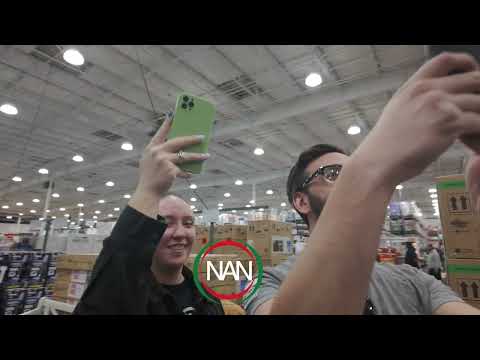
While many called for DEI supporters to boycott anti-DEI establishments, Sharpton called for a “buycott,” directing consumer dollars to corporations that support DEI.
“As we celebrated the legacy of Dr. (Martin Luther) King while Donald Trump took the oath of office, I promised to not only boycott companies that abandon their DEI commitments but support those who upheld them,” Sharpton said in a statement. “Costco has stood by their DEI programs because they see them as both the right thing to do and a smart business strategy. NAN will live by its own promise to support the companies who support us.”
Selective Patronage
Sharpton’s “buy-cott” has a similar historical precedence. The Civil Rights-era strategy of “selective patronage,” introduced to the movement by Leon Sullivan, added “teeth” to the sit-ins and lunch counter protests. Selective patronage was all about Black people refusing to patronize businesses that refused to hire Black people, and fully supporting those that did.

During MLK’s last public address (April 3, 1968) he not only challenged attendees to boycott anti-Black businesses, he called for a “bank-in” and “insurance-in,” or rather, a “buy-cotts” in the form of removing Black dollars from white-owned banks and insurance companies and investing that money in Black-owned institutions.
After issuing that challenge MLK said, “Now these are some practical things we can do,” regarding “building a greater economic base.”
The challenges to Buying Black and the benefits of doing it have been discussed thoroughly over the years. But without offering a specific game plan (“some practical things we can do”), making Buying Black the norm is difficult, at best.
The Defender spoke with various Houston-area Buy Black advocates to get their take on the game plan needed.
Develop a Buy-Black mindset
Rose believes the first step in normalizing Buying Black is shifting mindsets.
“We first have to realize everyone else outside of your group is utilizing your likeness and your product to make tons of revenue that will never return to your community,” said Rose, who believes a changed mindset can lead to changed actions.
“How do we locate and use Black vendors? You say to yourself, the first thing I’m gonna do is look for a person like me to give this dollar.’ You’re gonna buy a car? Look for the Black sales agent. You’re gonna buy a house? Look for the Black realtor. Look for the person who looks like you and needs your support, then support them. In turn, these people will look for you and support you,” stated Rose.

Nailah Nelson, who directs the Buy Black Marketplace, which is held every first and third Saturday of the month from noon to 5 p.m. at the Shrine Cultural and Event Center (5309 MLK Blvd, Houston 77021), believes developing Buy-Black minds should happen everywhere Black people exist.
“The importance of buying Black should be taught in the home with families. It should be a topic of discussion among friends and yes, a focal point in the church,” said Nelson.
Attend Black Business networking events
Dr. Asheli Atkins, president and CEO of the Greater Houston Black Chamber (GHBC), suggests attending networking events.

“We have our Network and Nourish, our monthly, second Tuesday event, which allows the public, anywhere from business owners to people in public policy to some of our corporate members and consumers, people who work 9-to-5s, to come and network across networks,” said Atkins.
Other
Other actions suggested to help increase our Buy Black opportunities include utilizing resources that list existing Black businesses (HoustonBuyBlack.com, BlackDirectory.com, WeBuyBlack.com, BuyBlack.org and BlackBookHouston.com). Another involves identifying entities and organizations offering Buy Black opportunities.
Below, the Defender compiled a list of tangible, easy-to-do Buy Black action steps:
Defender Buy-Black action steps
Institutions
- Black faith institutions identify, promote and increase spending with Black businesses
- Local HBCUs and educational facilities focus on buying more from Black businesses
- Black-owned businesses, use Black accountants, Black lawyers, vendors, etc.
- Black organizations cater your events via Black-owned establishments.
- Corporations set a budgeted amount to spend with Black businesses
Consumers
- Set weekly/monthly dollar or percentage spending goals with Black businesses.
- Take at least one day a week to advocate and advertise for your favorite Black businesses, especially online.
- Purchase Black books, subscribe/donate to Black media and buy artwork from Black-owned shops.
- Increase your commitment to supporting a specific number of Black businesses, especially during the holiday season, (e.g., on Juneteenth, I will specifically support at least three Black businesses)
- Ask for a Black representative when patronizing non-Black-owned businesses
- Open an account at the Black-owned bank – Unity Bank
- Utilize Black-owned service providers – plumbers, electricians, doctors, dentists, etc.