

For whatever reason, when people talk about U.S. Black history, Houston events rarely get acknowledged. But, Blackfolk in Houston have played a major role in the history of this city, state, nation and world.

Here are 11 of the Defender’s Houston Black History Moments. We’d love to hear from you about our list. What did we get right and what did we leave off? Let us know by contacting us at aswad@defendernetwork.com.
History of Juneteenth
Nationally revered historian, and UH professor, Dr. Gerald Horne believes because Galveston and Houston have so often been coupled, the history of Juneteenth deserves a spot on this list. Horne is in the process of writing a book that shows Juneteenth was about more than just apprising the enslaved on June 19, 1865 that they were free.

“This was part of a larger struggle insofar as Mexico had been taken over by France,” Horne said. “The Confederates would surrender in April 1865. Many of them were headed to Mexico where they plan to continue enslavement… General Granger was accompanied by thousands of African troops, Negro troops. And it was part of an effort to keep the Confederates from continuing slavery south of the border, which was the plan, and continuing to wage war against the United States from Mexico. Our ancestors, who were armed, helped to squash that particular plan.”
Purchase of Emancipation Park
Sparked by the desire to have a place to commemorate the anniversary of their emancipation (Juneteenth), community members – all formerly enslaved – in the Third and Fourth wards led by Reverend Jack Yates, Richard Allen, Richard Brock and Reverend Elias Dibble, united to raise $1,000 in 1872 to purchase 10 acres of park land to host Juneteenth celebrations. This is significant, not only as a ritual of remembrance and celebration, but also as an early act of exercising the new right of property ownership. (Source: epconservancy.org).
Camp Logan Rebellion
The Camp Logan Riot/Rebellion of 1917 involved soldiers from the all-Black 3rd Battalion, 24th Infantry (Buffalo Soldiers), who were housed at an Army training camp at a site now primarily occupied by Memorial Park. These soldiers, who had served valiantly on foreign battlefields fighting for America, were transferred from New Mexico to Houston to serve as security for Camp Logan, which was in the process of being built. Unlike their experiences in New Mexico, these Black troops faced rabid, daily micro- and macro-aggressions from Houston’s racist white citizens, especially members of the Houston Police Department who were notorious for their abuse of Blacks

On Aug. 23, 1917, Black soldiers from Camp Logan, incited by police violence earlier that day armed themselves and marched into town. Why? Two HPD officers molested a Black woman after breaking into her home in search of a Black man suspected of shooting dice, then pistol-whipped and jailed one of the Black soldiers who attempted to intervene on behalf of the sister. When that soldier’s commanding officer went to HPD headquarters to check on his soldier, HPD attempted unsuccessfully to kill him. However, word got back to the troops at Camp Logan, who decided to march on HPD. In route, they were ambushed by HPD members and armed white citizens. When the “riot” ended, four soldiers and 15 white civilians were dead. Numerous Black soldiers were eventually hung or received life sentences as punishment in a trial that was the largest military court martial trial in U.S. history.
“My uncle (Jesse Ball Moore) and those other 12 men executed first did not have their cases reviewed, though no white citizens could identify them,” said HCC Professor Angela Holder, curator of the 2017 Camp Logan exhibit. “Thirteen court marshals, no appeals for clemency. They were hung.”
Dr. Chad Williams, chair of Brandeis University’s African American Studies Department, contends the Camp Logan story has been relatively ignored by white scholars because it doesn’t fit the narrative of docile, fearful Blacks.
“The Houston rebellion represented white Southerners’ worst fears – armed Black men violently retaliating against Jim Crow racism, a reality that ran counter to Houston’s image (in 1917) as a city representing the racial conflict-free ‘New South.’”
Founding of TSU
On September 14, 1927, the Houston Public School Board agreed to fund the development of two junior colleges: one for whites and one for African-Americans. With a loan from the Houston Public School Board of $2,800, the Colored Junior College was born under the supervision of the Houston School District. The Colored Junior College progressed so fast that by 1931, it became a member of the Association of Colleges and Secondary Schools and was approved by the Southern Association of Colleges.

Between 1934 and 1947, this entity became a four-year college known as the Houston College for Negroes operating out of Yates High School. With rapidly growing enrollment, and support from local philanthropists, the school secured 53 acres in Third Ward and moved in 1946 from Yates HS to the school’s first structure, the T.M. Fairchild Building.
That same year Heman Marion Sweatt, an African American Houston mail carrier, applied for and was denied enrollment to the University of Texas’ law school. To maintain segregation, the Texas Legislature passed Senate Bill 140 on March 3, 1947, providing for the establishment of a Negro law school in Houston and the creation of a university to surround it. They chose Houston College for Negroes to be that school, and changed its name to Texas State University for Negroes.
The Heman Sweatt legal case, led by the NAACP’s legal division, was one of the key battles that initially led to the 1954 Brown v. Board of Education victory legally dismantling segregation in education, three years after the school changed its name to Texas Southern University.
Desegregation of Houston
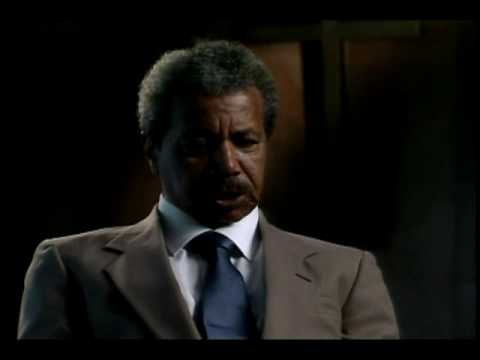
“The desegregation of Houston in the early 1960s, spearheaded by students at Texas Southern University, by the way, and the conspiracy by the mainstream press to take the wind out of their sails by not reporting on it, that’s a matter of public record. In fact, that’s a part of a documentary film that was done on that period, ‘The Strange Demise of Jim Crow,’” said Horne. A summary of the film says it “demonstrates how threats of demonstrations and civic strife compelled the power elite to negotiate with more moderate, ‘responsible’ Black leaders and neutralize arch-segregationists. At the same time, by censoring news coverage, Houston integrated peacefully but also undermined efforts to build a mass movement that might truly threaten and destabilize white power and privilege.”
TSU riot
Despite effort to quell Black resentment for ongoing racist mistreatment, TSU students protested various aspects of this disrespect hurled at Houston’s Black residents. On May 16, 1967 HPD blockaded the TSU campus in response to student civil rights protests. The unrest escalated into a shoot-out where police fired an estimated 3,000 rounds into TSU’s Lanier Dormitory where students were barricaded. Two officers were wounded and one killed, by what most suspect was “friendly fire” by the police, themselves. On May 17, 488 students were arrested, marking the largest mass arrest in Houston history. Student leaders, the “TSU Five,” were indicted on charges of inciting a riot, assault and murder, charges that were ultimately dismissed due to insufficient evidence.

Local white media labelled the confrontation, which followed months of campus protests against the university and then the city of Houston, as a “riot” caused by law-breaking Blacks. However, most of the Black community deemed the event an invasion led by a hostile force, HPD. (Source: TrueCrimeTalesTX.com).
Assassination of Carl Hampton
The assassination of leaders of the Civil Rights and Black Power movements by local, state and federal law enforcement, many of which coordinated by the FBI’s Counter Intelligence Program, is well-documented. Chicago’s Fred Hampton is probably the most notable victim of this state-sanctioned violence. However, Houston’s Carl Hampton (no relation to Fred), should be remembered, as well.

Carl Hampton, 21, was gunned down by HPD’s Central Intelligence Division on July 26, 1970. Black Houstonians count Hampton’s death as a targeted assassination because of his community impact and standing as a dynamic and influential young Black leader.
Hampton, a native of Pleasantville, regularly rallied Black Houstonians against police brutality and other issues, while also meeting basic community needs (food, clothes, etc.) as leader of the People’s Party II, a group modeled after the Black Panther Party for Self Defense (BPP), headquartered at the 2800 block of Dowling Street (now Emancipation Ave).
Consistent with the reason the BPP was formed, to protect Blacks from police brutality, Hampton, on July 17, 1970, approached HPD members he believed were harassing a Black person selling BPP newspapers in from of the People’s Party II headquarters. Though legally armed, one of the officers drew his weapon on Hampton, and Hampton drew, as well. Other community members drew weapons in support of Hampton. HPD called for backup. Hampton and others then barricaded themselves in their headquarters as HPD riot troops showed up in what was a multi-day stand-off.
On day 10, HPD snipers gained access to a historic Black Church on Dowling, St. John Missionary Baptist Church. From there, they shot and killed Hampton, a Black Power history-maker on par with his namesake Fred Hampton and others.
Justice for Ida Delaney and Byron Gillum
In 1989, Houston activists galvanized police brutality activists nationwide by garnering legal victories in getting two officers who killed local Blacks fired. On October 31 of that year, Ida Lee Delaney, a 50-year-old grandmother, was gunned down while on her way to work by drunken, off-duty HPD officer Alex Gonzales. Days later, 24-year-old Byron Gillum, just blocks away from reaching his Third Ward home after his shift as a security officer, was shot eight times and killed by HPD Officer Scott Tschirhart under suspicious and dubious circumstances.
A group of activists, including former City Council member Ada Edwards, Cassandra Thomas, Rose Upshaw, Carmichael Khan and Jew Don Boney, were already fighting to exonerate Clarence Brandley, a Conroe High School janitor, who was wrongly convicted of capital murder.
“I received a call from an HPD officer that told me someone needs to look into Delaney’s killing because it didn’t go down like it was being reported,” shared Edwards. “If I remember correctly, the news was saying she was gunned down fleeing a drug bust.”
Around that group of justice-seekers, formed the Ida Delaney-Byron Gillum Justice Committee. Amazingly, this group was able to defy all odds and get Gonzalez and Tschirhart fired. Though it wasn’t the murder convictions the group sought, getting police held accountable for the death of Black citizens was considered monumental, and a national victory that inspired activists nationwide.
“Thanks to our efforts, both Tschirhart and Gonzales were fired from HPD. Neither served jail time, however. Gonzales was convicted of voluntary manslaughter and received two year’s probation. Tschirhart’s case never went to trial. He was eventually rehired as a law officer in an East Texas city and promptly shot and killed three Latino men while on duty, again under dubious and suspect circumstances. Some say that’s amazing. I say it’s not amazing; it’s Texas,” said Khan.
City’s response to Hurricanes Katrina and Rita
In 2005, Hurricane Katrina was the costliest hurricane ever and one of the five most deadly storms ever to hit the U.S. It damaged more than 800,000 housing units, causing $81 billion of damage, and killed more than 1,500 people in Louisiana and at least 230 in Mississippi. Hurricane Rita, though not as deadly, added to the exodus of evacuees from Louisiana and the Gulf Coast, who ended up finding refuge in Houston.
Houston showed itself to be much more than a good neighbor, as all manner of organizations, institutions and individuals opened their hearts and homes to those displaced by the storms. Actions of Houstonians, especially Black Houston, made national news. However, there are still stories of altruism that have yet to be fully celebrated, like the nearly 200 individuals who were housed and fed free of charge, many for over a year, by the Shrine of the Black Madonna, who received no funding support from the Red Cross or U.S. government.
Contributions to the arts

What do Beyonce, Solange, Dr. John Biggers, Loretta Devine, LeToya Luckett, Mike Jones, Travis Scott, Bun B, Slim Thug, DJ Screw, Lightning Hopkins, Conrad Johnson, Joe Sample and the Jazz Crusaders, Billy Preston, Lizzo, Megan Thee Stallion, Lil’ Flip, Kelly Rowland, Johnny Nash, Marc Furi, Yolanda Adams, Robert Glasper, Chamillionaire, the Laws family, Trae Tha Truth, Debbie Allen, Ikechi Ojore, Phylicia Rashaad, Renee Elise Goldsberry, Jennifer Holiday, Liza Koshy, Sasha Lane, Tembi Locke, Chandra Wilson, Archie Bell, The Geto Boys, Eddie Vinson, Ernest Walker and others have in common? They are major contributors to the arts, nationally and internationally, who hail from Houston. Nuff said.
Space exploration
Since as early as 1791, Black American scientists have been making groundbreaking and heroic contributions in the fields of astronomy, astrophysics, mathematics and space exploration, performing vital mathematical and engineering work in the face of discriminatory laws and actions that blocked them from exercising their full rights as U.S. citizens.

Dr. Vanessa Wyche, NASA’s Johnson Space Center new leader, is the first Black woman to serve as director of any NASA center. However, she’s far from the first Black to contribute to America’s legacy of space exploration.
NASA’s Johnson Space Center in Houston has a new leader: Vanessa Wyche, who will be the first Black woman to serve as director of a NASA center. There’s Black astronauts who have, or will be going into space, including Robert Satcher, Bernard Harris, Mae Jemison and Jessica Watkins, who will be the first Black woman to join the international space station.
And has been stated, the movie Hidden Figures highlighted just of few in a long line of Black mathematicians and scientists who have served at every level to make space travel a reality.
Honorable mention
On April 28, 1967, Muhammad Ali refused to step forward when called to be drafted into the U.S. military right here in Houston’s Military Entrance Processing Station building (off San Jacinto). Ali was later arrested after making three attempts to change his draft status to “religious objector.” Ali risked prison, was barred from fighting for over three years during his prime, and thus lost millions in potential income, to stand up for his belief that it was wrong for the U.S.to send predominantly Black and Latinx troops to go to against other people of color.
Houston was also home to the original “Game of the Century” as college basketball powerhouse UCLA Bruins, led by Lew Alcindor (now Kareem Abdul-Jabbar), played the upstart University of Houston Cougars (led by Elvin Hayes) in the Houston Astrodome on Jan. 20, 1968. The game was the first NCAA regular season game broadcast nationwide in prime time, and established college basketball as a major force, opening the door to what is now known as “March Madness.”

The teams met the year before in the NCAA tournament, with UCLA winning easily. This game, however, found both squads coming in undefeated (UH was 14-0 while UCLA was 13-0). The Cougars emerged victorious, 71-69.
In addition, Houston has produced some history-making elected officials, including the late Congresswoman Barbara Jordan and Congressman George Mickey Leland. Their impacts extended fr beyond the borders of Houston, Texas and the United States. They were each global icons who inspired multiple generations of Black and Brown elected officials, community activists and change agents of all kinds.
Where to go to learn more
Camp Logan: “Mutiny on the Bayou” documentary
Desegregation of Houston: “The Strange Demise of Jim Crow” documentary
Book on TSU: “Born to Serve: A History of Texas Southern University”
Books on Black Women: “In Struggle Against Jim Crow: Lulu White and the NAACP, 1900-1957”; “Black Women in Texas History;” “Southern Black Women in the Modern Civil Rights Movement”
Books on general Houston Black history: “The Other Great Migration: The Movement of Rural African Americans to Houston, 1900-1941”; “Race and the Houston Police Department, 1930-1990: A Change Did Come”; and “Advancing Democracy: African Americans and the Struggle for Access and Equity in Higher Education in Texas.”
Book on Mickey Leland: “In This Land of Plenty: Mickey Leland and Africa in American Politics”
