The National Black Church Initiative (NBCI) recently entered the growing debate over artificial intelligence data centers with a position that is neither an outright embrace nor rejection of the technology.
The coalition, which says it represents 150,000 African American and Latino faith communities, supports data-center development when projects include legally enforceable Community Benefit Agreements (CBAs). Those agreements can address environmental impacts, resource consumption, local employment, and community investment.
“The church must play a constructive role of balancing the need for our members to work and pay their bills and, at the same time, promote technology that is going to enhance the quality of life for all of us,” said Rev. Anthony Evans, NBCI president. “This is why we strongly support CBAs.”
But where do Houston-area Black pastors and churchgoers stand?

Economic development — but at what cost?
For Dr. Timothy Sloan, senior pastor of The Luke Church, the answer is conditional.
“I’m not opposed to data centers being located in Black communities,” said Sloan. “But I am opposed to Black communities having to bear the burden of economic development without sharing in its benefits.”
Sloan said communities should receive environmental protections and equitable investment when their land is used.
“Technology and AI are part of our future,” he said, “but its growth shouldn’t happen at our expense.”
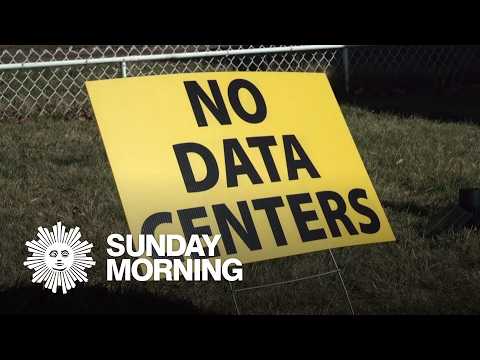
That perspective reflects a larger national debate. Research and reporting have documented data centers being built near predominantly Black communities, where residents have raised concerns about pollution, water use, electricity costs, and whether promised economic benefits will reach the people living closest to the facilities.
Black church leaders raise utility concerns
For Dr. Keith Somerville, former pastor of Houston’s Riverside UMC and now pastor of The Village UMC in DeSoto, Texas, the most immediate concern is electricity costs.
“My concern with the building of data centers in African American communities is the inevitable rise in the cost of living,” stated Somerville, specifically citing increased electric bills.
Somerville lives in DeSoto, a majority-African American suburb with mixed-income households. He said everyone could feel the impact of higher energy costs, but families already struggling with the rising cost of living would carry the greatest burden.
Darnell Fennell, a University of Houston alumnus and pastor of First Christian Church Texas City, offered a concise position: “My stance is for an equitable distribution of data centers.”
That emphasis on equity mirrors concerns emerging across the Houston region. A 2026 University of Houston Hobby School of Public Affairs survey found that 62.9% of Houston-area respondents opposed having a data center within one mile of their homes. Energy demand was among the leading concerns.

Some question whether churches can change anything
James Clark, a Houston native now living in Maryland, offered a more skeptical assessment of the church’s potential influence.
Clark lives near one of the world’s largest concentrations of data centers and said he sees the consequences as higher electric bills, water-pressure problems, short-term construction jobs, displacement, and noise.
“Quite frankly, I hate to say it, our Black pastors can’t slow down that train,” said Clark.
Clark nevertheless acknowledged the technology’s growing importance and argued that regulation may be the most realistic response.
“Data centers are needed,” he said. “Unfortunately, that ship has already sailed. The best we can do is regulate them as much as possible.”
His comments raise a question that extends beyond data centers: What role should Black churches play as major economic and technological changes reach Black communities?
Are Houston churches talking about it?
At least one Houston-area voice suggested the issue has yet to become a significant topic of conversation inside churches.
“I’m not opposed to data centers being located in Black communities. But I am opposed to Black communities having to bear the burden of economic development without sharing in its benefits.”
Dr. Timothy Sloan
“The sad part is that, for the past two weeks, I have visited churches, and they have talked about nothing political,” said Billie Jean, a Houston-area educator.
That silence could become more consequential as Texas continues attracting massive amounts of data-center investment.
Houston-area residents have already pushed back against proposed projects, while Missouri City has adopted zoning requirements that include special permits, public hearings, and disclosures regarding projected energy and water use. Statewide, residents have also raised concerns about grid reliability, water consumption, and household utility costs.
A seat at the table
The Houston Black voices interviewed for this story do not present a single position. Instead, they reveal a spectrum: Conditional support, demands for equitable development, concerns about rising utility costs, skepticism about the church’s influence, and, in some cases, a lack of discussion within congregations.
The common thread is accountability.
For Sloan, Black communities should not simply host the infrastructure powering an increasingly digital economy. They should have a voice in deciding how that development happens — and a meaningful share of its benefits.
That is also the central premise behind the NBCI’s support for CBAs: If data centers are coming, communities should have enforceable protections and a role in determining what they receive in return.
The question for Houston’s Black churches, then, may be less about whether they support data centers and more about what conditions they believe should accompany them. Because as AI expands, the debate is increasingly about something very familiar: Who pays, who benefits, and who gets a seat at the table.