


President Donald Trump’s ongoing tariff strategy faced a serious rebuke this week, as Federal Reserve Chair Jerome Powell delivered a sober warning about the administration’s trade policies — and the economic turbulence they are fueling.
Speaking Wednesday at the Economic Club of Chicago, Powell didn’t mince words. He warned that the White House’s escalating tariffs are “highly likely” to drive up inflation and slow economic growth. Financial markets reacted immediately, plunging into red as Powell spoke.
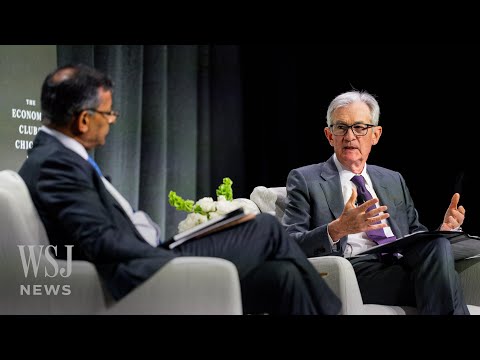
“Tariffs are highly likely to generate at least a temporary rise in inflation,” Powell said. “The inflationary effects could also be more persistent. The level of the tariff increases announced so far is significantly larger than anticipated.”
Powell emphasized that while the Fed has the ability to exercise patience on interest rates, Trump’s tariff war complicates the broader path for monetary policy. The trade conflict, he noted, threatens to force the Federal Reserve into a precarious balancing act — choosing between fighting inflation and protecting the labor market.
This warning from Powell — who Trump himself appointed in 2017 and who was later reappointed by President Biden in 2022 — highlights a critical economic reality: Trump’s tariff policy is not just a political tool; it is an active economic risk.

Predictably, Trump responded with characteristic fury, launching a blistering attack on Powell via Truth Social. He accused Powell of being “too late and wrong” and derided the Fed’s report as a “complete mess.” Trump demanded immediate rate cuts and floated the idea that Powell’s “termination cannot come fast enough,” though legally, a sitting president cannot remove the Fed Chair over policy disagreements.
Meanwhile, Trump continues to mislead the public about the economic effects of his tariffs. Despite his claims that tariffs are enriching the United States, economists point out that the burden falls squarely on American consumers and businesses through higher prices. Trump’s assertions that prices — like the cost of eggs — are falling ignore the broader trend of stubborn inflation exacerbated by trade barriers.

Powell, for his part, made it clear that the Federal Reserve will continue to operate independently, immune to political pressure from any administration.
“Fed independence is very widely understood and supported in Washington — in Congress, where it really matters,” Powell stated. “We will do what we do strictly without consideration of political or any other extraneous factors.”
This moment represents a critical clash between sound economic stewardship and short-term political theatrics. Trump’s trade policies are creating the very inflationary pressures he claims to oppose, while simultaneously demanding monetary policy adjustments that would further destabilize the economy.
It is not the first time Trump has used Powell as a scapegoat for his administration’s economic missteps. In 2019, Trump publicly attacked Powell for not cutting interest rates aggressively enough. The pattern has continued, with Trump once again pressuring the Fed to act politically — and once again finding a Chair unwilling to bend.

Ultimately, the institutions built to protect the U.S. economy from political interference, most notably, the independence of the Federal Reserve — are being tested. Whether they hold firm could determine not just the outcome of today’s economic challenges, but the long-term credibility of America’s financial system.
As it stands, Powell remains unshaken. And the economic reality remains unchanged: tariffs are taxing American households, feeding inflation, and complicating the very recovery Trump claims to champion.