A half-century ago, things were very different.
As Blackfolk, the vast majority of us moved on from the Black Power Movement. That may have happened thanks in part to 1) Affirmative Action jobs that some argue were given to quell Black unrest, 2) a change in focus from social protest to political empowerment, with major cities electing their first Black mayors and 3) the assassination and incarceration of many of the leaders of Black organizations.
Whatever the reason, in 1975, Black people were becoming convinced that integration into what MLK himself called a “burning house” was actually possible. Still, with George and Weezy Jefferson on our TV screens weekly, telling us that “We’re movin’ on up,” you couldn’t tell us nothin’.
Lord, Lord. Hindsight is mos def 20/20.
Back then, a gallon of milk cost $1.57. The median cost of a home in the U.S. was $38,100, and a year of undergraduate tuition at Boston College cost a little less than $3,000.
In the 50 years since 1975, it feels as if a whole new world has formed, leaving the old one behind. But, like James Baldwin once said, “History is not the past. History is the present. We carry our history with us.” That sentiment is consistent with the African concept of Sankofa, the charge to look back and fetch what was best from our past in order to move forward intelligently.
That said, let’s look back and see what past events can inspire us today to move forward and create some history of our own.
First season of Soul Train goes national
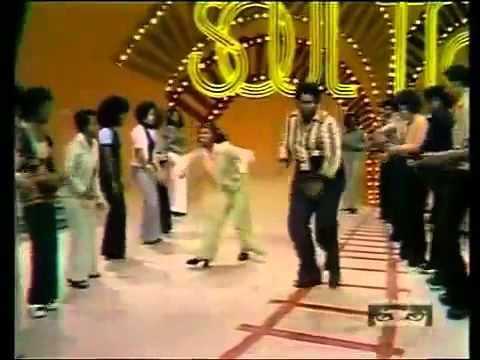
Don Cornelius’ Soul Train expanded its reach, becoming a Saturday staple that showcased Black music, fashion, and dance for the world.
Muhammad Ali defeats Joe Frazier in “Thrilla in Manila”

This Oct. 1 legendary boxing match cemented Ali in the sports world as “The Greatest.” For Blackfolk the world over, he won that title when he stood his ground against the U.S. military industrial complex and refused to fight in the Vietnam War on religious grounds, famously saying, “No Vietnamese ever called me ni@@er.” Ali truly symbolized (and still symbolizes) Black resilience, pride and cultural dominance.
United Nations passes resolution condemning apartheid

A major global step in the anti-apartheid movement, deeply connected to Black liberation struggles in Houston and across the diaspora.
Natalie Cole wins Grammy for Best New Artist

The daughter of Nat King Cole launched her career, representing Black musical excellence across generations.
National Association of Black Journalists (NABJ) founded

This was a milestone for Black representation in media, critical for truth-telling and shaping narratives that uplift Black communities. It took place on Dec. 12, 1975.
Parliament’s “Mothership Connection” released

With the release of Mothership Connection, George Clinton and crew blessed the world with funk classics like P. Funk (Wants to Get Funked Up), Mothership Connection and Give Up the Funk (Tear the Roof off the Sucker). FYI, the song Mothership Connection gave us one of the all-time greatest lines in Black music history: “We have returned to claim the pyramids.” Man, if this were a ranked list, this just might have to be number 1.
The Vietnam War ended
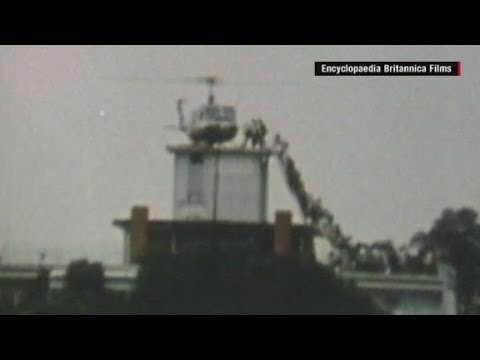
On April 30, when the North Vietnamese captured Saigon (now Ho Chi Minh City), the Vietnam War, one that divided the country regarding whether or not the U.S. should have been involved in it at all,
The Big Red Machine wins World Series

The greatest baseball team to ever grace the diamond (outside of those all-time great Negro League teams), the 1970s version of the Cincinnati Reds, known as the Big Red Machine, won its first of back-to-back World Series championships (1975, defeating the Boston Red Sox in seven games; 1976, defeating the New York Yankees 4-0). This was a team full of brothers. Besides Hall of Famer Johnny Bench and should-be Hall of Famer Pete Rose, the Reds put nothing but bruhs on the field for their starting line-up. Bruhs from the U.S. and the diaspora: Joe Morgan (Hall of Famer). Tony Perez (Hall of Famer), Dave Concepcion (should be Hall of Famer), George Foster (perennial all-star), Cesar Geronimo (defensive stalwart) and Ken Griffey (one of the best all-around players of the 70s and 80s, eclipsed because of the superstardom of his son, Ken Griffey Jr.). Though the early 1970s Reds were, in the words of the Wu-Tang Clan, “nothin’ to [mess] wit,” (playing in the NLCS in 1970, 1972, 1975 and 1976), 1975 was the year they earned arguably the greatest team nickname in baseball history. And again, they were the Blackest team in Major League Baseball.
Videocassette recorders (VCRs) created

VCRs, now a thing of the past, were so much a part of Black life that they earned a permanent invitation to the cookout. Hell, in some Black households, VCRs aren’t just part of the past; they’re still alive and kicking.
50 Cent (Curtis James Jackson III) born

Rapper, actor, television producer and Houston transplant, 50 Cent, known for his debut album Get Rich or Die Tryin’, turns 50 this year.