A growing number of Houston artists and industry leaders are confronting a technology advancing faster than the legal infrastructure designed to protect them from it.
At the heart of the discussion is whether AI tools that mimic voices and styles and generate music swiftly will empower independent artists or lead to their obsolescence.
By 2025, AI-generated music revenue had exceeded $6 billion globally, and streaming platform Deezer reported receiving approximately 75,000 AI-generated tracks every single day, 44% of all daily uploads, according to a 2026 industry forecast. Research also shows that 82% of listeners cannot distinguish between AI-composed and human-made music.
For independent Black artists in Houston, building careers without major-label support or legal representation, the stakes are both cultural and economic.
‘It could be destroying our community.’

Dria Thornton does not speak about the music industry from the outside looking in. The 16x RIAA Platinum-certified songwriter and vocalist has collaborated with Rick Ross, Meek Mill, Logic, and Young Thug, and created sync placements for Netflix, Hulu, Peacock, MTV, and VH1. She serves as treasurer of the City of Houston Music Advisory Board and as a voting member and district advocate for the Recording Academy.
Thornton’s position on AI is layered. She sees value for creatives who lack production resources, but is troubled by how convincing AI-generated music has become.
“When I listen to Spotify or Apple Music, and I hear an AI record mixed into a playlist, I feel tricked,” Thornton said. “I can hear the difference. There’s something sonically that tells me. But the rest of the world isn’t catching it.”
Her most acute concern involves sync licensing, the revenue stream generated when music is placed in film, television, and advertising.
Thornton said the Houston Music Advisory Board has not yet formally addressed AI but plans to raise it at a future town hall.
“Houston is a little antiquated compared to Los Angeles, Atlanta, and New York,” Thornton said. “To have AI come in and take over when we haven’t even gotten our footing yet would actually be destroying our community.”
At the federal level, Thornton has engaged members of Congress as a Recording Academy district advocate on AI copyright legislation, which is currently moving through the process.
“When I listen to Spotify or Apple Music, and I hear an AI record mixed into a playlist, I feel tricked. I can hear the difference. There’s something sonically that tells me. But the rest of the world isn’t catching it.
Dria Thornton, Singer/Songwriter
“A lot of people use these programs and don’t understand that once they put their voice in the program, that company may have full reign to do whatever they want with your voice.”
‘Anyone can do it now.’
Tatianna Mott is an artist and songwriter. She began experimenting with large language models in 2023 and discovered Suno, one of the most widely used AI music generation tools, in January 2024.
“I have all these songs in a songbook that will never see the light of day because the money wasn’t there,” she said.
Using Suno as a demo-making tool, she built production demos from hummed melodies she previously could not afford to develop, and performed original music live for the first time in years.
Access to online platforms can threaten traditional income streams for musicians, as AI tools like Suno allow anyone to create music for free, potentially undermining revenue from jingles and stock music.
“Right now, anything you post online is no longer yours,” Mott said. “These AI bots are scraping the internet. If you post it, just assume it’s going to show up somewhere else.”
Grammy-nominated R&B artist SZA captured the frustration of many Black creators in a March 2026 interview with i-D Magazine.
“I feel like I’m at war because of AI,” she said in the interview, warning that the technology is hitting Black music disproportionately, circulating AI covers of emerging artists before they have time to build their own audiences and flooding platforms with what she called “weird, stereotypical struggle music.”
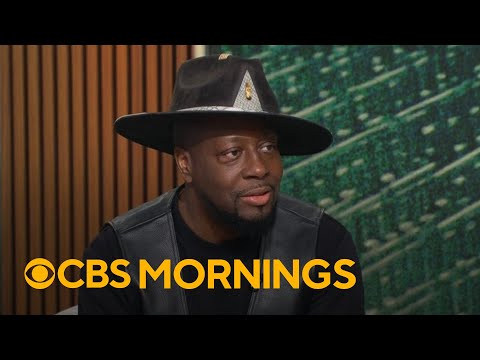
However, artists like former Fugees member Wyclef Jean announced plans to release seven AI-assisted albums in a single year through his Quantum Leap project, telling Yahoo Finance that AI tools saved him “an entire month and $150,000” in production costs.
‘There is something sacred about an artist.’

Akilah Nehanda is a Houston rapper and singer. A graduate of Houston’s High School for the Performing and Visual Arts and Howard University, she leans on a Lauryn Hill quote as her creative compass. “Music is supposed to inspire, so how come we ain’t getting no higher?”
Nehanda has used AI for commercial work and was transparent with her clients about it. But when it comes to her own artistry, the boundary is clear.
“There is something sacred about an artist,” she said. “I will always write my own music. Whatever I’m putting out into the world is coming from my mind and my highest self.”
What most concerns her is the use of deepfakes visuals and audio on the internet. Deepfakes in the music industry pose severe threats to artists’ livelihoods, intellectual property, and fan trust. By cloning distinctive vocals and musical styles without consent.
“I’ve seen full videos of artists saying and doing things they never did,” she said. “And that is dangerous.”
Nehanda called for enforceable legal consequences for the misuse of an artist’s image by harmful AI, similar to existing music copyright protections.
“If they can flag a Beyoncé song used without permission, there should be consequences when someone uses your face and voice without it.”