For years, Black voters in Houston have served as the Democratic Party’s most reliable voting bloc, yet many feel their community’s needs have been left unattended. As the midterm elections approach, the relationship between the party and its most loyal supporters is at a tense point. At a town hall in the heart of the historic Third Ward, the consensus was unwavering.
Candidates can no longer win by simply asking for a vote. Trust is the currency of persuasion, voters say, but is the party listening?
The three-hour gathering, hosted by elected officials State Representative Jolanda “Jo” Jones, Harris County Precinct 7 Constable James “Smokie” Phillips, and Houston Black American Democrats, was a space where Black Houstonians could tell the party what it has failed to do, and what it must do now. Since the primaries, Houston’s Black voters have rallied to let candidates know that the time to take the Black vote for granted is up. It must be earned, instead of being wooed through generic talking points.
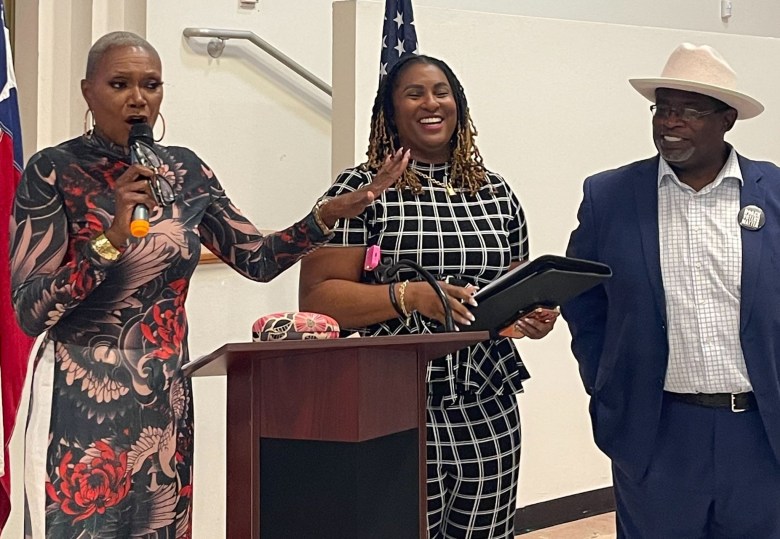
For Ashley Etienne, who is the former senior advisor to Presidents Barack Obama and Joe Biden, and communications director for Vice President Kamala Harris, this is not her first rodeo. The Sam Houston alumna has seen one election cycle after another, strategizing communication around national security and domestic policy for high-ticket candidates.
“We’re seeing distrust at an all-time high, especially with Black voters…distrust of the media, distrust of the institutions, distrust of the Democratic Party, distrust of self-agreement,” Etienne said. “Campaigns don’t lose because they fail to talk to the voters; they lose because they fail to listen to the voters.”
The need for patient ears
Not feeling heard is a recurring issue Black voters keep bringing up this election cycle.

“We need serious amounts of listening,” Etienne said. “We need to be engaged, just get to a level of intimacy with Black voters again.”
Particularly among Black women, a majority of whom voted for Harris in the general election in 2024, believe issues concerning the community have been left unattended.
The voting bloc is the single largest group that has not split its vote in every major presidential election. When it comes to presidential elections, 92% of Black women voted for Harris in 2024, 92% of the group’s vote led to the victory of Biden and Harris in 2020, 96% voted for Barack Obama in 2008 and 2012, bringing the margin he needed to win in both races, and 94% voted for Hilary Clinton in 2016.
‘We fell asleep at the wheel’
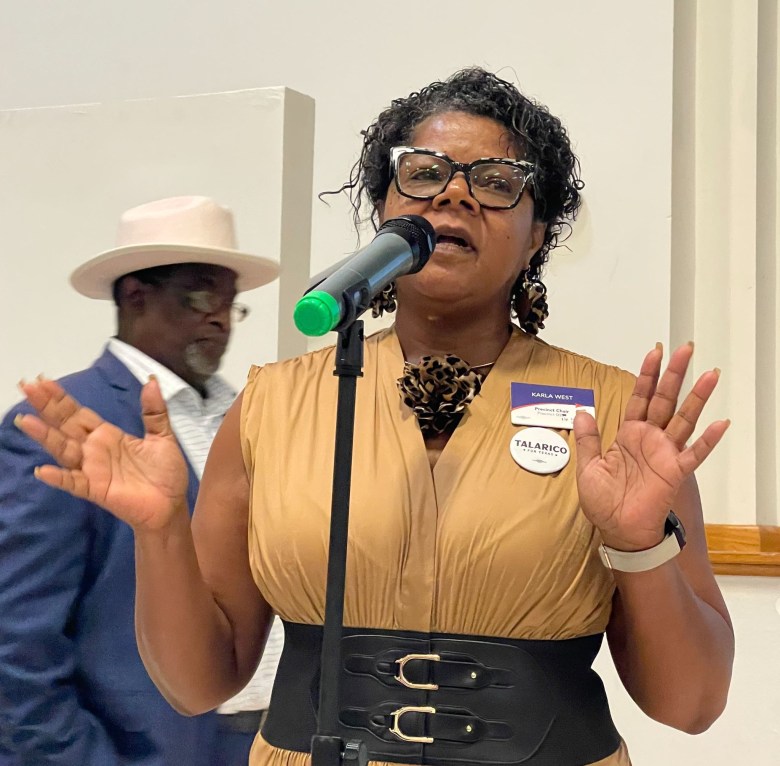
Karla West, a precinct chair for downtown’s Precinct 16, said voters “fell asleep at the wheel” by not turning out to vote in large numbers.
“The Democratic Party did not say what they would do for you,” said Karla West, a precinct chair for downtown’s Precinct 16. “We haven’t heard a plan for years. I’m sick of it. We have to have strategies, we have to have plans, we have to have a mechanism in place for people to feel they are heard.”
What the community wants addressed

A persistent issue in the Third Ward, Black voters said the neighborhood has been targeted by developers.
Vee Decatur, the founder of Cafe Restore, a lifelong resident of the Third Ward, started the organization to preserve Black homeownership in the neighborhood. Through Title and Land Justice, Decatur helps Black families retain their property titles and, in turn, their properties tied to generational wealth.
“I’m going to fight property theft until the day I die…They want us out,” she said. “Black men can’t even gather on empty lots that I own because they’re too busy calling the police on them. Gathering is cultural for us.”
Emphasizing the need for more information, Decatur suggested holding town hall meetings for community members.
“Revitalization is just another word for erasure,” she said.
Several Black community members pointed to the lack of a unified strategy, pointing to stale playbooks and treating Black people as a homogeneous entity, targeting varying age groups and venues for campaigns.
Pointing to the Texas Senate race, Etienne warned the party against treating the community as a monolith. To flatten the cultural motivation of different age groups could translate to a loss in votes, she added, urging candidates to allocate funds targeting each group separately.
“Campaigns don’t lose because they fail to talk to the voters; they lose because they fail to listen to the voters.”
Ashley Etienne, former senior advisor to Presidents Barack Obama and Joe Biden, and communications director for Vice President Kamala Harris
James Talarico, the Democratic U.S. Senate candidate running against Ken Paxton, recently pledged $25 million toward Black voter turnout at a July town hall in Houston.
While community members expressed support for the funds, they questioned where the money would be spent.
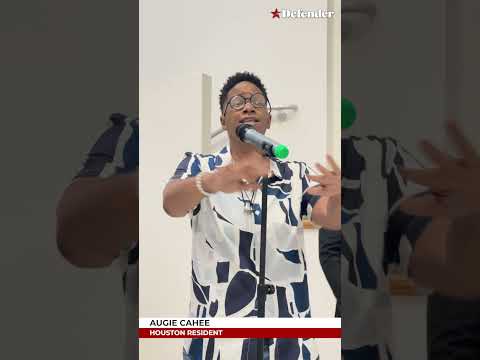
“We need our Black colleges, boarding, and we need them to know our agenda has not changed,” said Augie Cahee, vice president of marketing web delivery at JPMorgan Chase & Co. “Us in this community…we still need our kids, we still need our schools equitably funded. So, we want to know what you’re going to do with the money. Don’t stand up and tell me $25 million and you don’t have a plan.”
Additionally, Etienne suggested that candidates focus on venues outside of Black churches and barber shops, where “young people and low-propensity voters simply aren’t there,” as part of their campaign strategy.
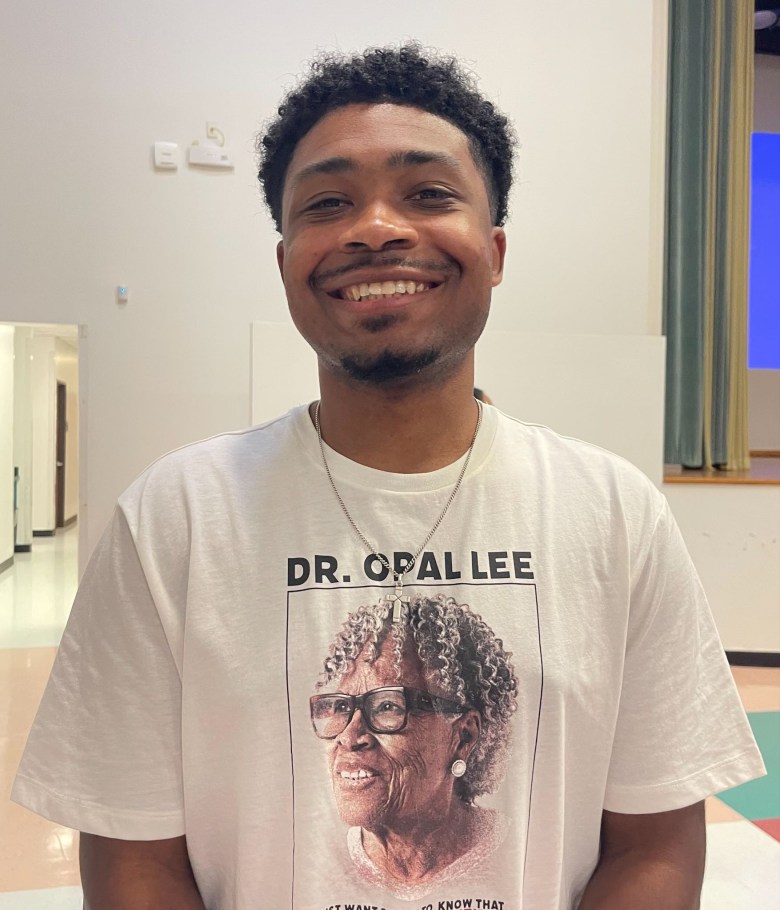
Josh Martin, a Houston-based political strategist, agreed, arguing that candidates need to expand their campaign stops to gyms and grocery stores, among other spots.
“A lot of people have gotten complacent,” Martin said. “We do a lot of complaining, saying that young voters don’t turn out or young voters need to turn out. But we aren’t actively going where they are. That starts with organizing, investing in those places where we go to ultimately turn them out.”
Victory is a long way off for the Democrats, who Etienne suggested must center Black political power, instead of asking for unquestioned party loyalty. Black votes must be earned, she said.
“Too many Black voters have heard the same tired argument from Democrats for years, but their lives remain unchanged,” she said, focusing on building grassroots-level connections by ending the cycle of laying off organizers after Election Day and building infrastructure in Black neighborhoods.
Investment in Black communities
A recurring theme was investment, specifically, the gap between what campaigns ask of Black voters and what they put into Black communities and organizations.
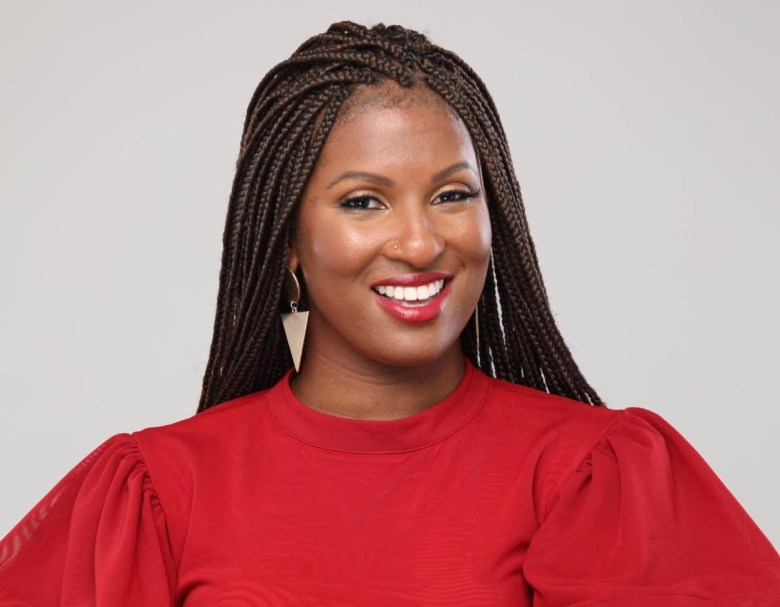
Shamier Bouie, chair of the Houston Black American Democrats, said candidates should invest in outreach to engage Black voters by budgeting for ads and printed materials.
“It’s all about year-round organizing, and increased investment in black voter outreach… more funding for Black-led organizations that have relationships, infrastructure, and experience in effectively engaging Black communities,” Bouie said.

The demand for real financial commitment was echoed by Rain Eatmon, an Acres Homes resident who framed it as a matter of quantifiable neglect.
Citing research on maternal mortality and housing costs in Harris County, Eatmon said, “Stop pretending like you don’t know what we’re doing… Stop pretending like you don’t know we have housing issues. Stop pretending that you don’t know what the work is.”
She added that officials with limited power to act, still have an obligation to “think, speak, connect, highlight, raise awareness…and acknowledge our suffering.”