There is a question that never quite goes away in American politics. No matter how many elections we survive, can a woman actually win?
Buried inside that question is a web of double standards, unspoken biases, and structural roadblocks that make the path to office harder for women long before a single vote is cast. For Black women in this country, that path is steeper, and the stakes are higher.
Studies have found that when women run for office, they win at roughly the same rate as men. The problem is not that voters won’t choose a woman. The problem is that women don’t run in the first place. And that gap exists because of the system.
Think about what it actually takes to run for office. You need money, serious money. You need party networks and influential people in your corner. For decades, those networks were almost exclusively male. When they stepped forward on their own, they entered a political world that had never quite been built for them.
Even when women do run, a second obstacle awaits them: The likability trap. We expect our leaders to be strong, decisive, and commanding. But when women show those exact qualities, they are often described as cold, difficult, or aggressive. It is a no-win scenario dressed up as a voter preference. Be warm, and you are not tough enough for the job. Be decisive, and you are suddenly the problem in the room.

We watched this play out during Kamala Harris’s 2024 presidential campaign. Her record was formidable: Former prosecutor, Attorney General of California, United States Senator, and Vice President. Yet a significant portion of political conversation centered not on what she would do in office, but on whether people liked her. Male candidates with far thinner résumés are rarely held to the same test.

Consider Stacey Abrams, who practically remade Georgia’s political landscape by sheer will. She built one of the most effective voter mobilization operations in recent history and ran for governor twice in races shadowed by voter suppression controversies. Her capability was never seriously in question. The structural forces working against her were another matter entirely.
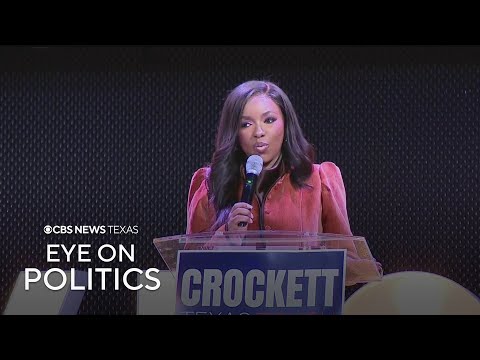
Also, look at what just happened to Congresswoman Jasmine Crockett. She entered the March 2026 Texas Democratic Senate primary as a nationally recognized progressive with a record of holding Republicans accountable on the House floor and a viral presence that had made her one of the most talked-about Democrats in the country.
Her opponent, state Rep. James Talarico, was less well known outside Central Texas when he launched his campaign. He built a national profile by focusing on his faith to challenge Christian nationalism and gained exposure through high-profile interviews. Ultimately, Crockett lost the election. Listen to the remarks made by Texas voter Sonya Bernhardt, sharing her reasons why she didn’t vote for Crockett in the first place.
The U.S. lags in electing women to top executive roles due to a structural, cultural, and political landscape that differs from those of nations with higher female leadership. Key factors include the U.S. reliance on a presidential system requiring intense, personalized national campaigns, lack of gender quotas, deep-seated gender stereotypes, and a “pipeline problem” with fewer women in high-level, high-visibility positions.
As of early 2026, over 80 countries have had a woman serve as head of state or head of government, a milestone that the United States has not yet achieved.
So what do we do with all of this? Here in Houston, Black voters, particularly Black women, have historically been among the most organized and effective political forces in this country. The question now is whether we show up for women candidates with the same conviction we hope the broader world will one day show them.
The next time a Black woman appears on your ballot, for city council, school board, state legislature, or Congress, do your homework and hit the voting booth. Ask instead what kind of world you are voting into existence. Because the game was never fair. But we have always had the power to change it.